Skip linksSkip to Content
play
Live
Navigation menu
  • News
    • Africa
    • Asia
    • US & Canada
    • Latin America
    • Europe
    • Asia Pacific
  • Middle East
  • Explained
  • Opinion
  • Sport
  • Video
    • Features
    • Economy
    • Human Rights
    • Climate Crisis
    • Investigations
    • Interactives
    • In Pictures
    • Science & Technology
    • Podcasts
    • Travel
play
Live

In Pictures

Gallery|Conflict

In Pictures: West Bank shops boycott Israel

Palestinian shops are removing Israeli products from their shelves to protest Israel’s military assault on Gaza.
Save

Share

facebookxwhatsapp-strokecopylink
Large supermarket chains in the West Bank are boycotting Israeli goods and replacing them with Palestinian or imported products.
By Dalia Hatuqa
Published On 16 Aug 201416 Aug 2014

Ramallah, occupied West Bank – Angry over the bombardment of Gaza, Palestinians in the West Bank are starting to shun Israeli goods.

In the past, concerted efforts have been made to rid the Palestinian market of products originating in Jewish settlements built illegally in the occupied West Bank – but never goods made in Israel. Last week, large supermarket chains began to clear their shelves of Israeli products, promising customers they would replenish them with Palestinian or imported ones.

Salem Hmeidat said the supermarket he works for in Ramallah was slowly replacing Israeli goods. “We are starting off with fresh produce and foodstuffs,” Hmeidat said. “Our progress depends on how receptive our customers are to these changes.”

Palestinians, a captive consumer market, are deeply economically reliant on Israel. Up until May 2014, 86.5 percent of Palestinian exports went to Israel, while approximately 65 percent of all Palestinian imports came from Israel, totalling approximately $300m worth of goods.

Dr Nafeth Abu Baker, an economist at An-Najah University in Nablus, said that for now, the economic boycott is a useful “non-violent tool of the struggle” that can eventually help create jobs and boost sales of local goods. But he acknowledged that its real effects would only be seen in the long run.

“Having a complete boycott is unattainable when there are goods or services we cannot import from elsewhere or provide locally, such as electricity, fuel, gas, and water,” Abu Baker said. “Also, if we want to see substantial changes, every effort should be made on the part of government, civil society, and consumer protection bodies to change attitudes about Palestinian goods.”

Advertisement

In 2005, several hundred Palestinian civil society groups launched a call for the boycott, divestment, and sanction (BDS) of Israel. The BDS movement’s goals are to end the Israeli occupation of Palestinian lands, recognise full equality of the rights of Palestinian citizens of Israel, and allow Palestinian refugees to return to their homes.

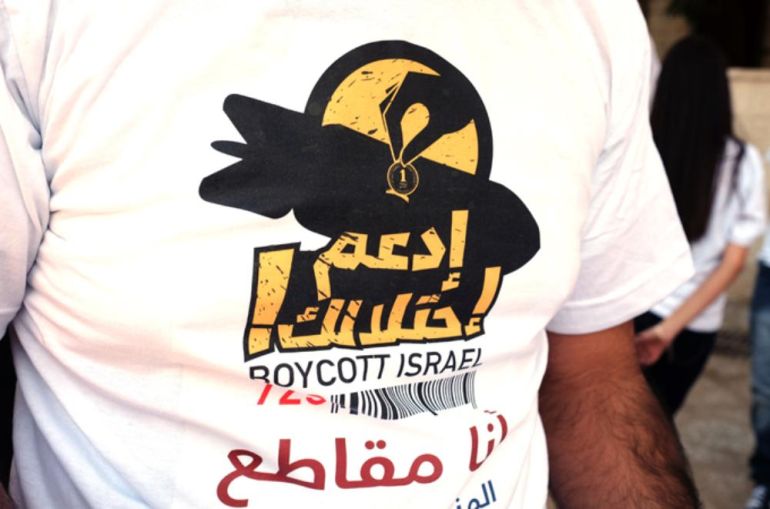
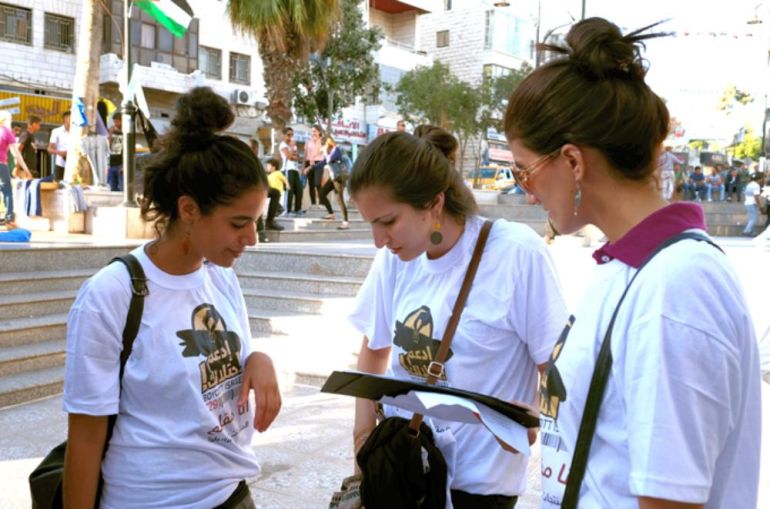
While not directly affiliated with the formal BDS movement, young Palestinians have kick-started a campaign called Support Your Occupation to raise awareness among customers that buying Israeli goods contributes to the army’s hold on the West Bank and Gaza.

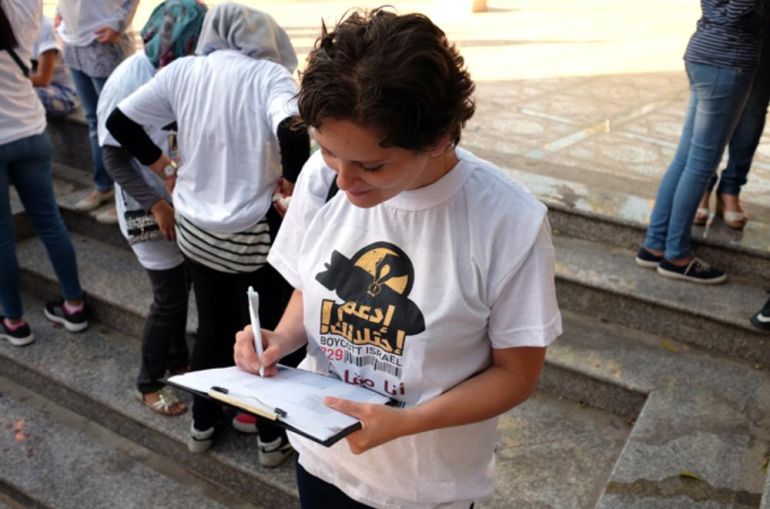
As part of this effort, volunteers are travelling to West Bank cities and towns and identifying Israeli goods in an effort to dissuade shoppers from buying them. “Six years ago when I would talk about boycotting Israeli goods, people would roll their eyes at me,” said Aisha Mansour, a volunteer with the campaign. “Today the boycott movement is expanding in many ways.”
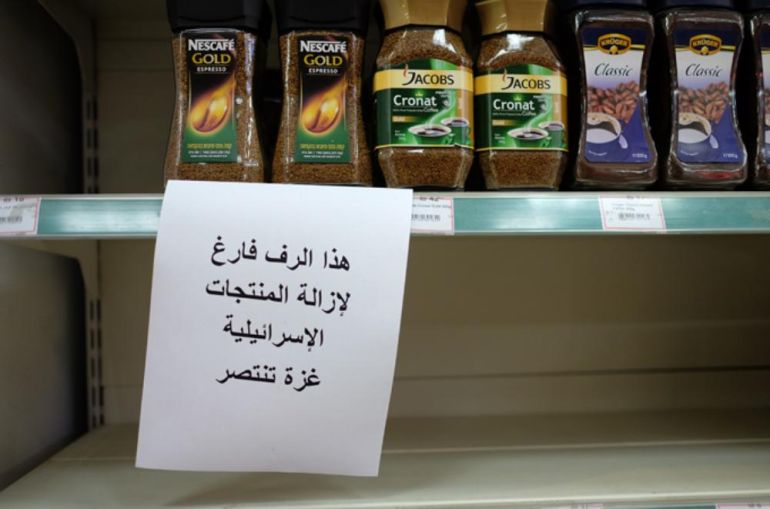
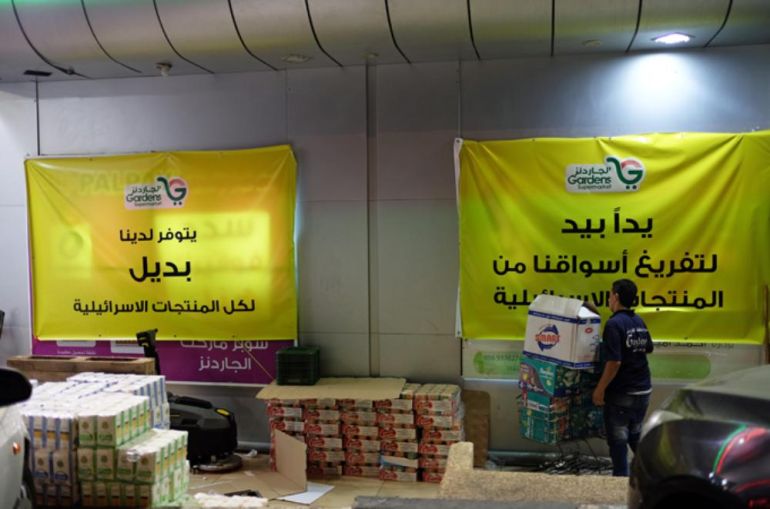
"This shelf is empty because we(***)ve removed our Israeli products. Gaza is victorious," reads a sign in a Ramallah supermarket.
Advertisement
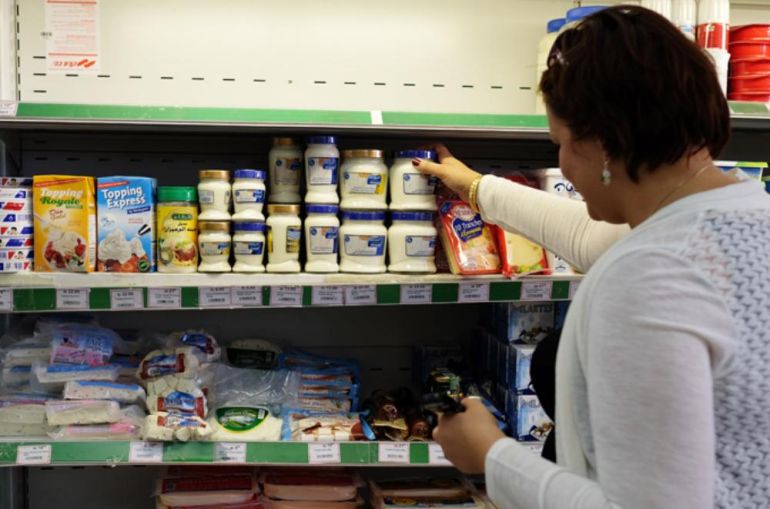
"Instead of Israeli shredded cheese, I(***)m buying the imported kind, so now my home-made pizza is free of Israeli products," says this university professor and mother of two.
Two local radio stations are providing free advertisement to those stores that boycott Israeli goods.
Activists say this effort is a new tool with which to fight Israel(***)s occupation of Palestinian territory.
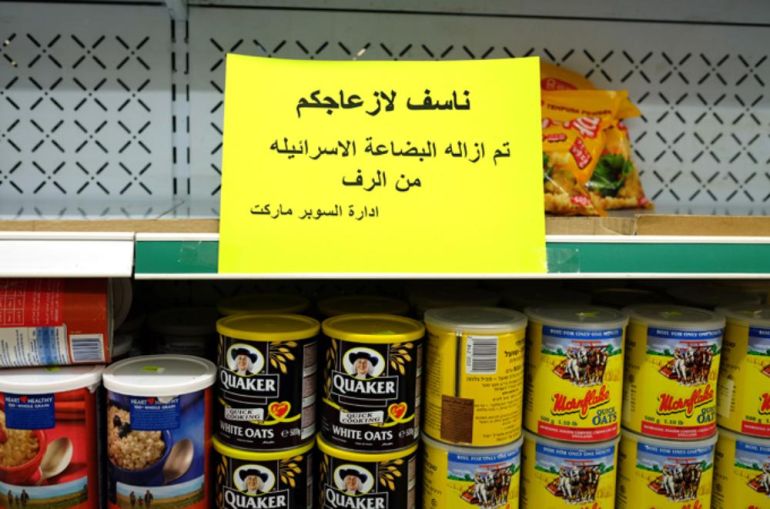
"Apologies for the inconvenience. Israeli products have been removed from this shelf," reads a sign in one Ramallah supermarket.
Young volunteers are hoping this is the beginning of a boycott that will reach the entire West Bank.
Advertisement
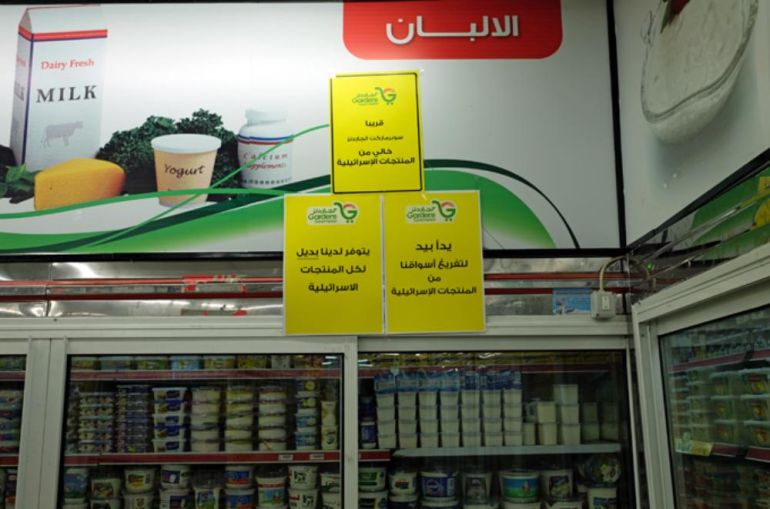
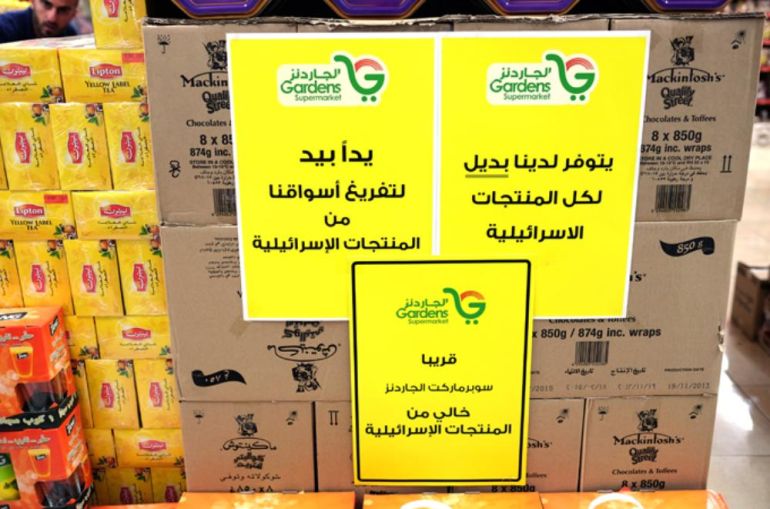
"Together we can rid our market of Israeli goods," reads a sign outside a Ramallah supermarket.
Activists from a campaign called "Support Your Occupation" called for volunteers to go around West Bank stores raising awareness.
Angry over the bloodshed in Gaza, many Palestinians have decided that demonstrations are not enough, and so are going from shop to shop, calling for a boycott of goods made in Israel.
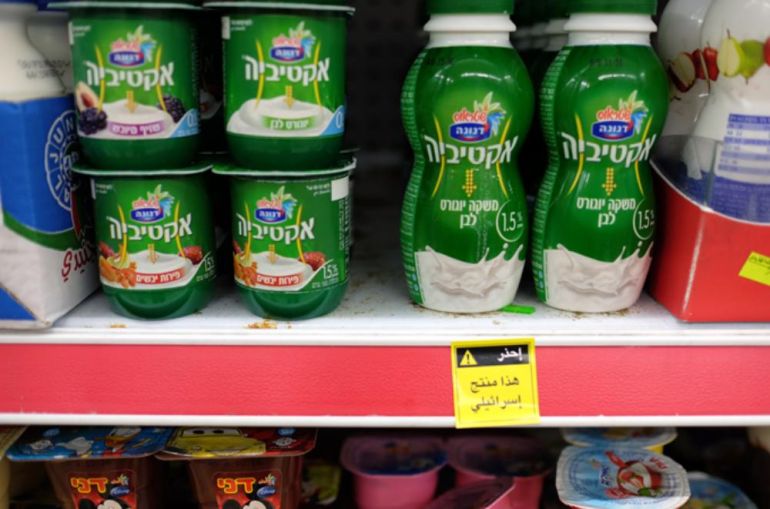
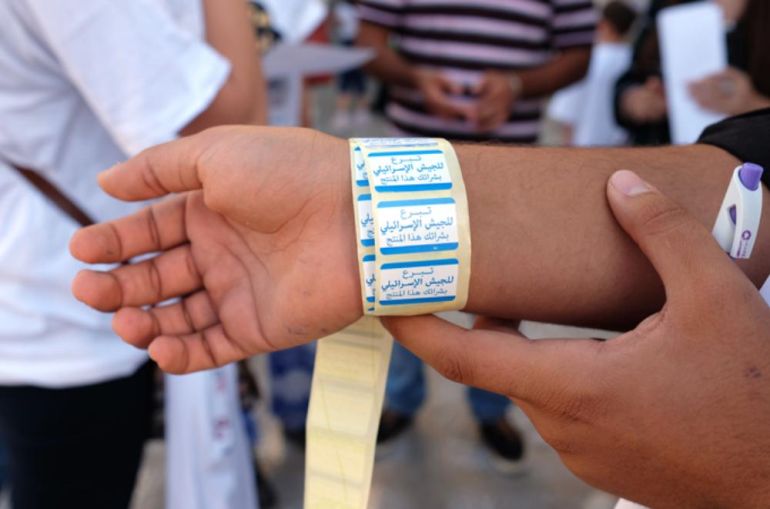
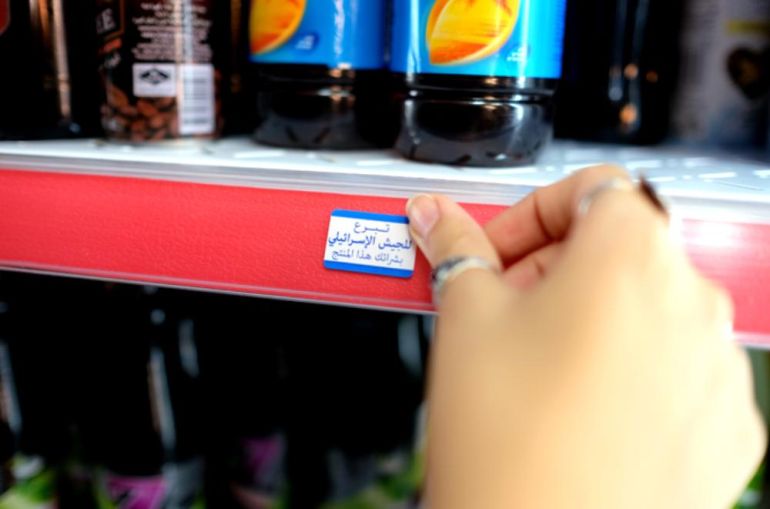
Young volunteers are labelling Israeli goods with a sticker that reads: "You are donating to the Israeli army by buying this product."
Activists are hoping this community-centered boycott has a far-reaching effect that lasts beyond the current crisis in Gaza.
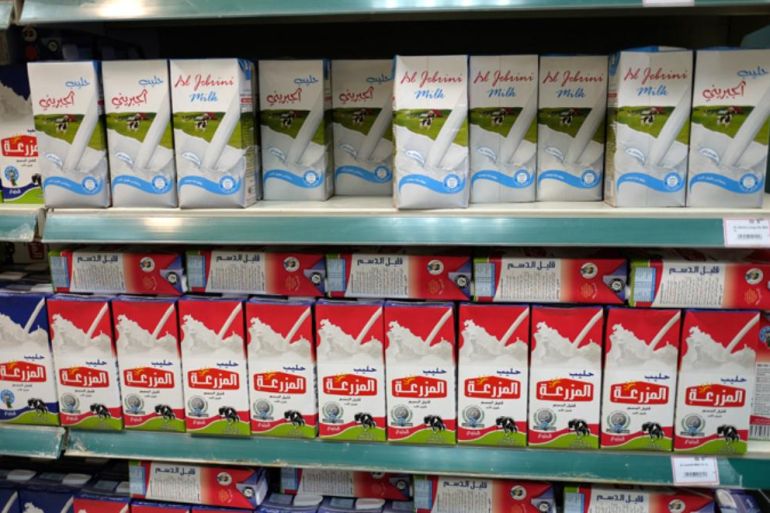
Some supermarkets are planning to liquidate the entirety of their current stocks of Israeli goods.

Related

  • Trump says he’ll speak to Taiwan’s leader: Why that is significant

    Analysts say the remarks are less a sign of closer US-Taiwan ties than another example of Trump’s unpredictability.

    Published On 21 May 202621 May 2026
    U.S. President Donald Trump speaks with Chinese President Xi Jinping while leaving after a visit to the Zhongnanhai Garden in Beijing, China, May 15, 2026. REUTERS/Evan Vucci/Pool
  • Putin and Lukashenko monitor joint Russia-Belarus nuclear exercises

    Moscow and Minsk hold strategic nuclear drills with the two countries’ leaders participating via video conference.

    Published On 21 May 202621 May 2026
    Russian President Vladimir Putin and his Belarusian counterpart Alexander Lukashenko, seen at the screen, take part in a video call as part of joint nuclear drills at the Presidential Situation Centre at the Kremlin in Moscow, Thursday, May 21, 2026. (Mikhail Metzel/Sputnik, Kremlin Pool Photo via AP)
  • From: NewsFeed

    Russia rehearses ‘use of nuclear forces’ in drills with Belarus

    Russia delivered nuclear warheads to sites in Belarus as part of a three-day military exercise involving both countries.

    Published On 21 May 202621 May 2026
    Video Duration 01 minutes 09 seconds play-arrow01:09
  • Maths behind Hormuz toll: Is paying Iran for transit cheaper than blockade?

    Economics of Hormuz closure are skewed towards Iran, so why won’t the vessels just pay Tehran and sail away?

    Published On 21 May 202621 May 2026
    Vessels at sea.

More from Gallery

  • Photos: Ebola tensions rise as treatment centre torched in DRC’s Ituri

    Ebola tensions rise as treatment center torched in Congo's Ituri
    This gallery article has 9 imagescamera9
  • Photos: Kenya transport strike paused after deadly protests

    MAY 19: Kenyan security forces intervene to disperse demonstrators blocking roads during a protest against the increase in fuel prices in Nairobi, Kenya on May 19, 2026. Crowds gather across the capital to voice their anger over the rising cost of living and energy tariffs.
    This gallery article has 7 imagescamera7
  • Photos: Thousands demand president’s resignation in Bolivia’s La Paz

    Mass protests and road blockades choking the Bolivian capital
    This gallery article has 10 imagescamera10
  • Photos: Somaliland marks first independence day since Israeli recognition

    Somaliland marks first independence day amid Israel ties and divisions
    This gallery article has 9 imagescamera9

Most popular

  • ‘Some good signs’ Iran peace deal can be reached, says US’ Rubio

    An Iranian woman walks past a banner depicting the US-Israel military attacks on Iran, in the capital Tehran.
  • Five key takeaways from Democrats’ autopsy report on Kamala Harris’s loss

    BLETCHLEY, ENGLAND - NOVEMBER 2: US Vice President Kamala Harris attends the second day of the UK Artificial Intelligence (AI) Safety Summit at Bletchley Park on November 2, 2023 in Bletchley, England. The UK Government are hosting the AI Safety Summit bringing together international governments, leading AI companies, civil society groups and experts in research to consider the risks of AI, especially at the frontier of development, and discuss how they can be mitigated through internationally coordinated action. (Photo by Leon Neal/Getty Images)
  • How Ben-Gvir’s flotilla video shattered Israel’s multimillion ‘Hasbara’

    Israeli far-right Minister of National Security, Itamar Ben-Gvir,
  • Trump shifts between diplomacy and threats in Iran standoff

    US President Donald Trump speaks during an announcement with Environmental Protection Agency (EPA) Administrator Lee Zeldin in the Oval Office of the White House in Washington, DC on May 21, 2026. (Photo by Kent NISHIMURA / AFP)

  • About

    • About Us
    • Code of Ethics
    • Terms and Conditions
    • EU/EEA Regulatory Notice
    • Privacy Policy
    • Cookie Policy
    • Cookie Preferences
    • Accessibility Statement
    • Sitemap
    • Work for us
  • Connect

    • Contact Us
    • User Accounts Help
    • Advertise with us
    • Stay Connected
    • Newsletters
    • Channel Finder
    • TV Schedule
    • Podcasts
    • Submit a Tip
    • Paid Partner Content
  • Our Channels

    • Al Jazeera Arabic
    • Al Jazeera English
    • Al Jazeera Investigative Unit
    • Al Jazeera Mubasher
    • Al Jazeera Documentary
    • Al Jazeera Balkans
    • AJ+
  • Our Network

    • Al Jazeera Centre for Studies
    • Al Jazeera Media Institute
    • Learn Arabic
    • Al Jazeera Centre for Public Liberties & Human Rights
    • Al Jazeera Forum
    • Al Jazeera Hotel Partners

Follow Al Jazeera English:

  • facebook
  • twitter
  • youtube
  • instagram-colored-outline
  • rss
Al Jazeera Media Network logo
© 2026 Al Jazeera Media Network