Skip linksSkip to Content
play
Live
Navigation menu
  • News
    • Africa
    • Asia
    • US & Canada
    • Latin America
    • Europe
    • Asia Pacific
  • Middle East
  • Explained
  • Opinion
  • Sport
  • Video
    • Features
    • Economy
    • Human Rights
    • Climate Crisis
    • Investigations
    • Interactives
    • In Pictures
    • Science & Technology
    • Podcasts
    • Travel
play
Live

In Pictures

Gallery|Humanitarian Crises

In Pictures: Floods ravage Pakistan

Al Jazeera visits Multan in Pakistan which has been inundated with floodwaters affecting more than 2.2 million people.
Save

Share

facebookxwhatsapp-strokecopylink
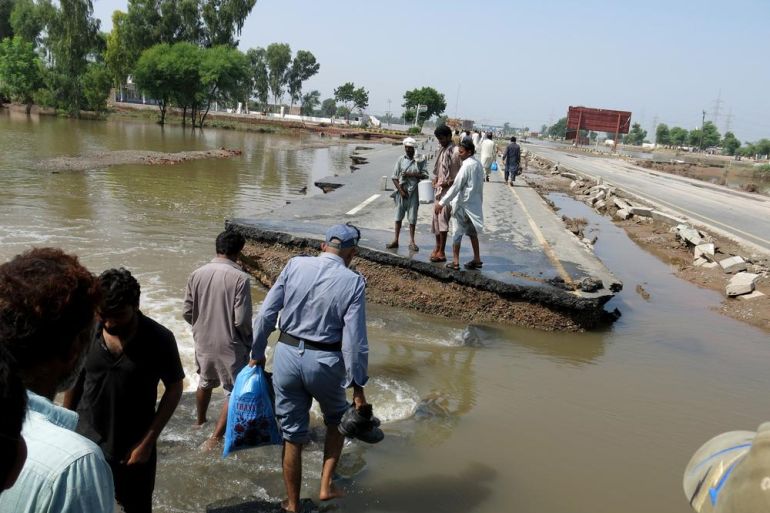
Torrents of water have broken through several major roads. People are seen here walking across the break in the main road linking Multan to Muzaffargarh. Many flood-affected areas are completely cut-off by land, and rescuers can only access them by boat.
By Asad Hashim
Published On 17 Sep 201417 Sep 2014

Multan, Pakistan – Massive flooding on two main rivers in Pakistan has wiped out thousands of villages, killing more than 317 people, and affecting a further 2.2 million, according to the National Disaster Management Authority (NDMA).

The floods began on September 6, when torrential downpours in Pakistan-administered Kashmir and northern Punjab provinces caused the rivers Jhelum and Chenab to swell to levels not seen in decades.

The ensuing floods have killed 64 people in Pakistan-administered Kashmir, 13 people in Gilgit-Baltistan, and 240 people in Punjab province.

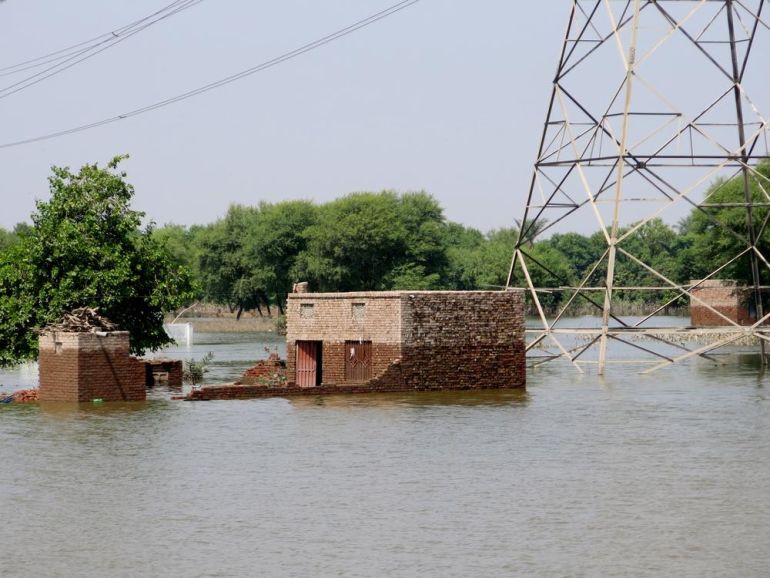
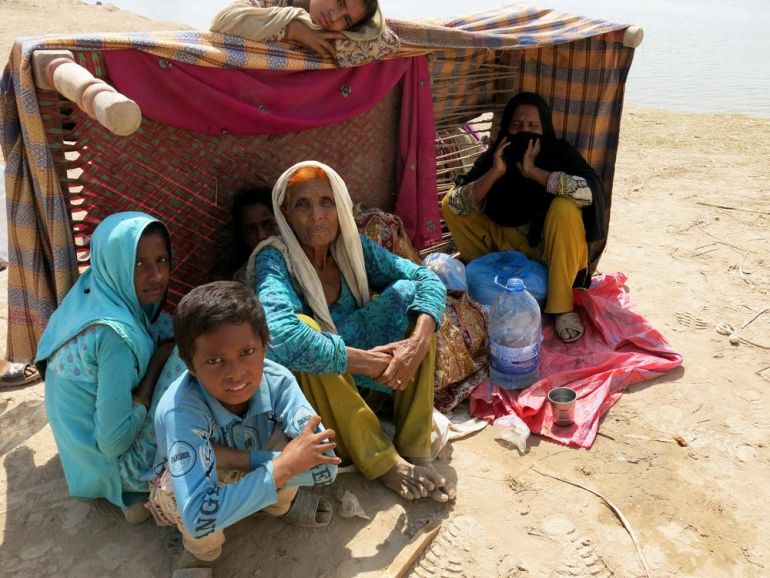
Punjab has been the worst hit, with rivers breaking through dykes and embankments to flood more than 688,000 hectares of agricultural land, inundating more than 2,900 villages and forcing the evacuation of more than half a million people, many of whom are being forced to sleep on the side of the road, or in makeshift camps. Several major roads have also been damaged.

As the flood peak continues to roll through the country’s river systems, Sindh province is next slated to bear the brunt of the water’s flow.

Authorities say breaches in dykes in southern and central Punjab should prevent major damage downstream, but it remains to be seen if Pakistan’s decades old barrage and headwork infrastructure can handle the flood.

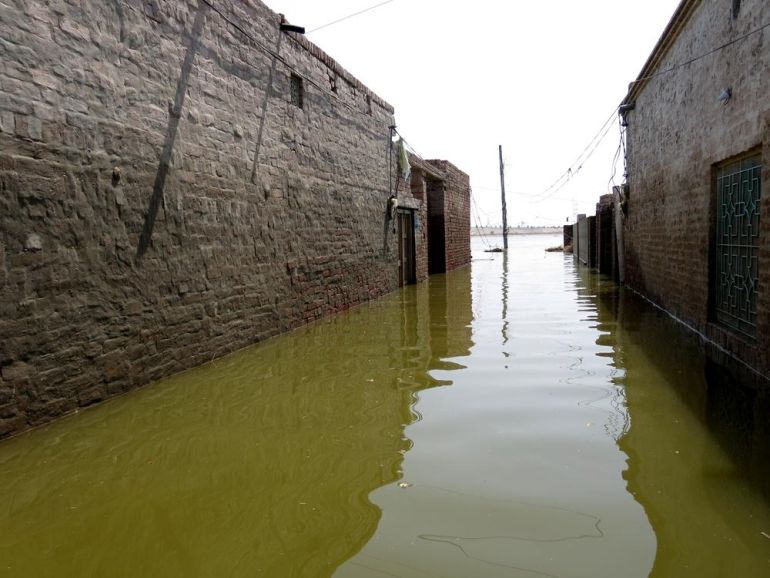
Multan district, in southern Punjab, has borne the brunt of much of the flooding, as strategic breaches in dykes were made to save the city. Those breaches diverted water towards inhabited villages surrounding the city, displacing more than 116,500 people from 121 villages.

Advertisement

Al Jazeera visited those villages, to see the scale of the devastation, and the pace of relief work.
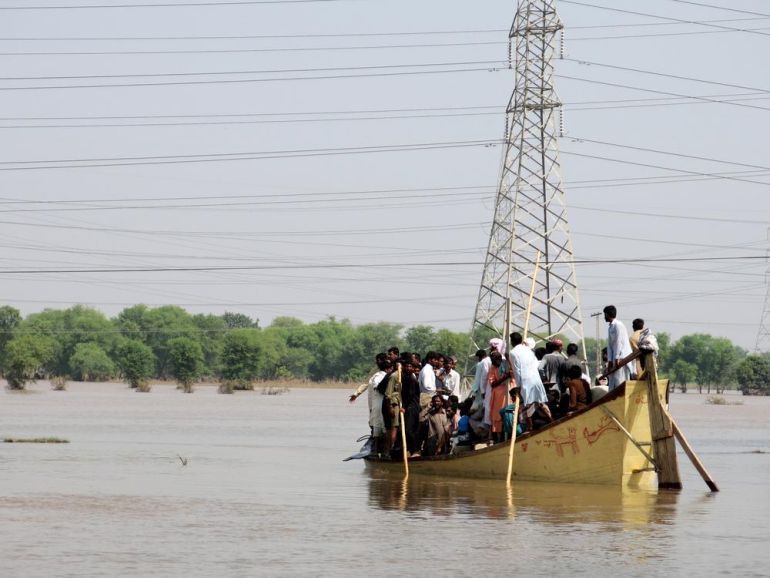
Many people have been using boats to check on their homes. At least 11 people were killed on September 14 when a similarly overloaded boat carrying a wedding party capsized near Muzaffargarh.
Advertisement
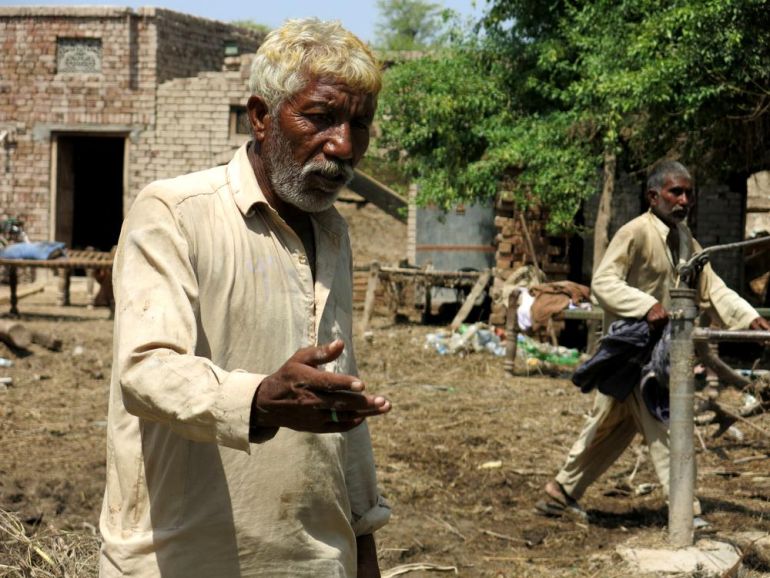
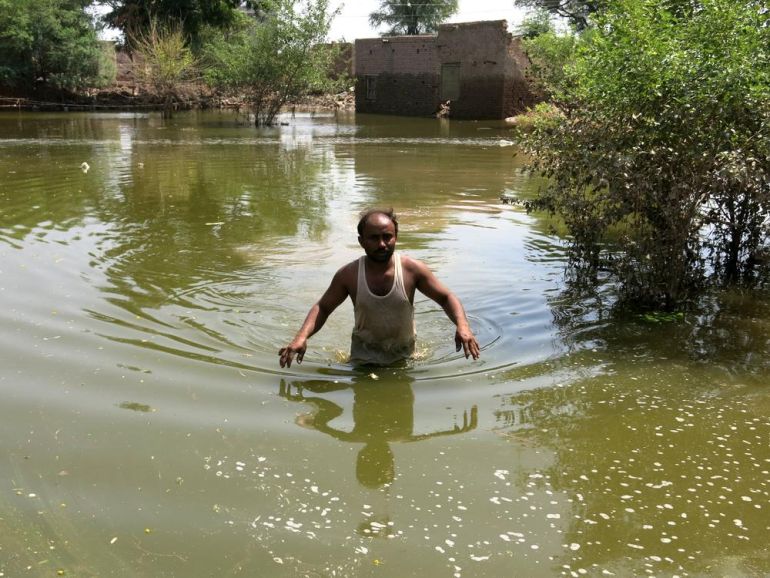
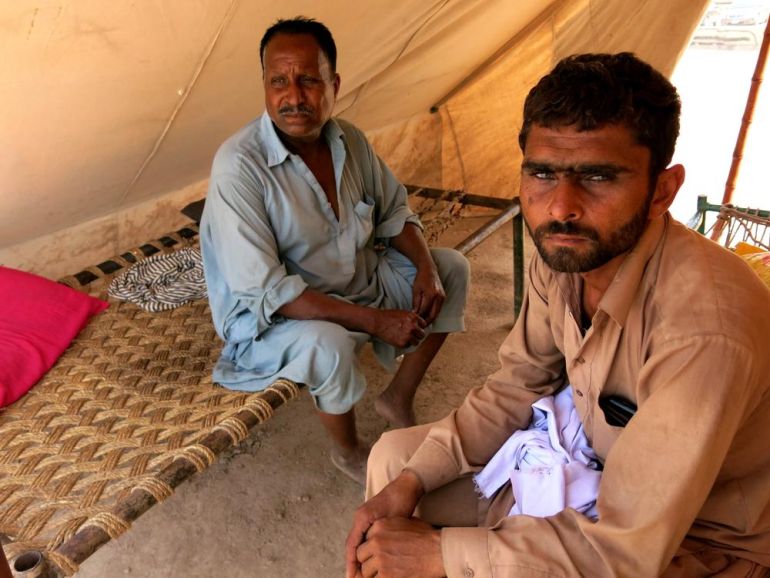
(***)This was not a flood, it was the day of judgement,(***) says 34-year-old Abdur Rauf (right), a resident of Faizabad village.
The Pakistani military says that it has so far rescued 41,115 people from flood-affected areas, and treated over 4,000 patients. Authorities say that a total of 19 helicopters and almost 600 boats have been mobilised for the rescue efforts.
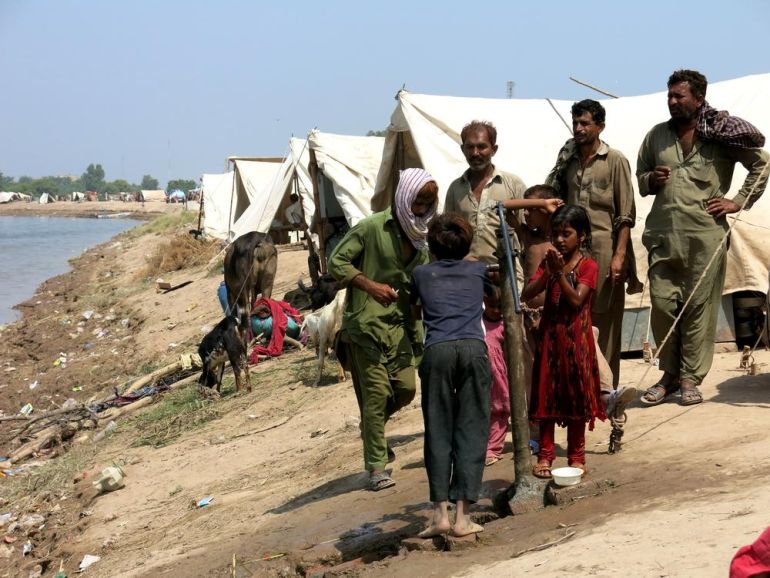
More than half a million people have been evacuated from flood areas, with most being forced to live in tents or on the sides of roads and dykes.
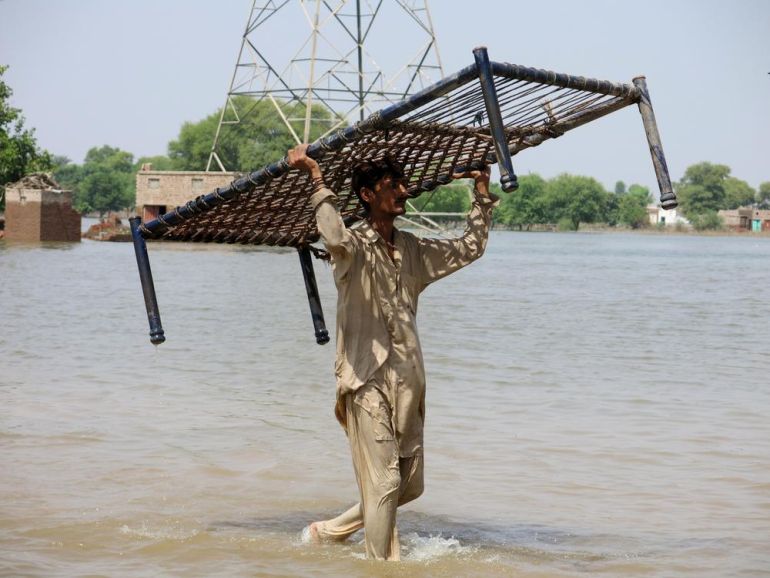
Residents of flood-affected villages said they had little time to gather their belongings. 
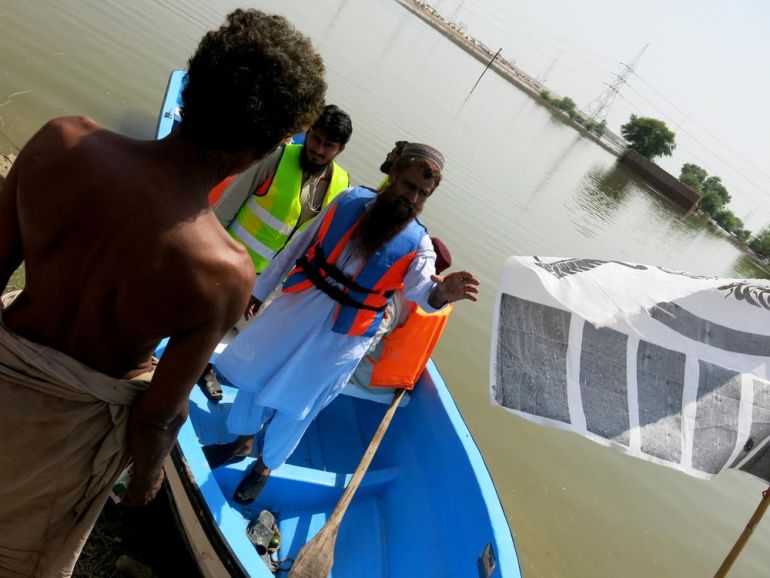
A resident of Nawa Shershah village, near Multan, reaches out for aid from a rescue boat. Many residents say they have stayed behind in their villages to protect their belongings from looters.
Advertisement
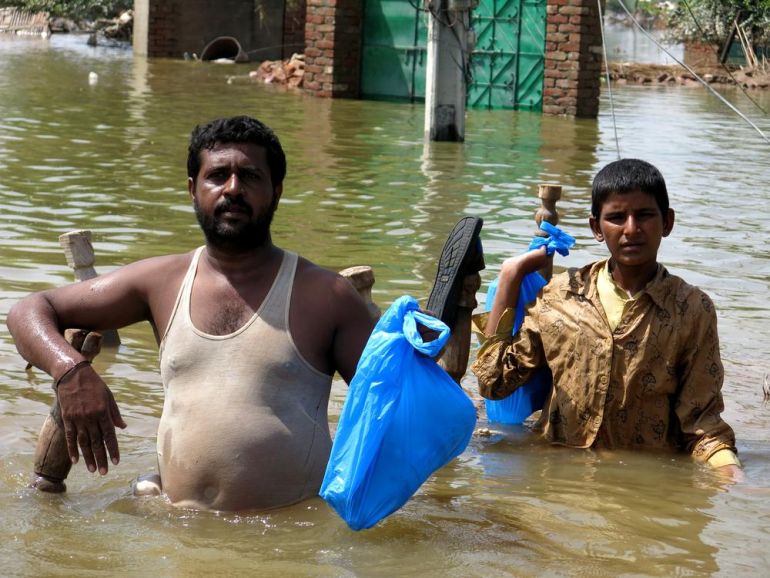
Muhammad Naveed, a resident of Nawa Shershah village, wades towards a rescue boat to receive aid from Jamaat-ud-Dawa (JuD) workers. Pakistani marines have been leading boat rescue efforts in flood-affected areas, working alongside non-governmental groups such as JuD, also known as Lashkar-e-Tayyaba, which supports armed fighters in Kashmir and elsewhere.
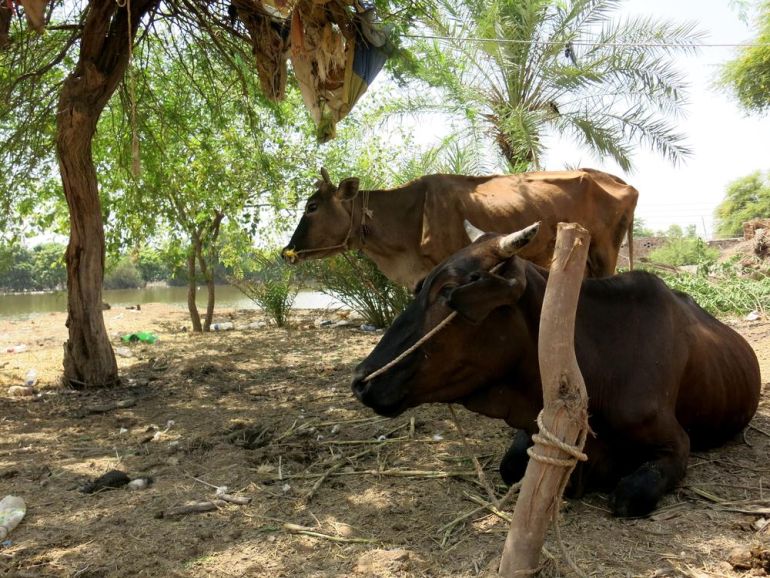
The floods have hit mostly farmland, and villagers have been forced to stay behind to look after their livestock, which are sometimes their sole source of income.
Khuda Baksh, 55, said that the government had not provided any aid, and that the JuD had been the only organisation to help him.
More than 2.2 million people have been affected by the floods, with water levels in many areas remaining over waist high, days after the flood water passed through.
(***)They didn(***)t breach the dyke in time, and the whole area was flooded. Eventually the water just broke through,(***) said Abdul Majeed, 40, a farmer from Sher Shah village.
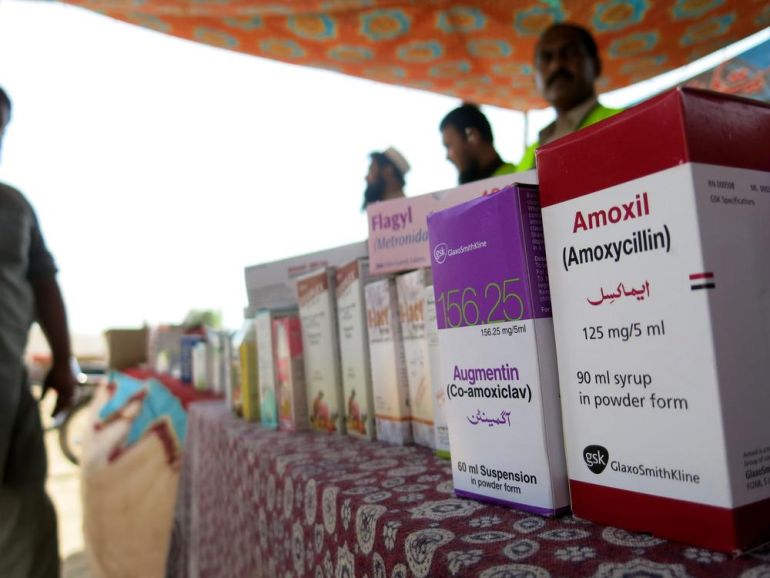
Doctors at relief camps say they are treating patients for cuts, bruises, and infections, as well as providing them and their children with vaccines for major illnesses. Pakistan is one of only three countries in the world where polio is endemic, and children evacuated from flood zones are being administered oral polio vaccines in order to stem the rapid spread of the disease. Relief workers are also providing vaccines for the more than 15 million animals (mostly goats and buffalo) that have been affected by the floods.
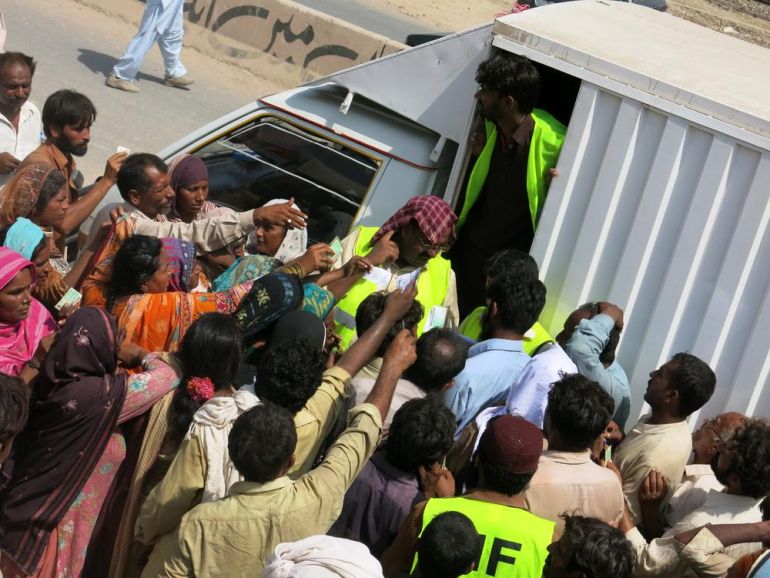
People crowd around a van delivering food to a relief camp near Multan. Flood affectees told Al Jazeera that the disaster response had been haphazard, and they were unsure of what aid was available to them and where it was.
(***)The government has not given us one danna (morsel). We are standing out here in the sun,(***) said Hayat Mai, 70, who had been living on the side of the road for five days without a tent.

Related

  • From: Inside Story

    Is Israel’s interception of the Global Sumud Flotilla legal?

    Spain says Israel’s detention of two activists is abduction.

    Published On 4 May 20264 May 2026
    Video Duration 28 minutes 10 seconds play-arrow28:10
  • Satellite imagery reveals how Sudan’s war scorched its ‘breadbasket’

    Data from satellites shows how Sudan’s war devastated its farming heartland, triggering a unprecedented hunger crisis.

    Published On 4 May 20264 May 2026
    Sudan families endure years of displacement, hunger, and unimaginable loss
  • Israel threatens Gaza war resumption to force disarmament as ‘truce’ frays

    Palestinian factions reject US-backed plans linking aid to weapons surrender, demanding clear political path forward.

    Published On 3 May 20263 May 2026
    A heavily armoured Israeli soldier sits on their tank near the Gaza Strip, menacing gogglesm tank gun and helmet against a blue sky
  • Khartoum drone strike kills five in Sudan, NGO reports

    The attack, the second in a week, follows months of relative calm in the city after government forces regained control.

    Published On 2 May 20262 May 2026
    Large plumes of smoke and fire rising from fuel depot in Port Sudan.

More from Gallery

  • Photos: Cuba holds May Day celebrations amid US threats

    People hold banners of Che Guevara at a march in Havana
    This gallery article has 8 imagescamera8
  • Photos: Rains revive Iraq’s wetlands after years of drought

    Iraq's marshes revived: long-awaited rains bring life back to wetlands
    This gallery article has 8 imagescamera8
  • Photos: Somalia hunger crisis worsens as drought displaces more than 500,000

    Hawa Moalim, 33, fled Wajid in the Bakool region after the drought destroyed her livelihood. She began the journey to Baidoa with her six children and the few goats that had survived, determined to give her family a chance. One by one, the animals died on the road. By the time the family arrived at Wayamo displacement camp two weeks ago, they had nothing left. "We arrived here hoping for help," she says. "But since we came, we have received nothing. There is no food, no water, and no proper shelter." Wayamo displacement camp, Baidoa, Southwest State, Somalia. [Abdulkadir Mohamed/NRC]
    This gallery article has 14 imagescamera14
  • Photos: North Korea opens museum for troops killed fighting for Russia

    North Korea opens museum for troops killed fighting for Russia
    This gallery article has 9 imagescamera9

Most popular

  • Pentagon chief says US-Iran ceasefire ‘not over’ despite Hormuz tensions

    Vessels in the Strait of Hormuz near Bandar Abbas, Iran, May 4, 2026. Amirhosein Khorgooi/ISNA/WANA (West Asia News Agency) via REUTERS ATTENTION EDITORS - THIS PICTURE WAS PROVIDED BY A THIRD PARTY TPX IMAGES OF THE DAY
  • ‘Dangerous escalation’: World condemns Iran after attacks on UAE

    Cargo ships are seen at sea in the Gulf of Oman near the Strait of Hormuz, as viewed from a rocky shoreline near Khor Fakkan, United Arab Emirates, on May 1, 2026 [Fatima Shbair/AP]
  • What Modi’s big win in Indian state elections could mean for its democracy

    India election
  • US Secret Service shoots gunman near White House

    US Secret Service police

  • About

    • About Us
    • Code of Ethics
    • Terms and Conditions
    • EU/EEA Regulatory Notice
    • Privacy Policy
    • Cookie Policy
    • Cookie Preferences
    • Accessibility Statement
    • Sitemap
    • Work for us
  • Connect

    • Contact Us
    • User Accounts Help
    • Advertise with us
    • Stay Connected
    • Newsletters
    • Channel Finder
    • TV Schedule
    • Podcasts
    • Submit a Tip
    • Paid Partner Content
  • Our Channels

    • Al Jazeera Arabic
    • Al Jazeera English
    • Al Jazeera Investigative Unit
    • Al Jazeera Mubasher
    • Al Jazeera Documentary
    • Al Jazeera Balkans
    • AJ+
  • Our Network

    • Al Jazeera Centre for Studies
    • Al Jazeera Media Institute
    • Learn Arabic
    • Al Jazeera Centre for Public Liberties & Human Rights
    • Al Jazeera Forum
    • Al Jazeera Hotel Partners

Follow Al Jazeera English:

  • facebook
  • twitter
  • youtube
  • instagram-colored-outline
  • rss
Al Jazeera Media Network logo
© 2026 Al Jazeera Media Network