Skip linksSkip to Content
play
Live
Navigation menu
  • News
    • Africa
    • Asia
    • US & Canada
    • Latin America
    • Europe
    • Asia Pacific
  • Middle East
  • Explained
  • Opinion
  • Sport
  • Video
    • Features
    • Economy
    • Human Rights
    • Climate Crisis
    • Investigations
    • Interactives
    • In Pictures
    • Science & Technology
    • Podcasts
    • Travel
play
Live

In Pictures

Gallery|Humanitarian Crises

Abyei, a non-state entity of post-war Sudanese divide

Abyei, a fist of oil-rich land on the border between Sudan and South Sudan, is violently contested.

Save

Share

facebookxwhatsapp-strokecopylink
Abyei/ DO NOT USE/ RESTRICTED
Agok, a settlement of mainly displaced people on the southern border of Abyei with South Sudan, hosts tens of thousands of families displaced by fighting inside Abyei and also from South Sudan's troubled northern states. [Ashley Hamer/Al Jazeera]
By Ashley Hamer
Published On 1 Jul 20151 Jul 2015

Abyei is a tormented piece of land, locked on the border between Sudan and South Sudan.

“The box” as insiders call it, has been violently contested since South Sudan split from the north in 2011. There is oil here, which the governments of both countries desire to possess.

There is no government in Abyei, no legal justice system and no police force. When South Sudan gained independence, the governments of Khartoum and Juba failed to agree on the border division, leaving Abyei’s status unresolved.

A United Nations peacekeeping mission – the UN Interim Security Force for Abyei (UNISFA) – has monitored the situation here since 2011.

When South Sudan seceded, most of greater Sudan’s oil fields went with it. One of these, known as Difra oil field, remains disputed inside the Abyei box.

Despite agreeing to a demilitarised Abyei, the Sudanese government keeps armed “oil police” guarding the site.

Sudanese President Omar al-Bashir promised to give four percent of oil sales from Difra to the people of Abyei. Bashir’s condition was that this money could only be distributed by a local administration. But no functioning local administration exists and political dialogue at every level has collapsed. Consequently, the government of Sudan keeps all Difra oil revenue for itself.

Abyei is also ethnically contested. It is claimed by a southern sub-tribe – the Ngok-Dinka – who raise livestock and live inside the box. They held a unilateral referendum in 2013, voting to join South Sudan, but this has never been recognised.

Advertisement

The Misseriya – northern Arab nomads – also lay claim to Abyei. This group of people migrate south into the box from Sudan for half the year seeking water and pasture for their cattle.

Cattle raids, killings and revenge attacks are frequent and brutal. Misseriya have been know to abduct Ngok-Dinka children.

Due to insecurity, humanitarian agencies operating from the south cannot implement aid projects in territory occupied by groups aligned with the north, leaving most of Abyei crumbling, neglected, and its population forgotten.

Abyei/ DO NOT USE/ RESTRICTED
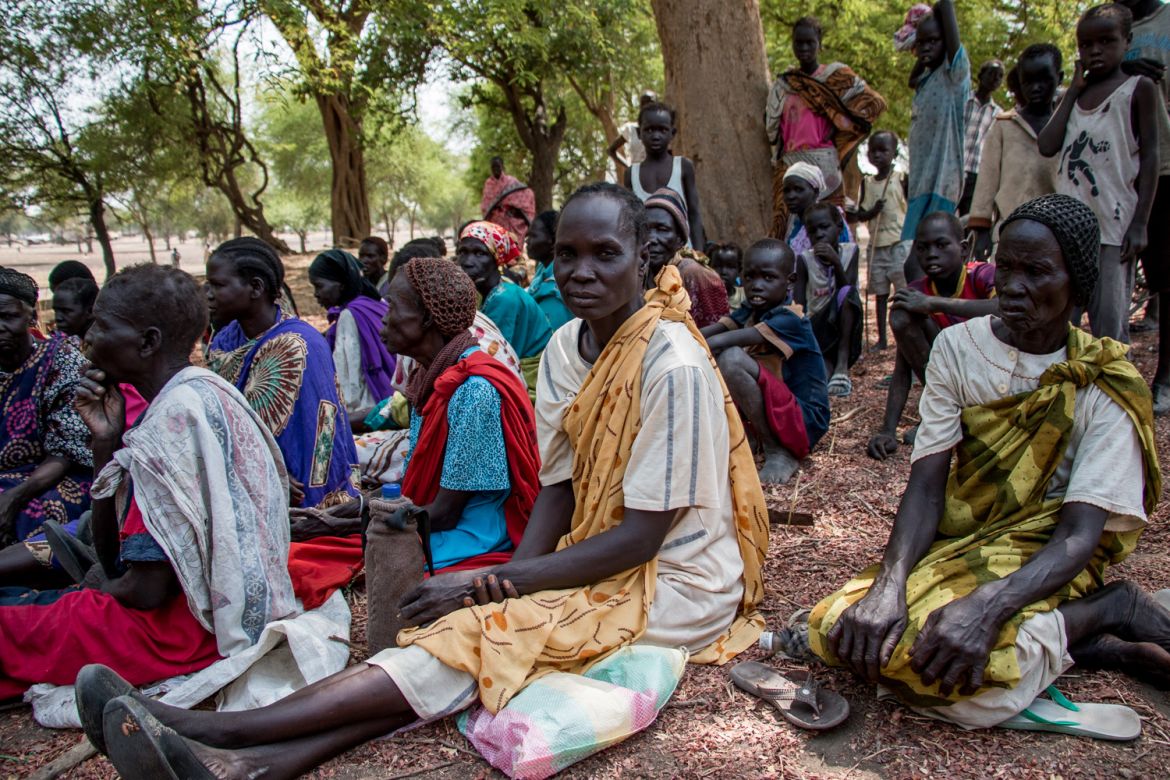
The Ngok-Dinkas fled villages inside Abyei and retreated closer to its border with South Sudan to escape attacks by Misseriya moving through the territory. [Ashley Hamer/Al Jazeera]
Advertisement
Abyei/ DO NOT USE/ RESTRICTED
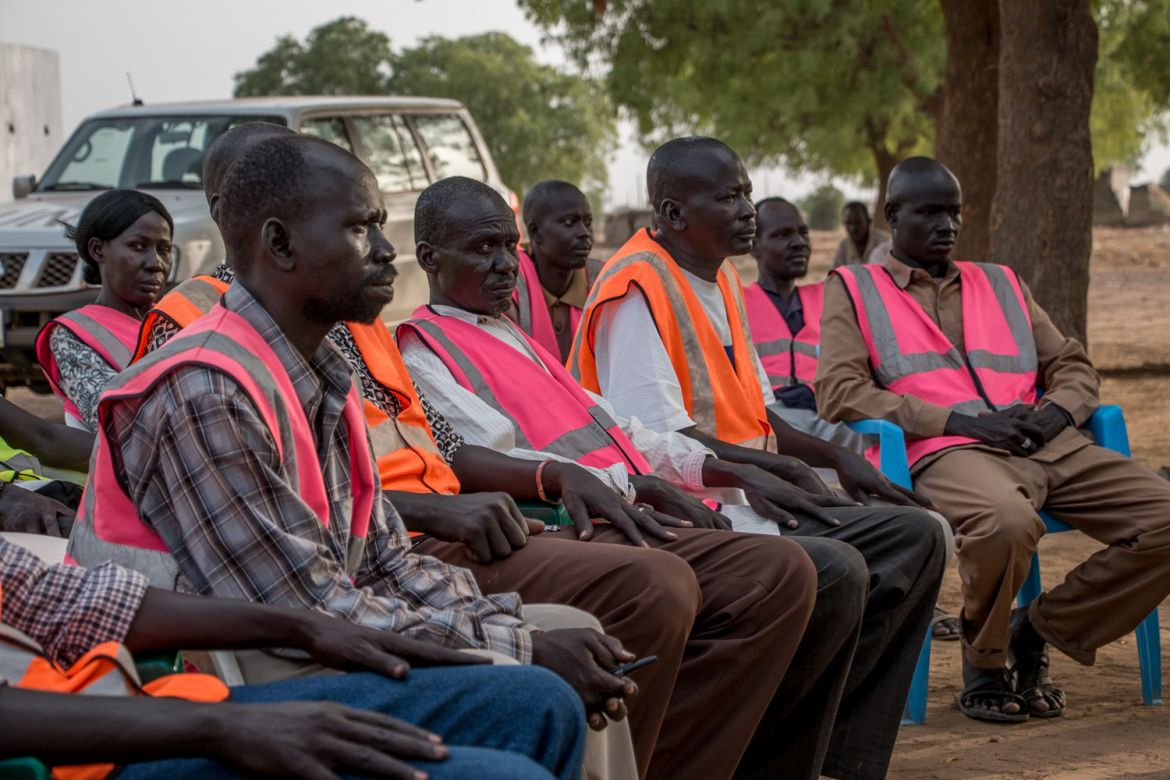
In the absence of law and order, the Ngok-Dinkas have established unofficial community protection committees (CPC) to 'police' their villages and respond to trouble. UNISFA has trained many and recently was recognised by the UN Security Council for its efforts. The trainees are unpaid volunteers. [Ashley Hamer/Al Jazeera]
Abyei/ DO NOT USE/ RESTRICTED
UNISFA troops pull trapped calves from thick mud. UNISFA is the only peacekeeping force worldwide with only one nation contributing troops: Ethiopia. Around 5,600 Ethiopian peacekeepers are based in Abyei, on an agreement reached by both Sudan and South Sudan. [Ashley Hamer/Al Jazeera]
Abyei/ DO NOT USE/ RESTRICTED
Abyei Town, once the main settlement in the Abyei box, where Dinka and Misseriya co-existed peacefully, was destroyed in 2011 when Sudanese Armed Forces launched a military campaign against the south as it battled for independence. [Ashley Hamer/Al Jazeera]
Abyei/ DO NOT USE/ RESTRICTED
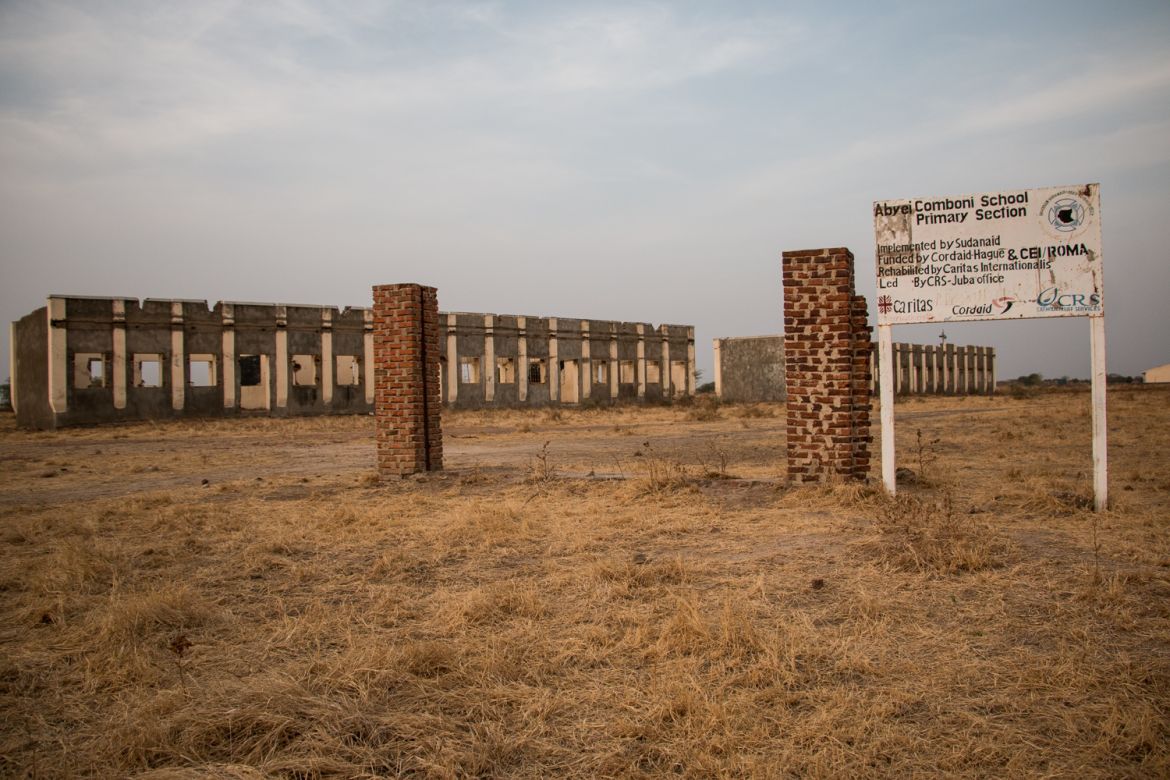
Due to ongoing insecurity and political stalemate, little is being rebuilt in Abyei Town and a neglected population exists among the shells of bombed-out buildings. [Ashley Hamer/Al Jazeera]
Abyei/ DO NOT USE/ RESTRICTED
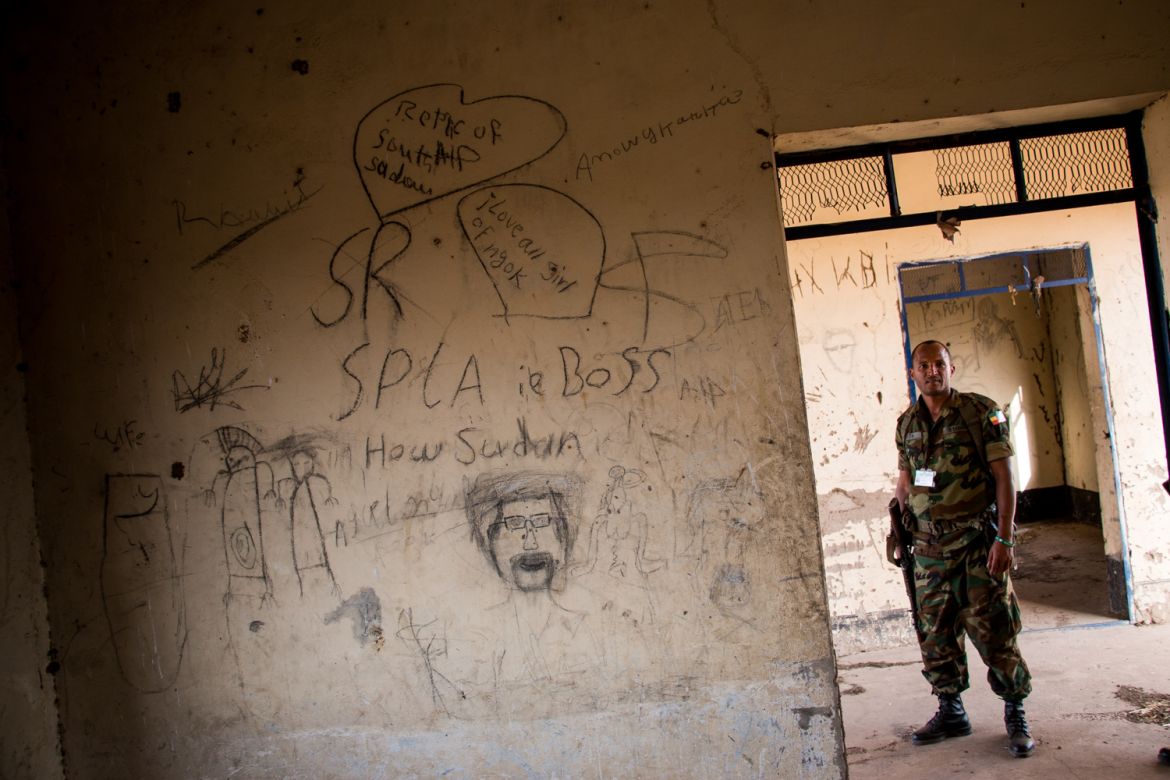
An Ethiopian peacekeeper stands inside a bombed-out school building in Abyei Town. Graffiti illustrates Ngok-Dinka affiliations with South Sudan's military (SPLA). [Ashley Hamer/Al Jazeera]
Advertisement
Abyei/ DO NOT USE/ RESTRICTED
Misseriya groups cross into Abyei for half the year seeking water for their cattle herds. Clashes are frequent between Ngok-Dinka and Misseriya as they compete for resources, and each accusing UNISFA of favouring the other. [Ashley Hamer/Al Jazeera]
Abyei/ DO NOT USE/ RESTRICTED
The Misseriya, who have been crossing into Abyei for decades, reject any political development on the status of the territory which threatens their access to traditional grazing land inside the box. [Ashley Hamer/Al Jazeera]
Abyei/ DO NOT USE/ RESTRICTED
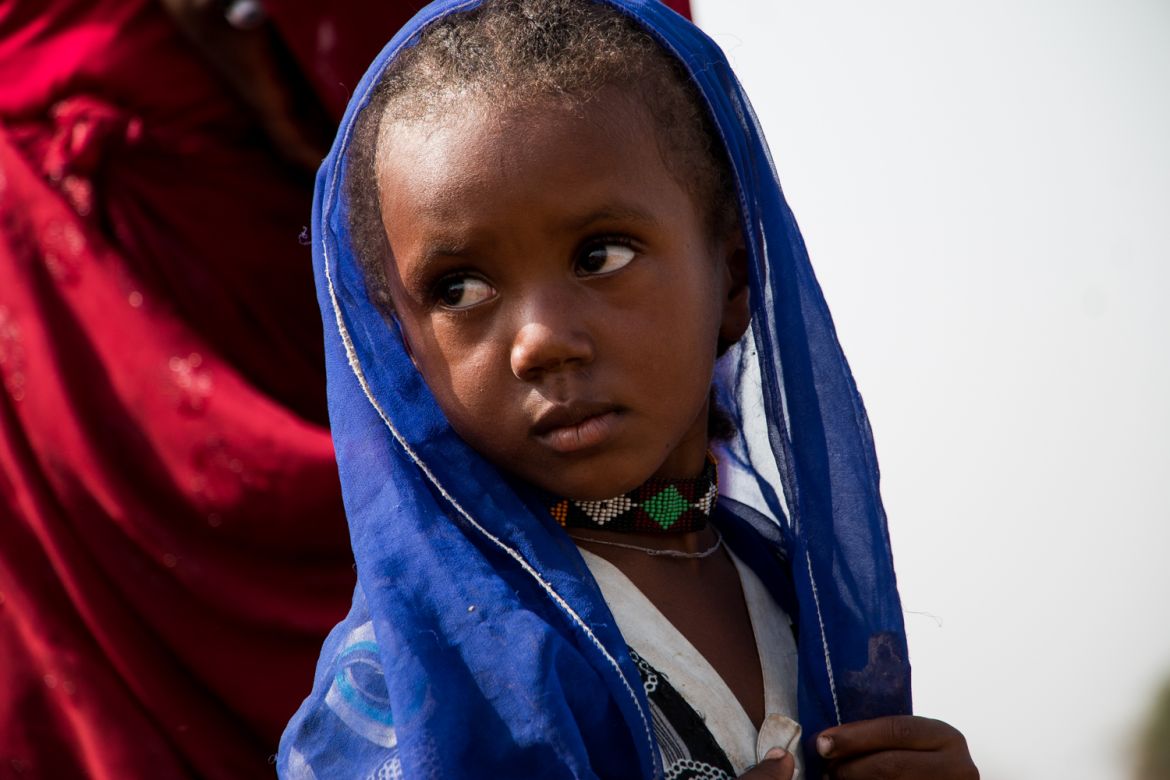
The Misseriya's nomadic lifestyle and alignment with the north means humanitarian groups have struggled to reach them with sustainable aid. As a result they have limited access to education and healthcare. [Ashley Hamer/Al Jazeera]
Abyei/ DO NOT USE/ RESTRICTED
Nyanyath Payjok's three children were abducted by Misseriya in an attack on her village in March. Remarkably, UNISFA and its partners managed to locate the children, who had been taken out of the Abyei territory into Sudan. [Ashley Hamer/Al Jazeera]
Abyei/ DO NOT USE/ RESTRICTED
For the first time in general memory, the release of the children was negotiated and Payjok's children were returned to her after several weeks in captivity. The children are traumatised but healthy and have gone back to school. [Ashley Hamer/Al Jazeera]

Related

  • ‘We saw terrible things’: Mali refugees tell of atrocities amid attacks

    Thousands of Malians have been forced to flee their country as several groups, including the army, assault them.

    Published On 29 Apr 202629 Apr 2026
    A Malian refugee now willing to the identified sits in his tent in Dounkara village, Mauritania [Shola Lawal/Al Jazeera]
  • Life in limbo: How Iranians navigate a state of ‘no war, no peace’

    Tehran’s residents are living through a fragile truce and deep economic uncertainty.

    Published On 29 Apr 202629 Apr 2026
    Despite a fragile truce, daily life in Tehran's commercial districts masks an underlying anxiety over the possibility of renewed conflict.
  • From: NewsFeed

    UN aid chief says situation in Somalia worsened by US war on Iran

    UN relief coordinator Tom Fletcher has slammed the war on Iran during a visit to Somalia.

    Published On 29 Apr 202629 Apr 2026
    Video Duration 00 minutes 54 seconds play-arrow00:54
  • Lebanon’s PM slams Israel’s ‘war crimes’ as attack kills 3 rescue workers

    Lebanese President Joseph Aoun says Israel violating international law that protects civilians and humanitarian workers.

    Published On 29 Apr 202629 Apr 2026
    as attack kills 3 rescue workers

More from Gallery

  • Photos: Rains revive Iraq’s wetlands after years of drought

    Iraq's marshes revived: long-awaited rains bring life back to wetlands
    This gallery article has 8 imagescamera8
  • Photos: Somalia hunger crisis worsens as drought displaces more than 500,000

    Hawa Moalim, 33, fled Wajid in the Bakool region after the drought destroyed her livelihood. She began the journey to Baidoa with her six children and the few goats that had survived, determined to give her family a chance. One by one, the animals died on the road. By the time the family arrived at Wayamo displacement camp two weeks ago, they had nothing left. "We arrived here hoping for help," she says. "But since we came, we have received nothing. There is no food, no water, and no proper shelter." Wayamo displacement camp, Baidoa, Southwest State, Somalia. [Abdulkadir Mohamed/NRC]
    This gallery article has 14 imagescamera14
  • Photos: North Korea opens museum for troops killed fighting for Russia

    North Korea opens museum for troops killed fighting for Russia
    This gallery article has 9 imagescamera9
  • Photos: Bomb attack on Colombia highway kills 19 ahead of election

    Bomb attack on Colombia highway kills 19 ahead of election
    This gallery article has 9 imagescamera9

Most popular

  • ‘Junk advice’: Iran mocks US economic pressure campaign as oil prices surge

    People attend a rally in Tehran, Iran, April 29, 2026.
  • Pentagon chief Hegseth first public hearing on Iran war: Key takeaways

  • Iran war updates: Trump tells Iran to ‘get smart soon’ amid stalled talks

    as attack kills 3 rescue workers
  • UAE quits OPEC: What that means for the Gulf, energy markets and beyond

    OPEC

  • About

    • About Us
    • Code of Ethics
    • Terms and Conditions
    • EU/EEA Regulatory Notice
    • Privacy Policy
    • Cookie Policy
    • Cookie Preferences
    • Accessibility Statement
    • Sitemap
    • Work for us
  • Connect

    • Contact Us
    • User Accounts Help
    • Advertise with us
    • Stay Connected
    • Newsletters
    • Channel Finder
    • TV Schedule
    • Podcasts
    • Submit a Tip
    • Paid Partner Content
  • Our Channels

    • Al Jazeera Arabic
    • Al Jazeera English
    • Al Jazeera Investigative Unit
    • Al Jazeera Mubasher
    • Al Jazeera Documentary
    • Al Jazeera Balkans
    • AJ+
  • Our Network

    • Al Jazeera Centre for Studies
    • Al Jazeera Media Institute
    • Learn Arabic
    • Al Jazeera Centre for Public Liberties & Human Rights
    • Al Jazeera Forum
    • Al Jazeera Hotel Partners

Follow Al Jazeera English:

  • facebook
  • twitter
  • youtube
  • instagram-colored-outline
  • rss
Al Jazeera Media Network logo
© 2026 Al Jazeera Media Network