Skip linksSkip to Content
play
Live
Navigation menu
  • News
    • Africa
    • Asia
    • US & Canada
    • Latin America
    • Europe
    • Asia Pacific
  • Middle East
  • Explained
  • Opinion
  • Sport
  • Video
    • Features
    • Economy
    • Human Rights
    • Climate Crisis
    • Investigations
    • Interactives
    • In Pictures
    • Science & Technology
    • Podcasts
    • Travel
play
Live

In Pictures

Gallery|Environment

The vulture restaurant

The scavenger birds once adorned roofs and telegraph poles across Nepal, but now are only found in special reserves.
Save

Share

facebookxwhatsapp-strokecopylink
The vulture restaurant
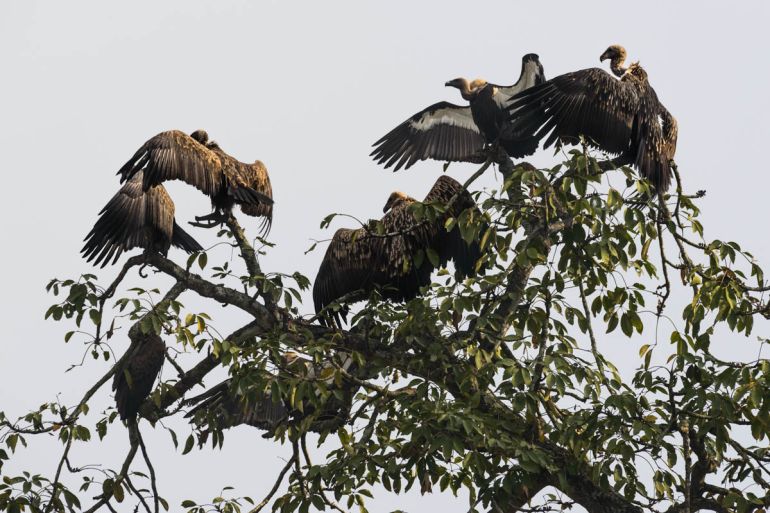
As the rising sun burns away the morning fog in Chitwan National Park's Pithauli restaurant, a committee of vultures perched high in the tree branches unfurl their wings to let the first warmth of the day heat their bodies. White-rumped and Himalayan griffon vultures are visible here. [Alexander Lerche/Al Jazeera]
By Alexander Lerche
Published On 23 Dec 201723 Dec 2017

Chitwan National Park, Nepal – Nepal is home to nine species of vultures. But five of them, including the white-rumped vulture, experienced a catastrophic population collapse of more than 99 percent in the span of just 20 years. Most species are now critically endangered and risk extinction.

In the 1990s, the scientific community determined the raptors were suffering kidney failures because of an anti-inflammatory veterinary drug used on cattle, called Diclofenac. In regions where few people eat beef due to cultural persuasions, farmers would leave dead dairy cows in the fields for the birds to pick clean. As the birds ate, they got sick and died in massive numbers.

Scavenger birds play a vital role in the ecosystem, helping prevent the spread of disease and pathogens into the wider environment. Nepal’s government banned the use of Diclofenac in 2006, and the non-profit Bird Conservation of Nepal, with international support, established several vulture “restaurants” with an aim to preserve and rebuild the species.

There are seven community-run sites where the raptors are regularly provided safe meat untainted by harmful drugs, allowing them an opportunity to thrive and repopulate. All the reserves have applied a push towards ecotourism.
The vulture restaurant
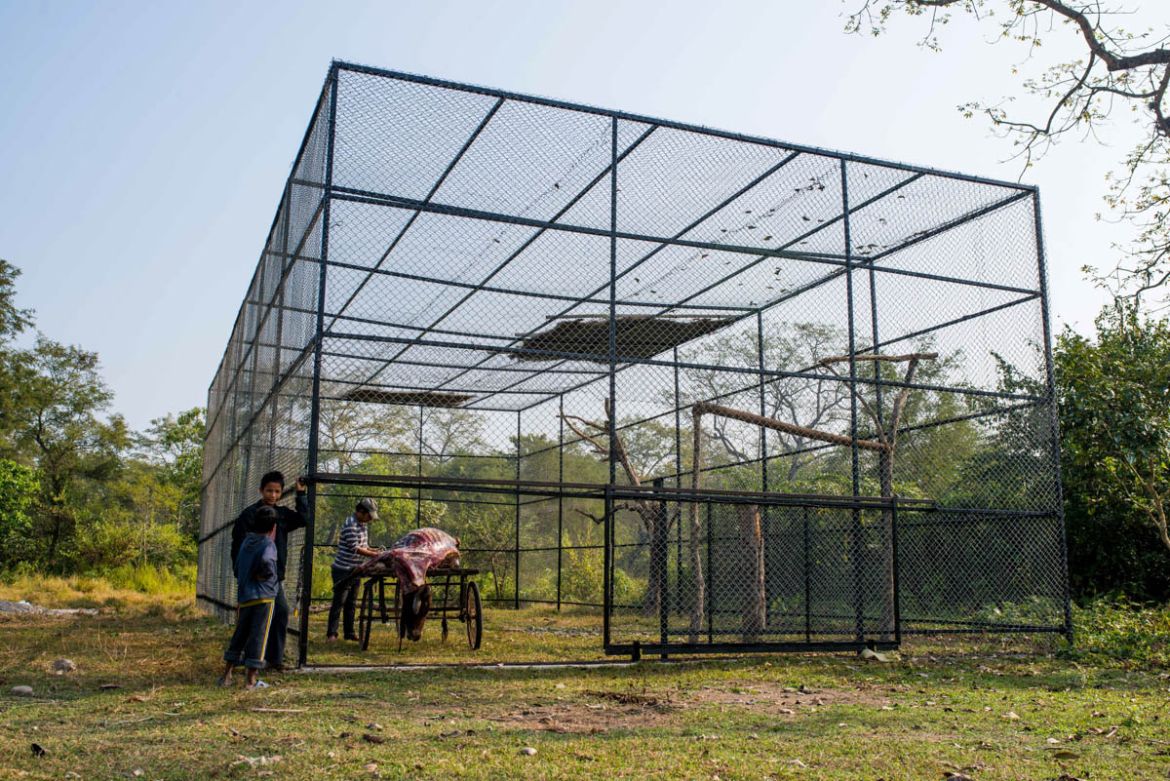
In the clearing below, bones from yesterday's meal are scraped for sinew by the early risers and a stray wild pig. Inside a nearby cage, Pithauli's cow-keeper, Yam Bahadur Nepali, and his sons prepare a skinned cow for serving. [Alexander Lerche/Al Jazeera]
Advertisement
The vulture restaurant
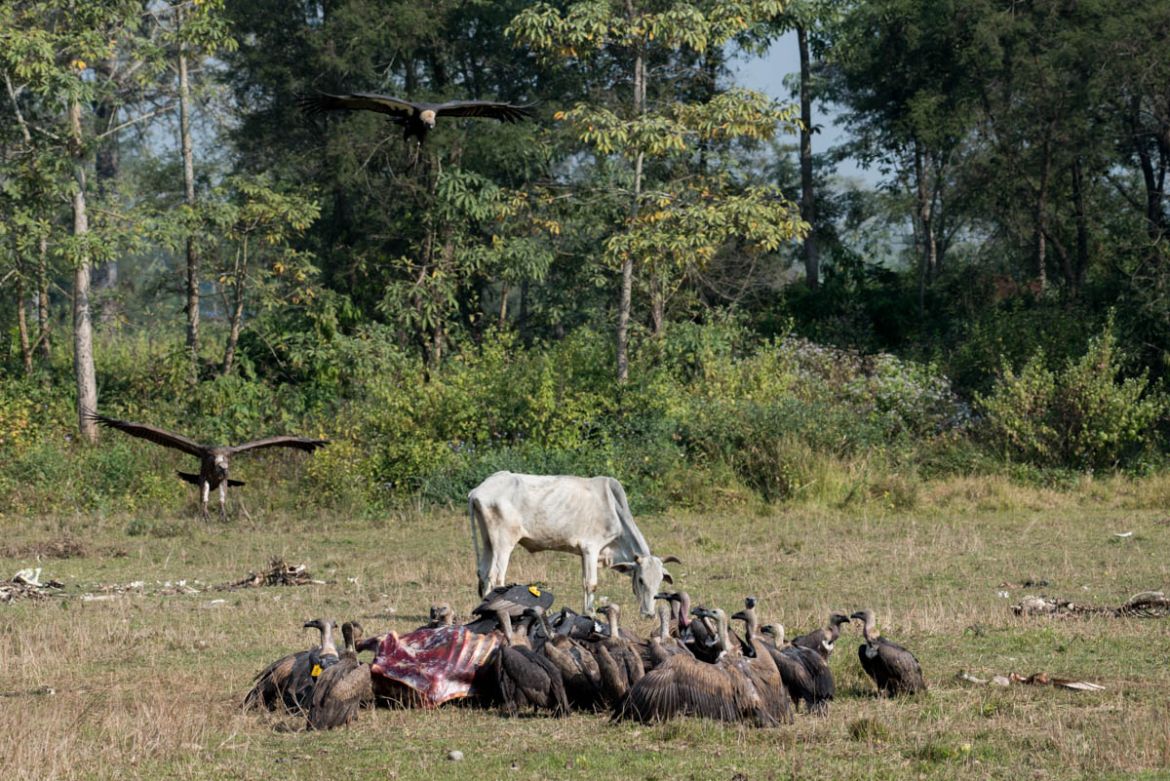
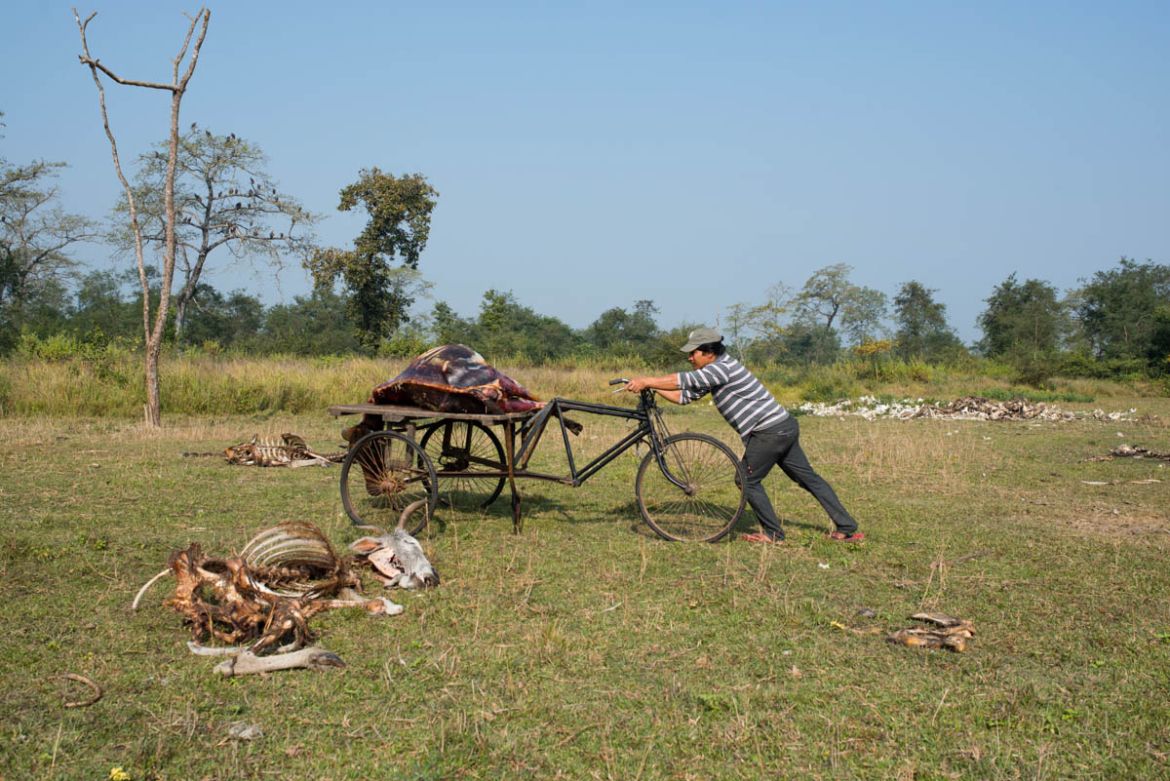
Yam carts the body into the middle of a clearing in full view of the watching birds. When the previous carcass is reduced to bones, a fresh body is prepared in the cage to attract the vultures. [Alexander Lerche/Al Jazeera]
The vulture restaurant
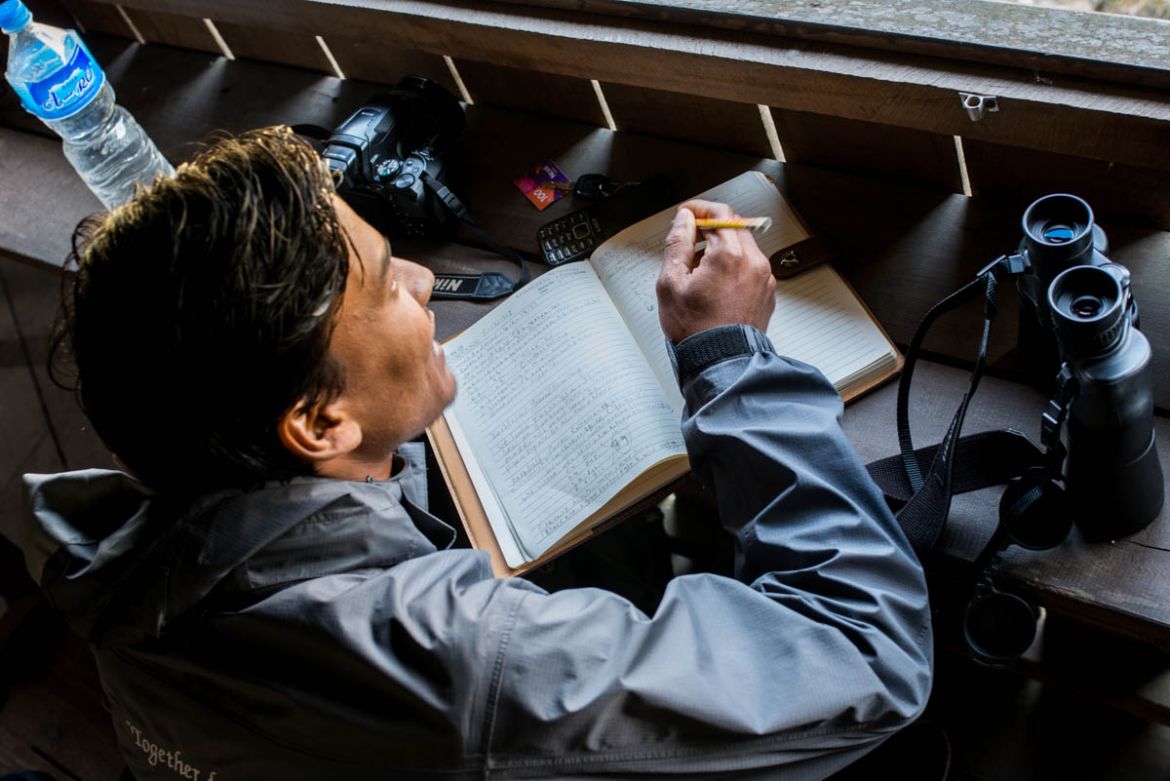
From a secluded location, Pithauli's vulture guide and community mobiliser, Hewal Chaudhary, counts the different species and their numbers during feedings. 'We were the first vulture restaurant in Nepal. At the start there [were] so few to see,' he recalls. 'Now, we have many sites and more than 56 districts have been declared Diclofenac-free.' [Alexander Lerche/Al Jazeera]
The vulture restaurant
Pithauli is the world's first community-managed vulture restaurant. It was set up inside Chitwan's buffer zone away from busy roads and construction sites. Local farmers sell their sick and injured cows to the restaurant for $3; the animals are then left to freely roam the site until their death. [Alexander Lerche/Al Jazeera]
The vulture restaurant
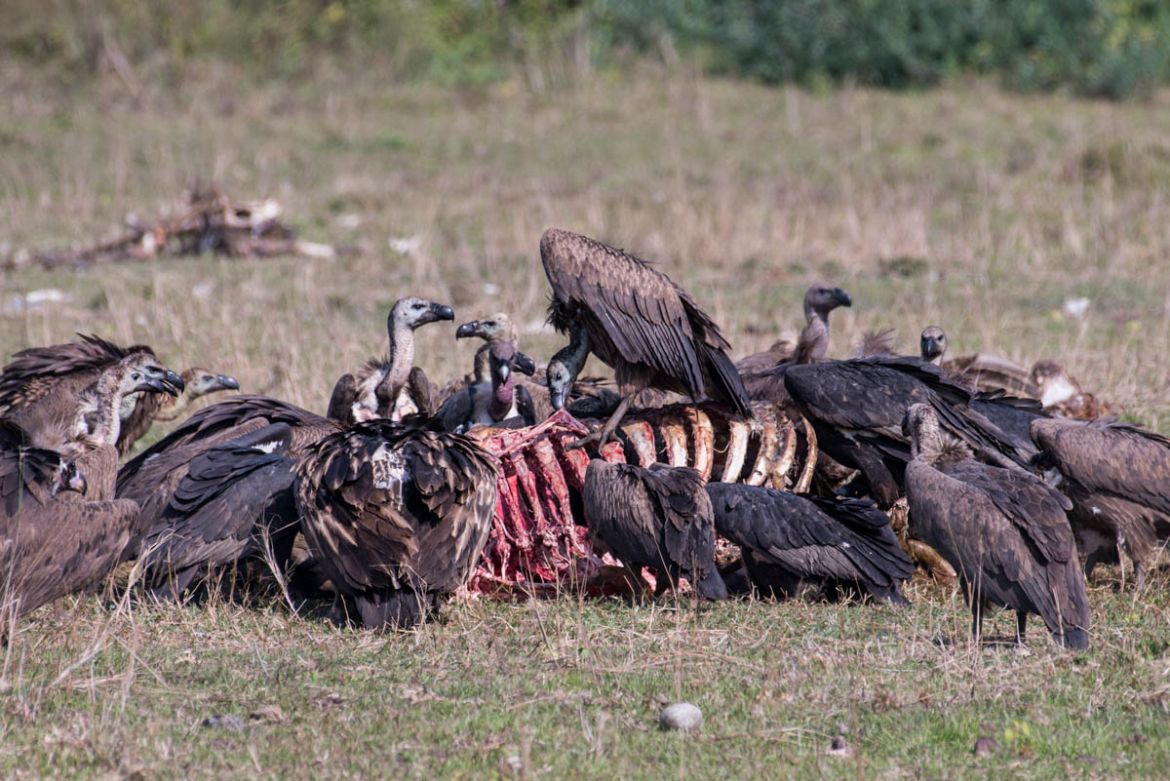
Vultures feed entirely through scavenging, rather than hunting or grazing. It takes just an hour for them to transform a carcass into a pile of bones. People once viewed them as disease-spreading creatures and a sign of impending death in some cultures. 'In the beginning, the villagers didn't like the vultures being in the area because they were a bad omen,' says Hewal. 'But now, people are happier because we are supporting the local biodiversity and bringing in some tourism.' [Alexander Lerche/Al Jazeera]
The vulture restaurant
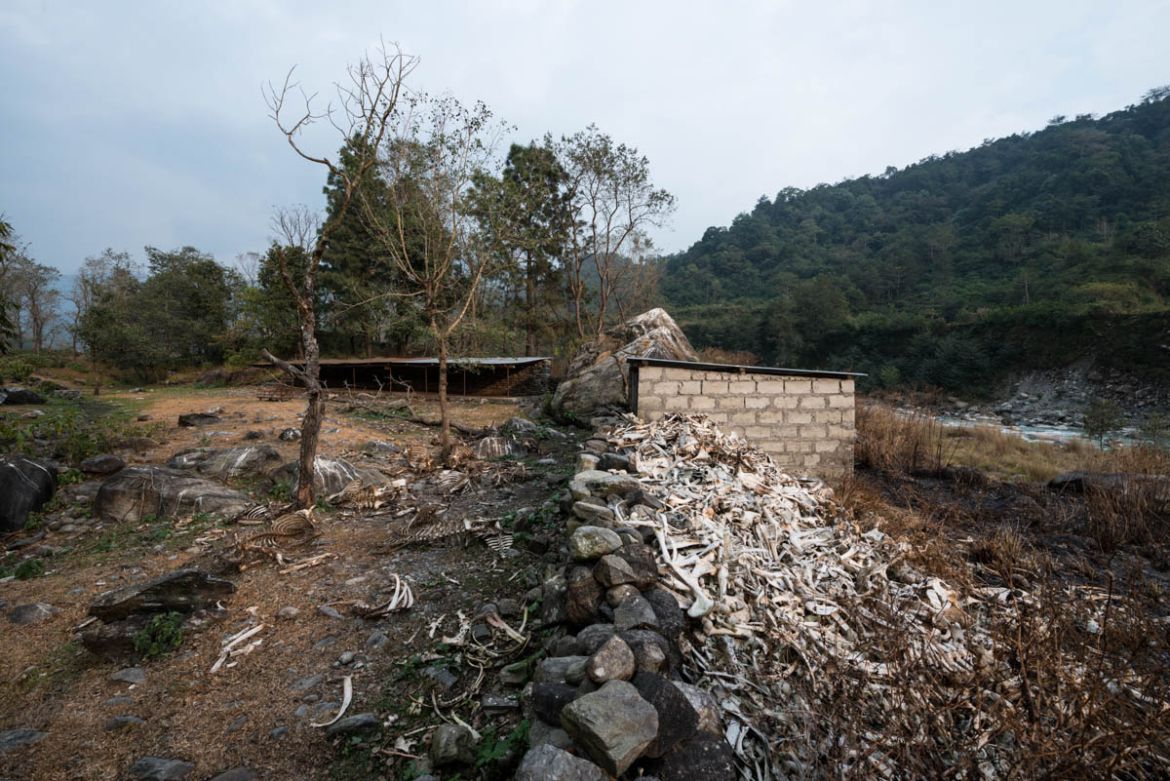
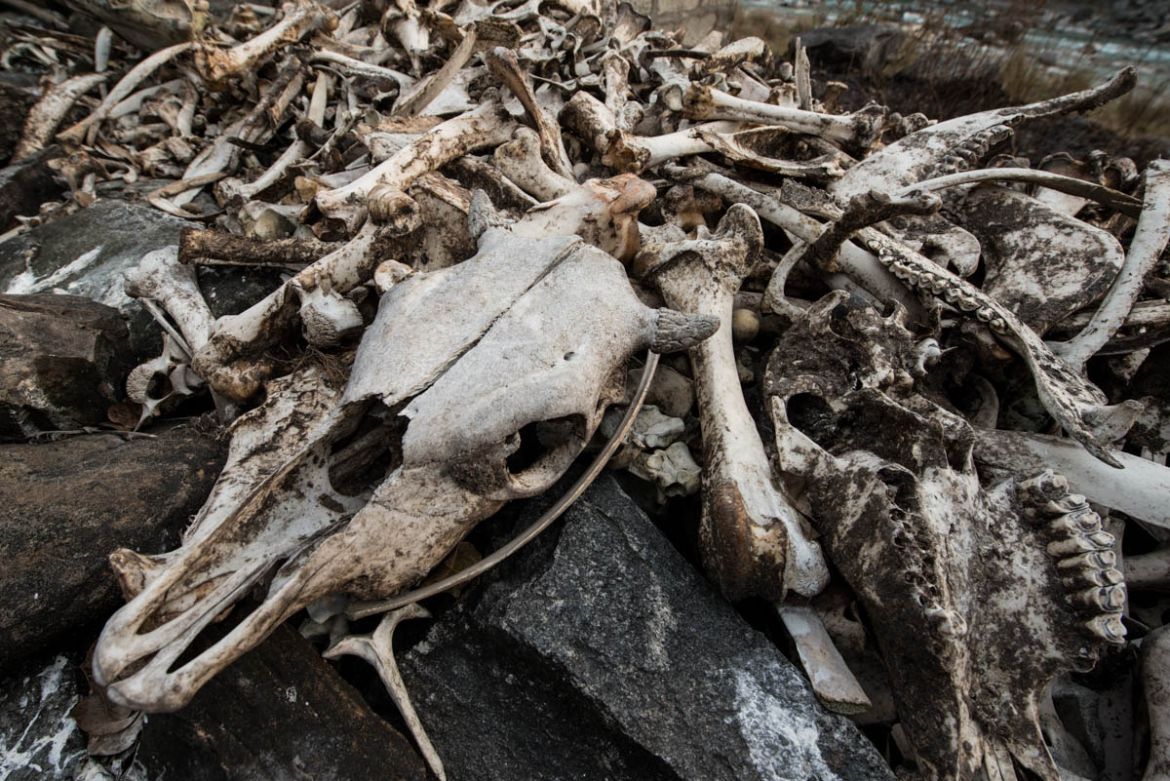
Bones left over from the feed are collected and stored. Hewal says they are later sold to be ground up and mixed with chicken feed, providing extra income for the restaurant. [Alexander Lerche/Al Jazeera]
Advertisement
The vulture restaurant
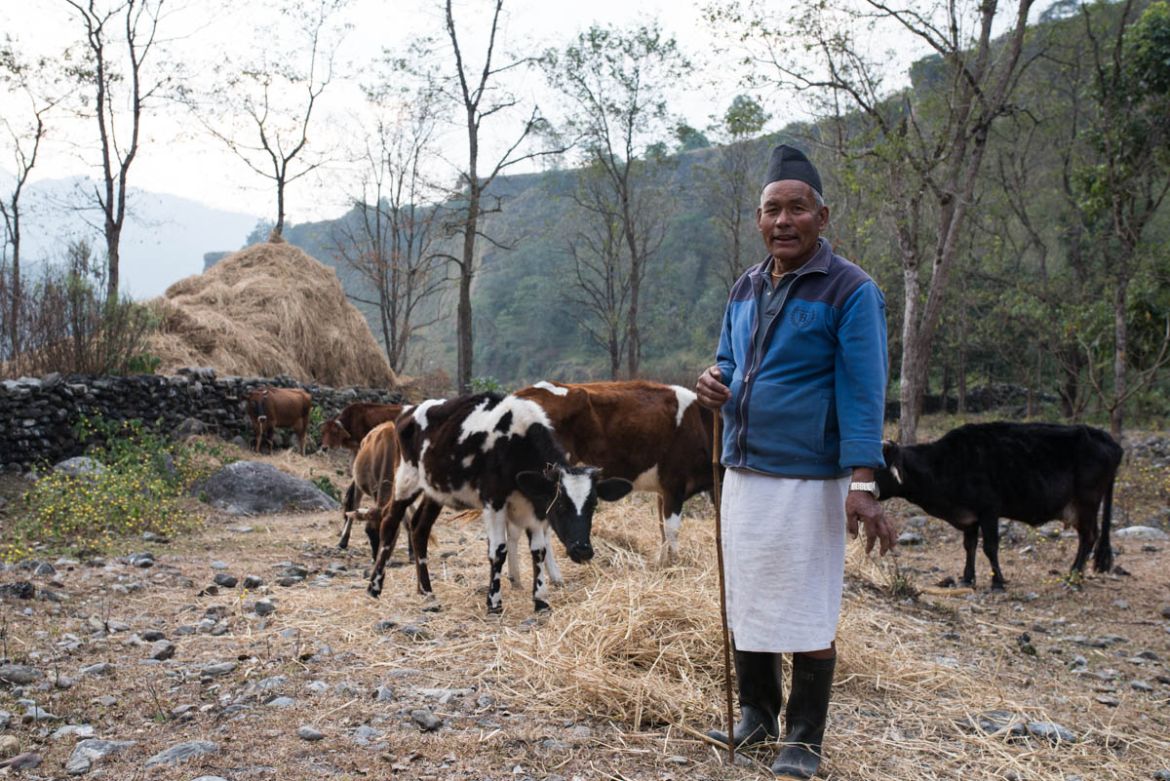
'In winter when it's cold, we'll get more sick cows, sometimes twice a week,' says Hewal. 'We used to test the meat for Diclofenac, but now the area is free, and the vets are all monitored to ensure they're not selling it.' [Alexander Lerche/Al Jazeera]
The vulture restaurant
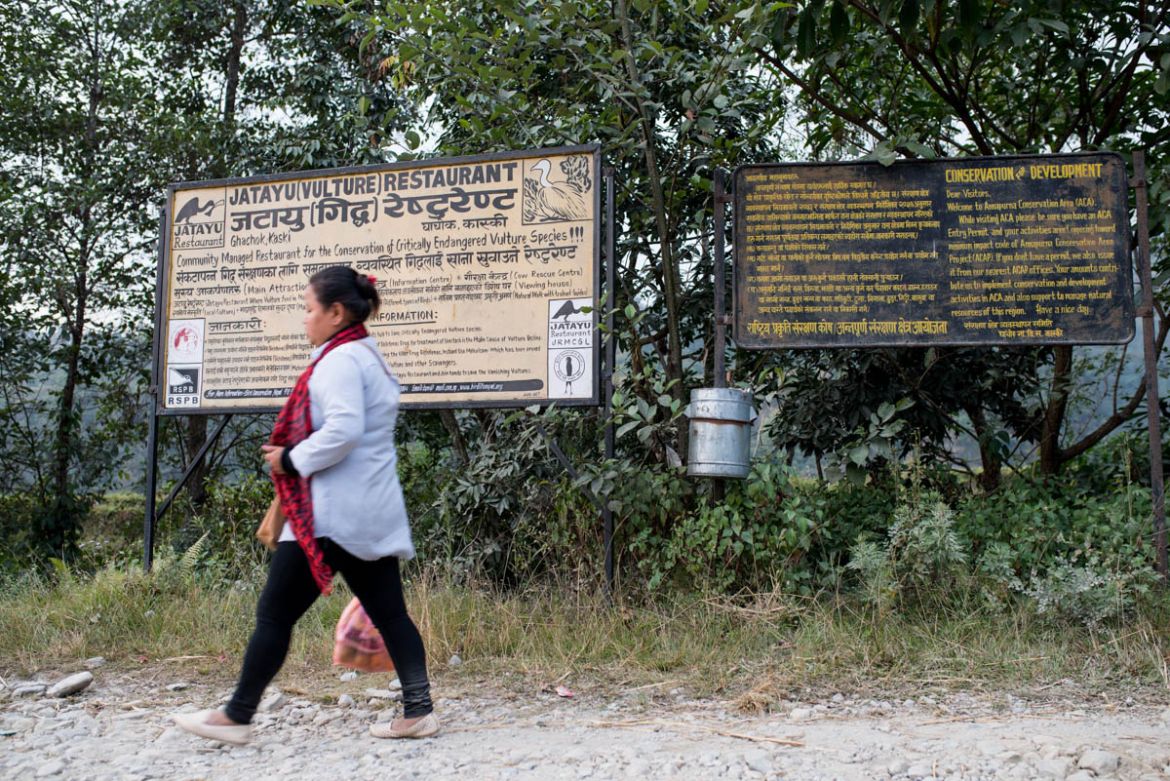
Cow-caretaker Khusi Man Gurun has worked the Ghachock feeding site since it opened in 2006. Ecotourism is a priority goal for Bird Conservation of Nepal, whose members come from local villages. 'We want to conserve the biodiversity and promote the ecosystem by keeping the vultures safe,' says Khusi. 'And support the community.' [Alexander Lerche/Al Jazeera]
The vulture restaurant
Ghachock's restaurant lies on the Seti River within the Annapurna Conservation Area, Nepal's largest Important Bird and Biodiversity Site. But despite efforts to protect the vultures, researchers say birds in the region are still suffering from the impact of humans. [Alexander Lerche/Al Jazeera]
The vulture restaurant
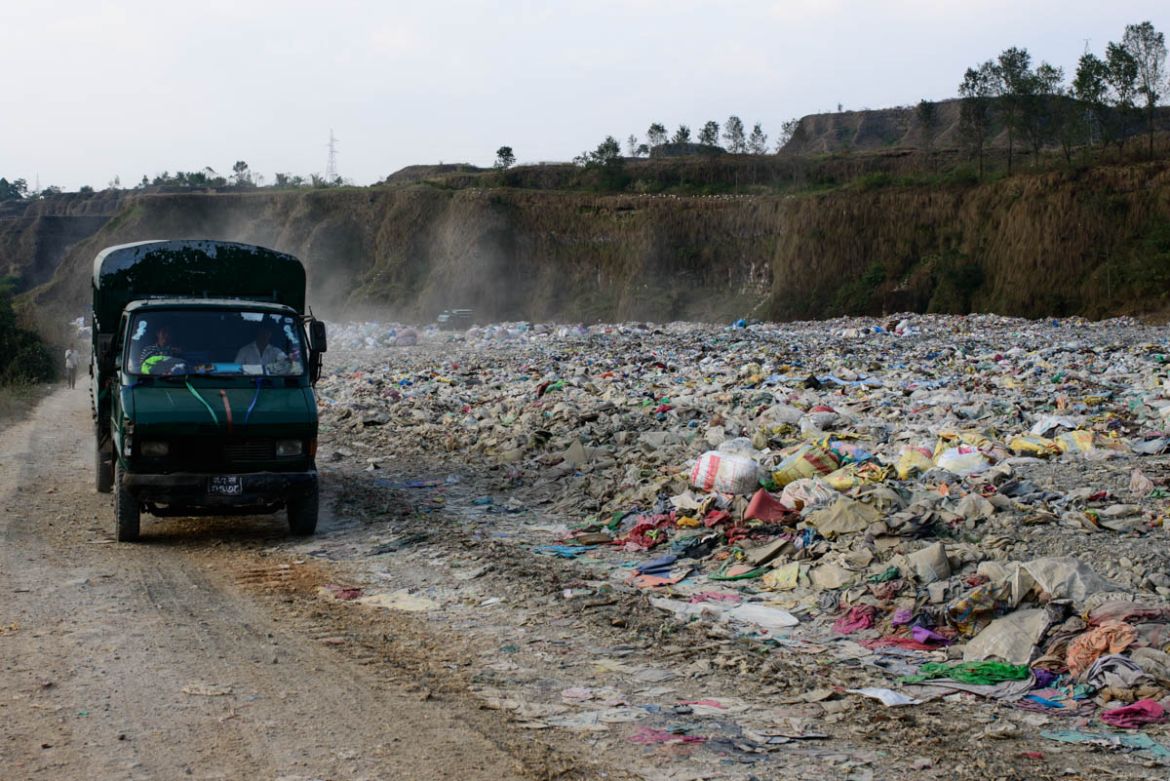
Dozens of vultures sit along the ridge of a cliff at Pokhara's main waste site, waiting for people sifting rubbish below to leave. When it is safe, the birds fly down and pick through plastic and metal to get at any food scraps, consuming toxic man-made chemicals in the process. [Alexander Lerche/Al Jazeera]
The vulture restaurant
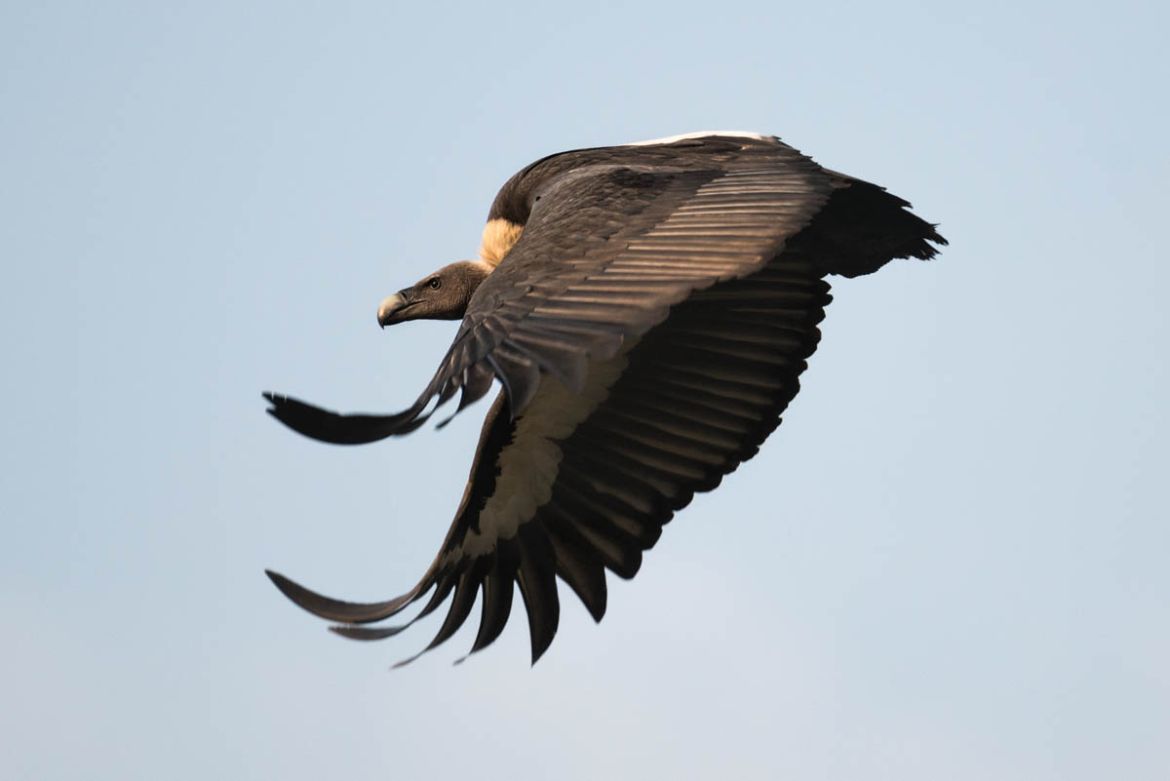
A critically endangered white-rumped vulture flies over Pokhara's landfill. The species once numbered in the millions, but the last count in 2016 estimated there are only 10,000 left globally. BCN undertook the world's first release of two captive-bred white-rumped vultures in November. Yet vultures lay and care for only one egg at a time, so rebuilding the species to their former numbers will take many years. [Alexander Lerche/Al Jazeera]

Related

  • ‘Encouraging’: Global rainforest loss slows in 2025 after record year

    The researchers credit the slowdown to policies implemented by Brazil’s President Lula da Silva to curb deforestation.

    Published On 29 Apr 202629 Apr 2026
    Aerial view of a forest fire in the Amazon Rainforest, Brazil in September 2020.
  • ‘I have to protect them’: The man guarding Mauritania’s rare Islamic books

    Chinguetti was once a popular desert library town attracting scholars from the Muslim world to its precious collections.

    Published On 27 Apr 202627 Apr 2026
    Librarian el-Habot, one of the last few in Chinguetti [Shola Lawal/Al Jazeera]
  • OPINIONOPINION,

    On Earth Day, remember the people defending the planet

    Behind every environmental victory are activists whose sacrifice is rarely recognised.

    Opinion by Amanda BurrellAmanda Burrell
    Published On 22 Apr 202622 Apr 2026
    Handout photo provided by the Goldman Environmental Prize showing Colombian activist Yuvelis Morales Blanco, winner of its 2026 edition, sitting on a boat at the Magdalena River, by her house in Puerto Wilches, Santander department, Colombia, on January 29, 2026.
    quotes
  • From: NewsFeed

    Video: Moment hikers get caught in Guatemala volcano eruption

    A group of hikers were forced to flee as Guatemala’s Santiaguito Volcano erupted.

    Published On 21 Apr 202621 Apr 2026
    Video Duration 00 minutes 33 seconds play-arrow00:33

More from Gallery

  • Photos: Rains revive Iraq’s wetlands after years of drought

    Iraq's marshes revived: long-awaited rains bring life back to wetlands
    This gallery article has 8 imagescamera8
  • Photos: Somalia hunger crisis worsens as drought displaces more than 500,000

    Hawa Moalim, 33, fled Wajid in the Bakool region after the drought destroyed her livelihood. She began the journey to Baidoa with her six children and the few goats that had survived, determined to give her family a chance. One by one, the animals died on the road. By the time the family arrived at Wayamo displacement camp two weeks ago, they had nothing left. "We arrived here hoping for help," she says. "But since we came, we have received nothing. There is no food, no water, and no proper shelter." Wayamo displacement camp, Baidoa, Southwest State, Somalia. [Abdulkadir Mohamed/NRC]
    This gallery article has 14 imagescamera14
  • Photos: North Korea opens museum for troops killed fighting for Russia

    North Korea opens museum for troops killed fighting for Russia
    This gallery article has 9 imagescamera9
  • Photos: Bomb attack on Colombia highway kills 19 ahead of election

    Bomb attack on Colombia highway kills 19 ahead of election
    This gallery article has 9 imagescamera9

Most popular

  • ‘Junk advice’: Iran mocks US economic pressure campaign as oil prices surge

    People attend a rally in Tehran, Iran, April 29, 2026.
  • Iran war updates: Trump tells Iran to ‘get smart soon’ amid stalled talks

    as attack kills 3 rescue workers
  • Pentagon chief Hegseth first public hearing on Iran war: Key takeaways

  • UAE quits OPEC: What that means for the Gulf, energy markets and beyond

    OPEC

  • About

    • About Us
    • Code of Ethics
    • Terms and Conditions
    • EU/EEA Regulatory Notice
    • Privacy Policy
    • Cookie Policy
    • Cookie Preferences
    • Accessibility Statement
    • Sitemap
    • Work for us
  • Connect

    • Contact Us
    • User Accounts Help
    • Advertise with us
    • Stay Connected
    • Newsletters
    • Channel Finder
    • TV Schedule
    • Podcasts
    • Submit a Tip
    • Paid Partner Content
  • Our Channels

    • Al Jazeera Arabic
    • Al Jazeera English
    • Al Jazeera Investigative Unit
    • Al Jazeera Mubasher
    • Al Jazeera Documentary
    • Al Jazeera Balkans
    • AJ+
  • Our Network

    • Al Jazeera Centre for Studies
    • Al Jazeera Media Institute
    • Learn Arabic
    • Al Jazeera Centre for Public Liberties & Human Rights
    • Al Jazeera Forum
    • Al Jazeera Hotel Partners

Follow Al Jazeera English:

  • facebook
  • twitter
  • youtube
  • instagram-colored-outline
  • rss
Al Jazeera Media Network logo
© 2026 Al Jazeera Media Network