Skip linksSkip to Content
play
Live
Navigation menu
  • News
    • Africa
    • Asia
    • US & Canada
    • Latin America
    • Europe
    • Asia Pacific
  • Middle East
  • Explained
  • Opinion
  • Sport
  • Video
    • Features
    • Economy
    • Human Rights
    • Climate Crisis
    • Investigations
    • Interactives
    • In Pictures
    • Science & Technology
    • Podcasts
    • Travel
play
Live

In Pictures

Gallery|Human Rights

Inside Sierra Leone’s maximum security prison for women

The Freetown Female Correctional Centre houses about 90 women and their children.

Save

Share

facebookxwhatsapp-strokecopylink
Women Behind Walls: Inside Sierra Leone’s Maximum Security Prison for Women
Freetown Female Prison, located in the centre of Sierra Leone's capital, is the former detention facility of the Special Court for Sierra Leone, where men accused of war crimes during Sierra Leone's 11-year civil war were detained. [Boaz Reisel/AdvocAid]
By Sabrina Mahtani and Maeve O'Gorman
Published On 25 Mar 201825 Mar 2018

The number of female prisoners in Sierra Leone has doubled in the last three years.

There are only two separate detention facilities for female prisoners in the country.

The largest separate detention facility is the Freetown Female Correctional Centre which holds around 90 female prisoners and their children.

Women on death row or those who are serving life imprisonment sentences are also held at the facility.

Sierra Leone still retains the death penalty for murder, treason and armed robbery.

However, the majority of female prisoners are arrested for minor, petty offences such as theft, loitering, disorderly behaviour or debt.

These laws are vague, poorly defined and disproportionately affect the poor.

Many women spend excessive time in prison waiting for their trial to be heard or serving sentences simply because they cannot afford to pay the alternative fine. 

AdvocAid Sierra Leone is the only holistic organisation working to provide access to justice, education and empowerment for women and girls in conflict with the law in Sierra Leone.

AdvocAid has freed four women on death row through appeals or pardons and provided free legal advice to over 4,000 women since 2006. 

Editor’s note: Names have been changed to protect the women’s identities. 

Aminata was only 17 years old when she was arrested for killing her abusive ex-boyfriend eight years ago. The trial judge, when advising the jury on the law, stated that using a knife in self-defence
Aminata was 17 years old when she was arrested for killing her abusive ex-boyfriend eight years ago. The trial judge, when advising the jury on the law, stated that using a knife in self-defence when being beaten by a rubber pipe was a disproportionate use of force. Aminata was sentenced to death for murder in November 2010 and feared each day she would be executed. Her sentence was commuted to life imprisonment by the government on Independence Day in April 2011. [Boaz Reisel/AdvocAid]
Advertisement
Women Behind Walls: Inside Sierra Leone’s Maximum Security Prison for Women
AdvocAid filed an appeal for Aminatta’s release in 2010. Her case was finally heard in the Court of Appeal in May 2014 and the case closed for judgment in February 2015, but Aminata is still waiting for the appeal judgment over three years later. [Boaz Reisel/AdvocAid]
Women Behind Walls: Inside Sierra Leone’s Maximum Security Prison for Women
AdvocAid runs literacy classes in the prison with an educational charity, EducAid, and the support of the Sierra Leone Correctional Service. One of the women who attends the classes, Serah, said: 'I choose to learn because in society, if you cannot read or write, you are left out, and I know that once I am released I will feel more part of society. I will also be able to help my child to read. When you sit here in the lesson, you can forget what you are in here for, and just devote time to learning. I want to encourage and inspire other women to take up the classes and show that it is not too late to learn.' [Boaz Reisel/AdvocAid]
Women Behind Walls: Inside Sierra Leone’s Maximum Security Prison for Women
Sierra Leone passed a progressive Legal Aid Act in 2012. However, funding for legal empowerment organisations remains a challenge. In 2015, 193 countries agreed to make 'access to justice for all' one of the goals for achieving sustainable development by 2030. Insufficient funds have been pledged for access to justice. [Boaz Reisel/AdvocAid]
Women Behind Walls: Inside Sierra Leone’s Maximum Security Prison for Women
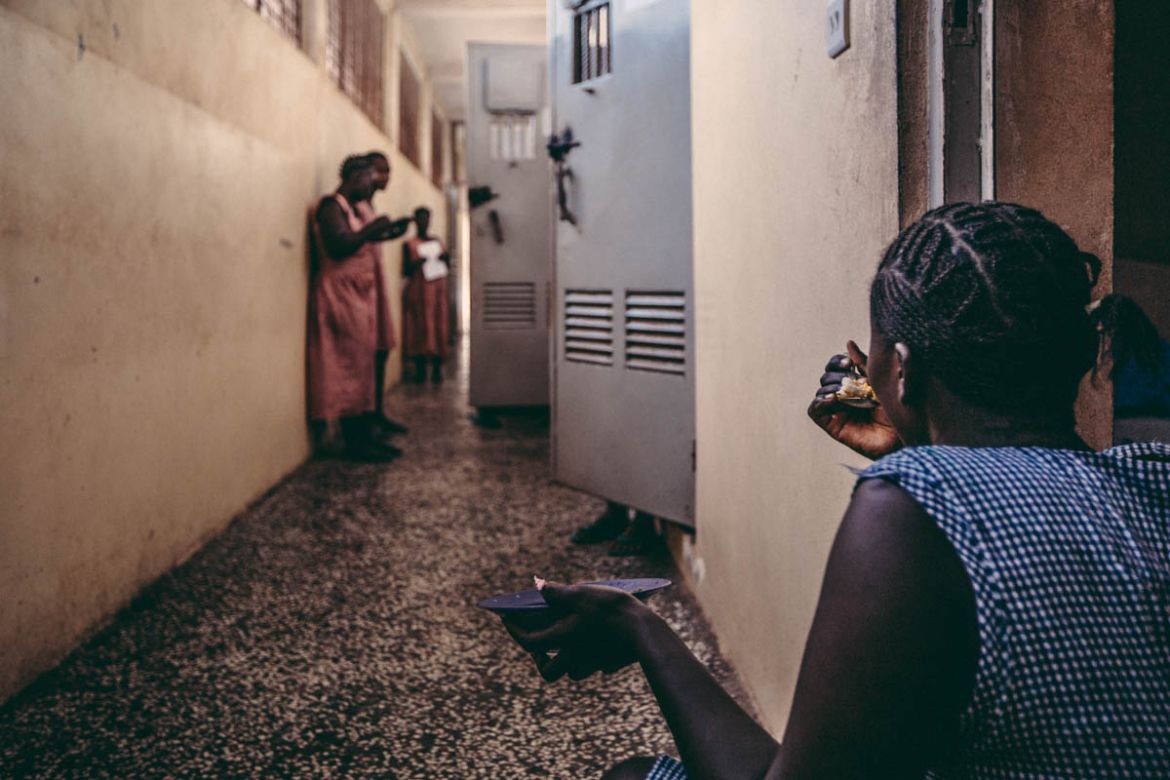
Freetown is one of the wettest capitals in the world, with the rainy season raging from May to October. This poses various challenges for the prison, including making the open space outside the cells unusable for much of the time, exacerbating illnesses and creating difficulties to wash and dry clothes and sheets. [Boaz Reisel/AdvocAid]
Women Behind Walls: Inside Sierra Leone’s Maximum Security Prison for Women
During the rainy season, women are prone to more illnesses. The prison has few nurses and just one doctor for both the more than thousand male and female prisoners. [Boaz Reisel/AdvocAid]
Advertisement
Women Behind Walls: Inside Sierra Leone’s Maximum Security Prison for Women
Medical supplies and healthcare items, such as sanitary towels, are in short supply. [Boaz Reisel/AdvocAid]
Women Behind Walls: Inside Sierra Leone’s Maximum Security Prison for Women
Many women are detained with their children in prison. There is no official policy but generally, children under two years old are kept with their mothers in prison. After that, the child may be given to a family member or orphanage. [Boaz Reisel/AdvocAid]
Women Behind Walls: Inside Sierra Leone’s Maximum Security Prison for Women
Josephine sells palm oil for a living, to provide for herself and her three children. She buys the palm oil on credit, paying back her suppliers once she sells enough to her customers. One day, some customers ran off with her oil before paying, placing her in significant debt with her suppliers. Four of Josephine's suppliers took her to court separately on the charge of obtaining goods by false pretences. AdvocAid's lawyer advocated for all four counts to be counted as one offence, however, this was denied. Josephine is now serving a two-year sentence in the correctional centre. Josephine has not seen or heard from her children since the beginning of the sentence and is worried that they may have stopped going to school. [Boaz Reisel/AdvocAid]
Women Behind Walls: Inside Sierra Leone’s Maximum Security Prison for Women
Sex workers are often arrested by the police for ill-defined crimes such as 'loitering' or 'frequenting'. The police routinely use these old-fashioned laws to arrest sex workers simply for being outside at night. Arresting sex workers for these minor offences deters them from reporting serious crimes, such as violence, rape, and theft to the police. One woman working in Lumley recalls being held at knifepoint by a client: 'They [clients] have sex with us and then beat us. When we argue, they take out a knife and say if you talk they will stab you.' Another woman said: 'If you don’t have sex with them [the police], they will put you in a cell.' [Boaz Reisel/AdvocAid]
Women Behind Walls: Inside Sierra Leone’s Maximum Security Prison for Women
Christiana, Zainab and Favour are commercial sex workers. They were leaving the local nightclub in Freetown at around midnight one evening, when the police arrested them on charges of loitering. They were held by the police for three days and were asked to pay for bail, even though bail is free in Sierra Leone. Because they didn’t have any money, the matter was charged to court. The women had the choice of paying a fine of Le 1,500,000 ($200) each or spending nine months in the correctional centre. The parents of these women gathered enough money to pay the fines, but the women chose instead to serve the time in prison, as they knew that to accept their parents' offer would cripple them financially and could result in their siblings being taken out of school, or not being able to pay medical bills. [Boaz Reisel/AdvocAid]
Women Behind Walls: Inside Sierra Leone’s Maximum Security Prison for Women
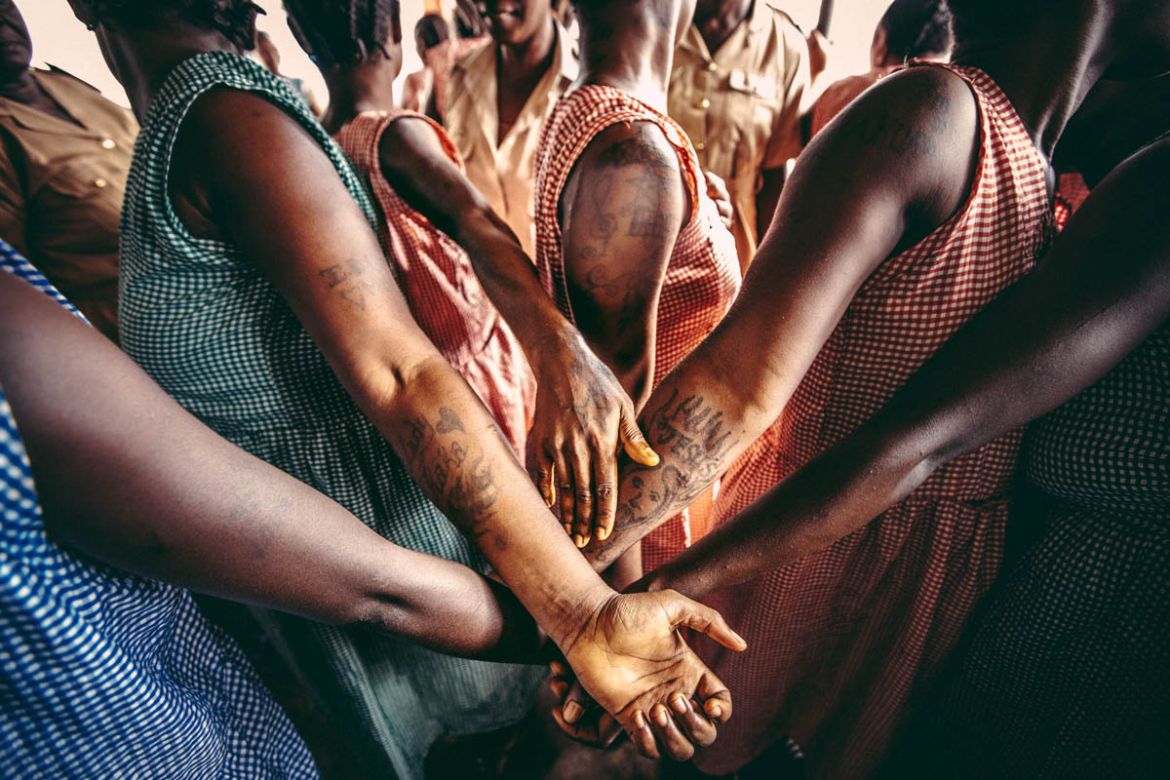
Mariatu is asking for the government to speed up delays in receiving indictments. After a case is committed to the High Court, women in pre-trial detention can wait months to over a year for their indictment, and then for the trial to begin. Most women are the main breadwinners and caregivers and excessive time in pre-trial detention has a huge impact on their families. [Boaz Reisel/AdvocAid]
Women Behind Walls: Inside Sierra Leone’s Maximum Security Prison for Women
Being separated from their children is very traumatic for women in prison. Prison rules do not allow young children to visit the prison and some women are detained far from their families. Paralegals and social workers can act as a lifeline for prisoners and help them to check on their families. [Boaz Reisel/AdvocAid]

Related

  • Shoot Palestinians, not settlers: Israeli general exposes double standard

    Leaks from the head of the Israeli army in the West Bank reveal two-tier firing policies and endemic prejudice.

    Published On 6 May 20266 May 2026
    A Palestinian woman ushers her children away from a group of Israeli soldiers during a weekly settlers’ tour in Hebron, in the Israeli‑occupied West Bank, January 24, 2026. REUTERS/Mussa Qawasma TPX IMAGES OF THE DAY
  • Amputee football grows in Rwanda, fostering unity and resilience

    Amputee football builds trust and community in Rwanda, helping survivors overcome stigma and find a sense of belonging.

    Published On 6 May 20266 May 2026
    Sport transforms lives for Rwanda's amputees, offering hope and unity
    This gallery article has 9 imagescamera9
  • Pro-Palestine group protests outside Israeli real estate event in New York

    Demonstration against event featuring properties for sale in occupied West Bank is the second protest in six months.

    Published On 6 May 20266 May 2026
    Pro-Palestinian protesters gather at a demonstration against an Israeli real estate event in New York
  • Iran’s judiciary vows action against ‘enemy’s mercenaries’ amid executions

    Authorities target accused foreign agents, citing national security, as executions and confiscation of assets intensify.

    Published On 5 May 20265 May 2026
    epa12931855 An Iranian drives over a painting depicting the US and Israeli flags in a street in Tehran, Iran, 04 May 2026. Iranian Foreign Ministry Spokesman Esmaeil Baghaei criticized the US president's plans on the passage of vessels through the Strait of Hormuz, a day after Donald Trump said that Washington would begin escorting ships through the waterway. EPA/ABEDIN TAHERKENAREH

More from Gallery

  • Photos: Aid cuts, drought and conflict leave Somalis desperate

    Aid cuts, drought and conflict leave Somalis desperate
    This gallery article has 7 imagescamera7
  • Amputee football grows in Rwanda, fostering unity and resilience

    Sport transforms lives for Rwanda's amputees, offering hope and unity
    This gallery article has 9 imagescamera9
  • Photos: Colombia tourist jewel plagued by violence

    Aerial view of Playa Blanca beach in Santa Marta, Magdalena department, Colombia
    This gallery article has 8 imagescamera8
  • Photos: Cuba holds May Day celebrations amid US threats

    People hold banners of Che Guevara at a march in Havana
    This gallery article has 8 imagescamera8

Most popular

  • Trump says Iran agreement ‘very possible’; Israeli forces bomb Beirut

    People gather at the site of an Israeli airstrike that targeted Beirut’s southern suburbs Haret Hreik neighborhood
  • Iran war updates: Trump threatens ‘much higher level’ attacks if no deal

    TOPSHOT - A photo illustration taken in Nicosia on May 4, 2026, shows a person in front of a large screen displaying vessel movements in the Strait of Hormuz on a ship-tracking website.
  • In rare push, US lawmakers demand transparency on Israel nuclear capability

    Joaquin Castro
  • Trump says war will be ‘over quickly’ as Iran reviews US peace proposal

    US President Donald Trump speaks during a Military Mother's Day event at the White House in Washington, DC on May 6, 2026.

  • About

    • About Us
    • Code of Ethics
    • Terms and Conditions
    • EU/EEA Regulatory Notice
    • Privacy Policy
    • Cookie Policy
    • Cookie Preferences
    • Accessibility Statement
    • Sitemap
    • Work for us
  • Connect

    • Contact Us
    • User Accounts Help
    • Advertise with us
    • Stay Connected
    • Newsletters
    • Channel Finder
    • TV Schedule
    • Podcasts
    • Submit a Tip
    • Paid Partner Content
  • Our Channels

    • Al Jazeera Arabic
    • Al Jazeera English
    • Al Jazeera Investigative Unit
    • Al Jazeera Mubasher
    • Al Jazeera Documentary
    • Al Jazeera Balkans
    • AJ+
  • Our Network

    • Al Jazeera Centre for Studies
    • Al Jazeera Media Institute
    • Learn Arabic
    • Al Jazeera Centre for Public Liberties & Human Rights
    • Al Jazeera Forum
    • Al Jazeera Hotel Partners

Follow Al Jazeera English:

  • facebook
  • twitter
  • youtube
  • instagram-colored-outline
  • rss
Al Jazeera Media Network logo
© 2026 Al Jazeera Media Network