Skip linksSkip to Content
play
Live
Navigation menu
  • News
    • Africa
    • Asia
    • US & Canada
    • Latin America
    • Europe
    • Asia Pacific
  • Middle East
  • Explained
  • Opinion
  • Sport
  • Video
    • Features
    • Economy
    • Human Rights
    • Climate Crisis
    • Investigations
    • Interactives
    • In Pictures
    • Science & Technology
    • Podcasts
    • Travel
play
Live

In Pictures

Gallery|Conflict

Land dispute drives new exodus in Ethiopia’s Tigray

Tens of thousands of Tigrayans are reportedly being driven from their homes by Amhara militia over a land dispute.

Save

Share

facebookxwhatsapp-strokecopylink
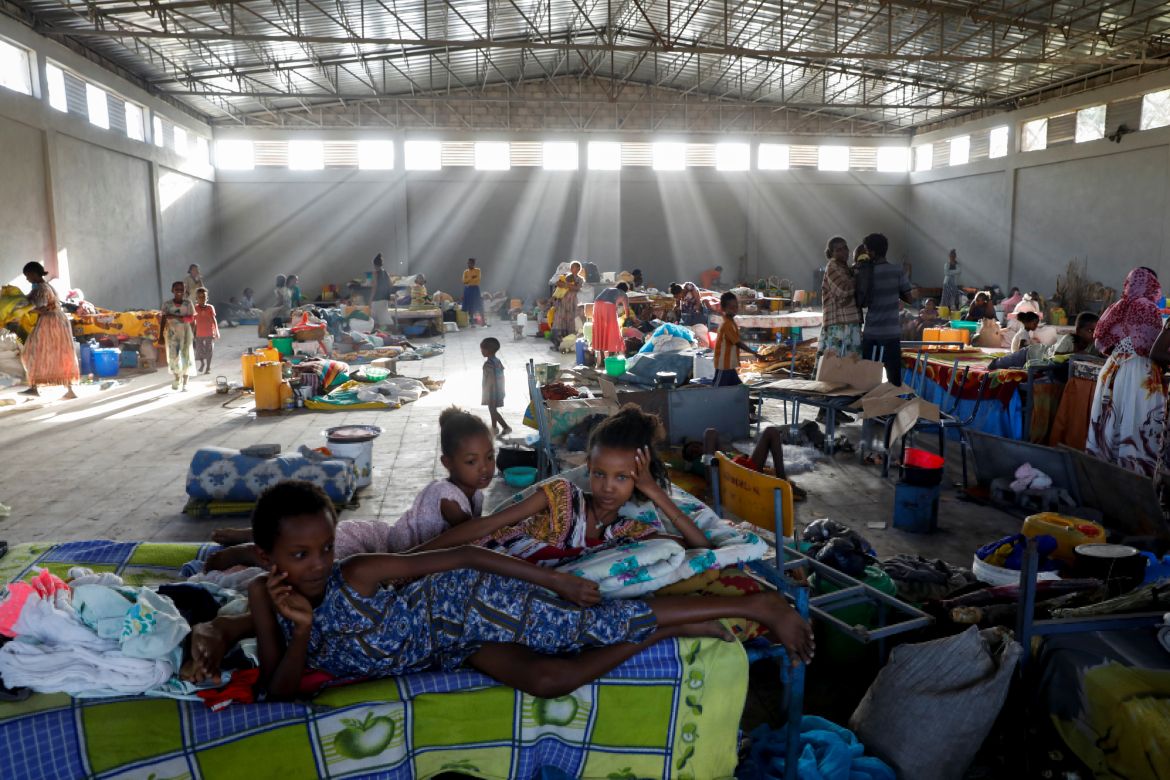
Displaced people queue for food at the Tsehaye primary school, which was turned into a temporary shelter for people displaced by conflict, in the town of Shire, Tigray region. [Baz Ratner/Reuters]
By Reuters
Published On 31 Mar 202131 Mar 2021

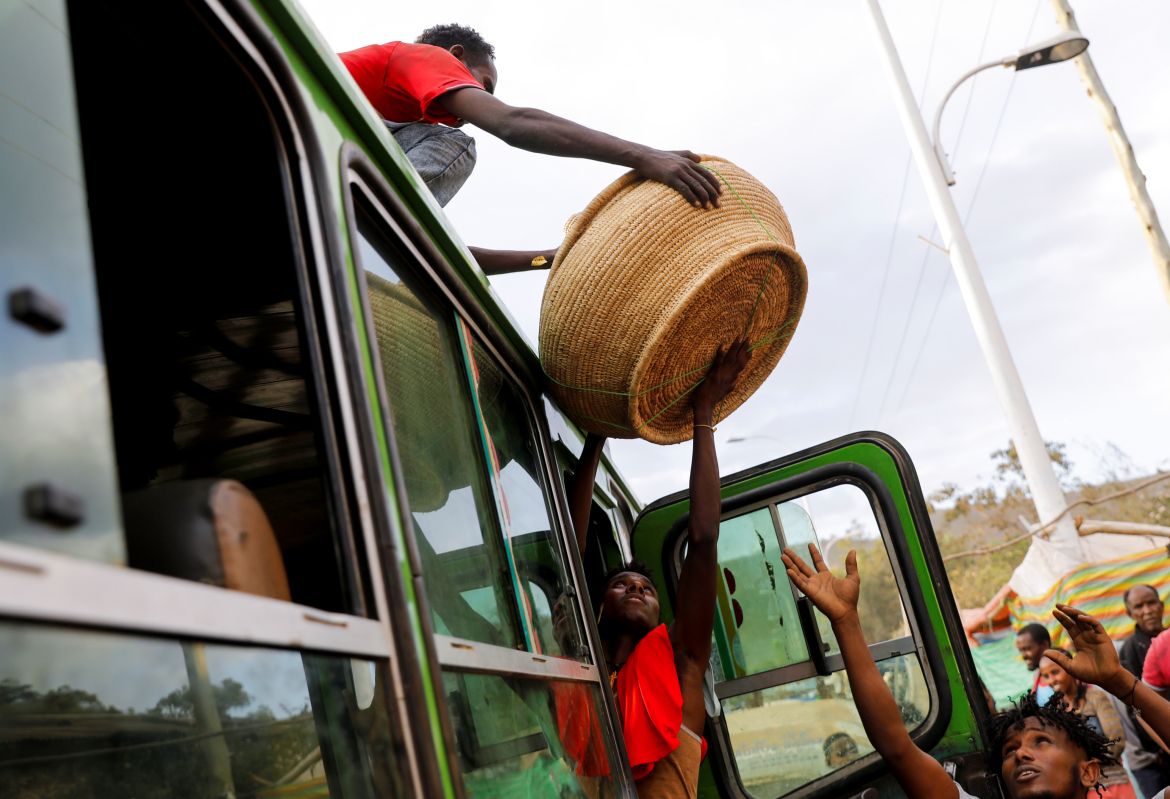
The dusty buses keep coming, dozens a day, mattresses, chairs and baskets piled on top. They stop at schools hurriedly turned into camps, disgorging families who describe fleeing from ethnic Amhara militia in Ethiopia’s Tigray region.

Four months after the Ethiopian government declared victory over the Tigray People’s Liberation Front (TPLF), tens of thousands of Tigrayans are again being driven from their homes.

This time, it is due not to the fighting, but to regional forces and militiamen from neighbouring Amhara seeking to settle a decades-old land dispute, according to witnesses, aid workers and members of Tigray’s new administration.

Amhara officials say the disputed lands, equal to about a quarter of Tigray, were taken during the nearly 30 years that the TPLF dominated central government before Prime Minister Abiy Ahmed came to power in 2018.

Fighters from Amhara entered western Tigray in support of federal forces after the TPLF, Tigray’s then-governing party, attacked military bases there in November.

Ababu Negash, 70, said she fled Adebay, a town in western Tigray, after Amhara officials summoned Tigrayans to meetings in February.

“They said you guys don’t belong here,” Ababu told the Reuters news agency in Shire, a town 160 kilometres (99 miles) to the east, to where many from west Tigray are fleeing. “They said if we stay, they will kill us.”

This fresh exodus from the west of Tigray risks exacerbating a precarious humanitarian situation in the region, with hundreds of thousands of people already uprooted by fighting.

Advertisement

Tigrayan officials say the area has long been home to both ethnic groups and that the region’s borders are set by the constitution. Now that fighting has subsided and roads have reopened, they say there is a concerted, illegal push to drive out Tigrayans.

“The western Tigray zone is occupied by the Amhara militias and special forces, and they are forcing the people to leave their homes,” Mulu Nega, the head of Tigray’s government-appointed administration, told Reuters in Tigray’s capital Mekelle.

Asked about the accounts of violence and intimidation by Amhara fighters, Yabsira Eshetie, the administrator of the disputed zone, said nobody had been threatened and only criminals had been detained.

“No one was kicking them out, no one was destroying their houses even. Even the houses are still there. They can come back,” he said. “There is federal police here, there is Amhara special police here. It is lawful here.”

The United Nations has warned of possible war crimes in Tigray. US Secretary of State Antony Blinken said this month there have been acts of ethnic cleansing and called for Amhara forces to withdraw from Tigray.

Ethiopia’s government strenuously denies that it has an ethnic agenda.

“Nothing during or after the end of the main law enforcement operation (against the TPLF) can be identified … as a targeted, intentional ethnic cleansing against anyone in the region,” the foreign ministry said in a statement following Blinken’s remarks.

Local authorities and the UN Office for the Coordination of Humanitarian Affairs (OCHA) said about 1,000 people were reaching Shire every day, with 45,000 coming since late February.

The Norwegian Refugee Council said between 140,000-185,000 came from west Tigray over a two-week period in March.
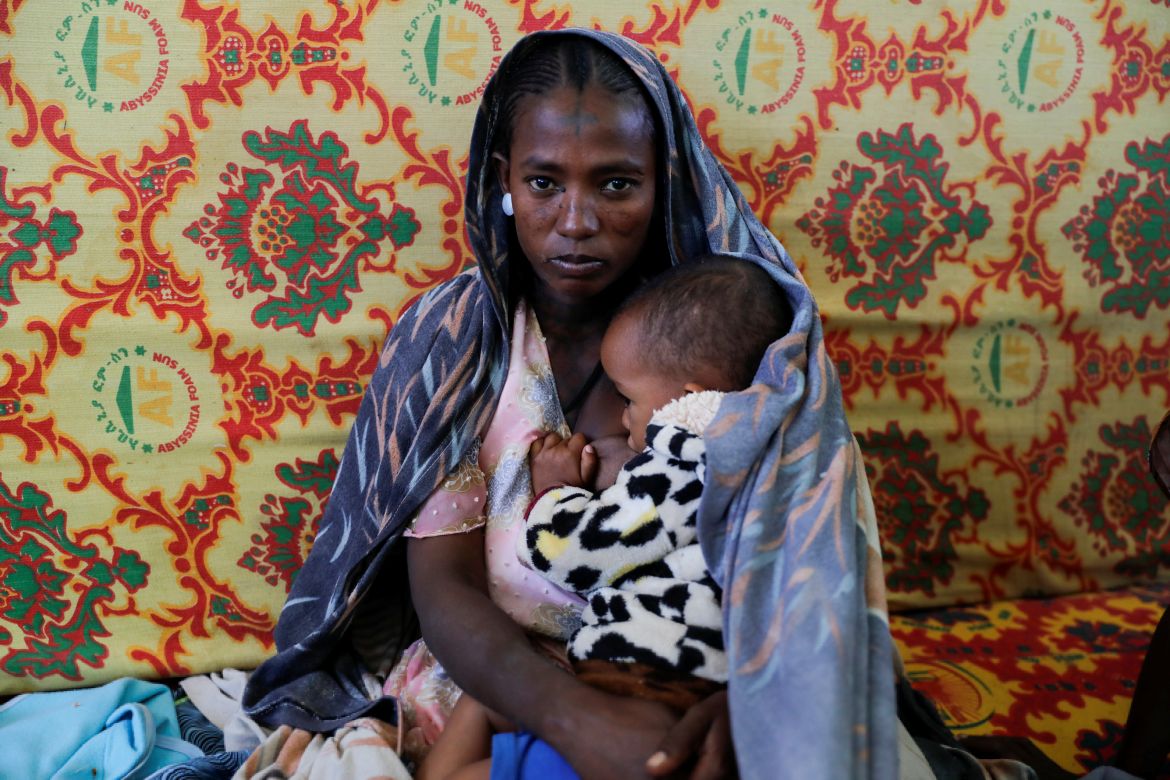
A woman holds an infant inside the Adiha secondary school, which was turned into a temporary shelter for people displaced by conflict, in the city of Mekelle, Tigray region. Four months after the Ethiopian government declared victory over the Tigray People's Liberation Front (TPLF), tens of thousands of Tigrayans are again being driven from their homes. [Baz Ratner/Reuters]
Advertisement
Displaced people at the Shire campus of Aksum University, now a temporary shelter, in the town of Shire. [Baz Ratner/Reuters]
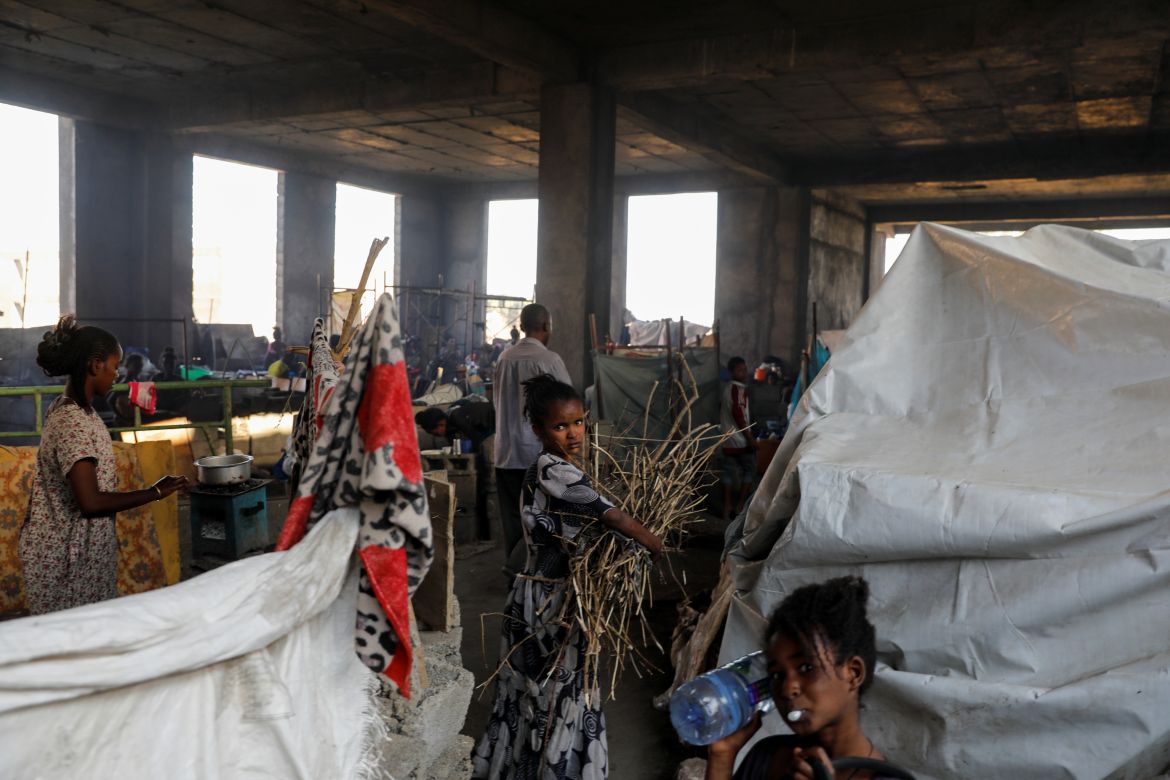
A girl carries firewood in a building under construction at the Shire campus of Aksum University. [Baz Ratner/Reuters]
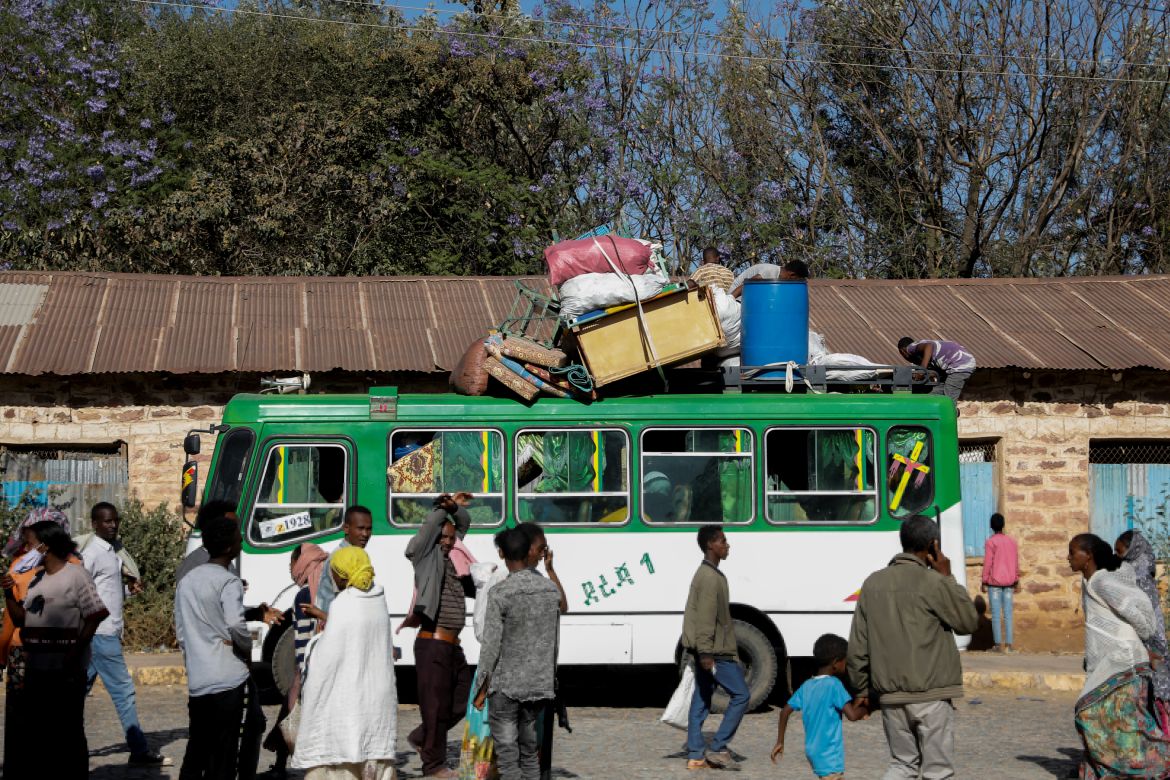
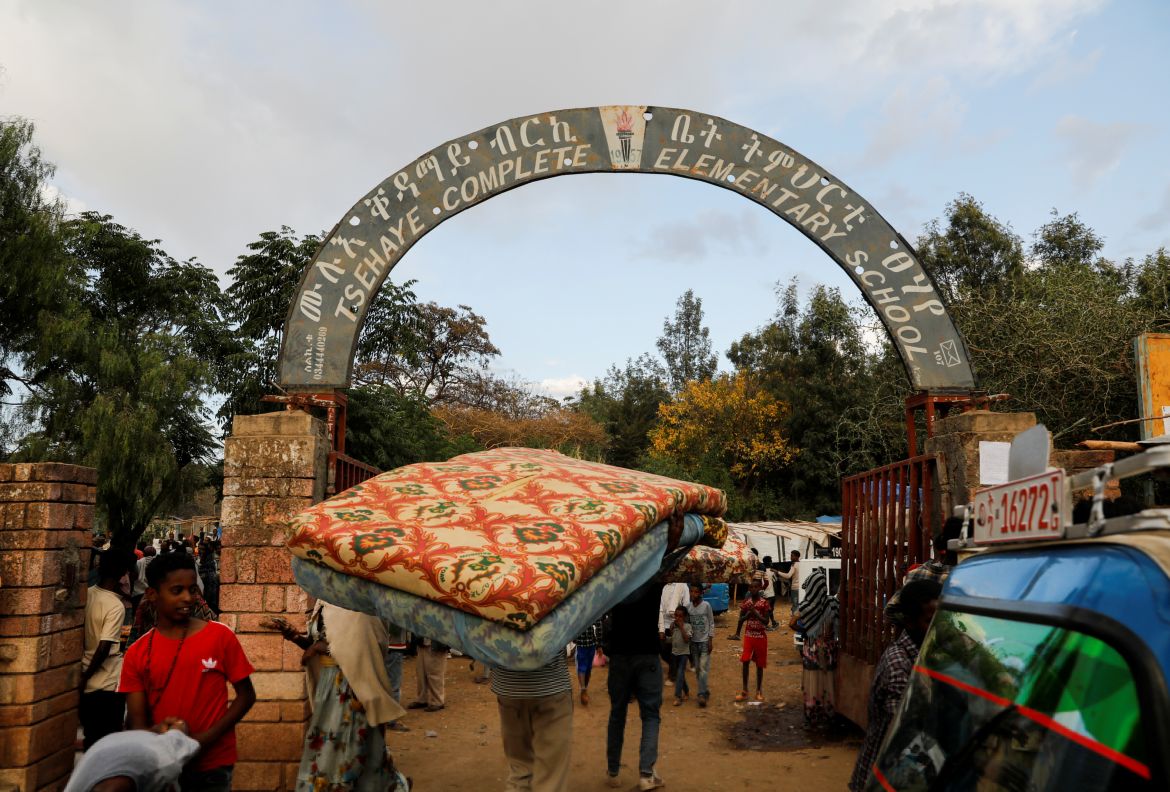
A bus carrying displaced people arrives at the Tsehaye primary school, sheltering people displaced by conflict, in Shire. [Baz Ratner/Reuters]
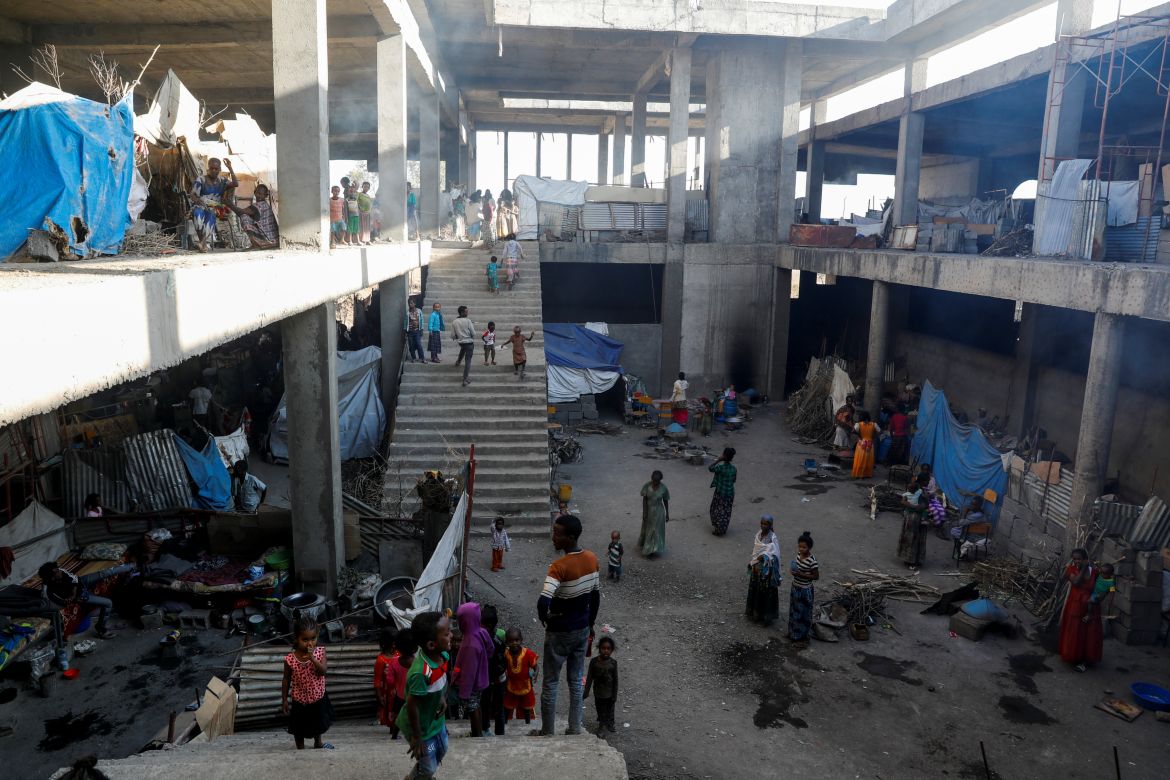
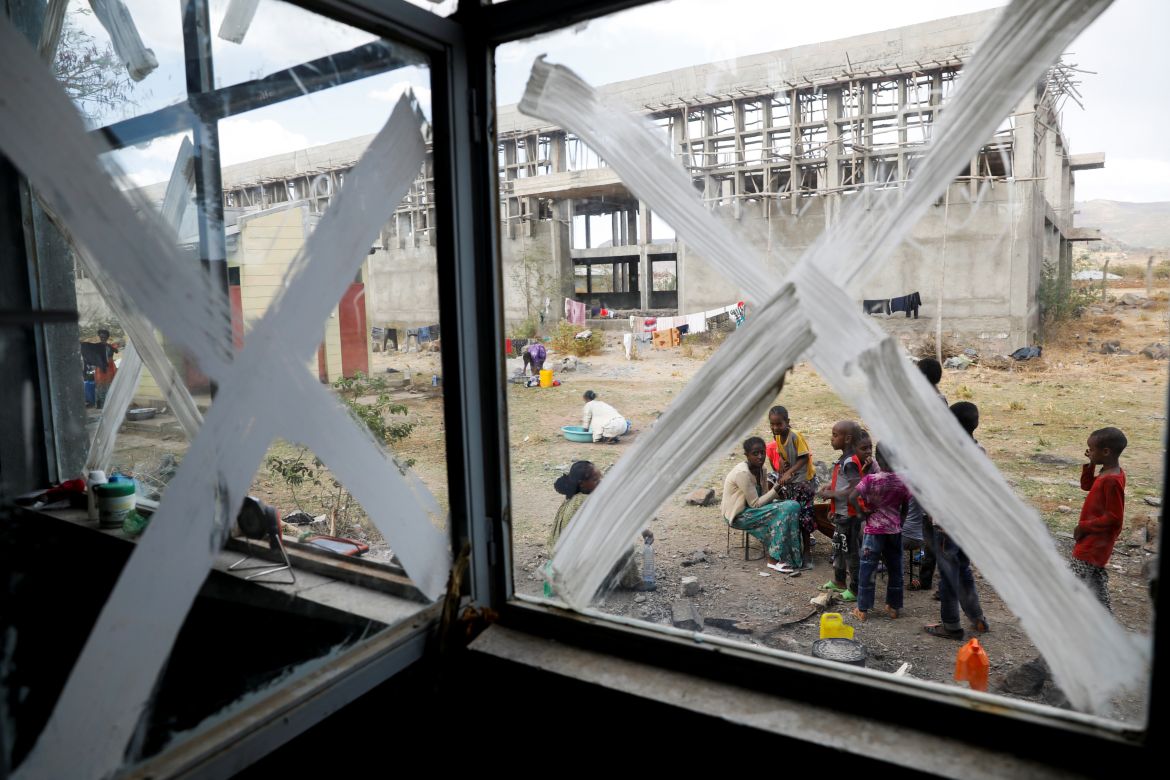
Displaced people in a building under construction at the Shire campus of Aksum University. [Baz Ratner/Reuters]
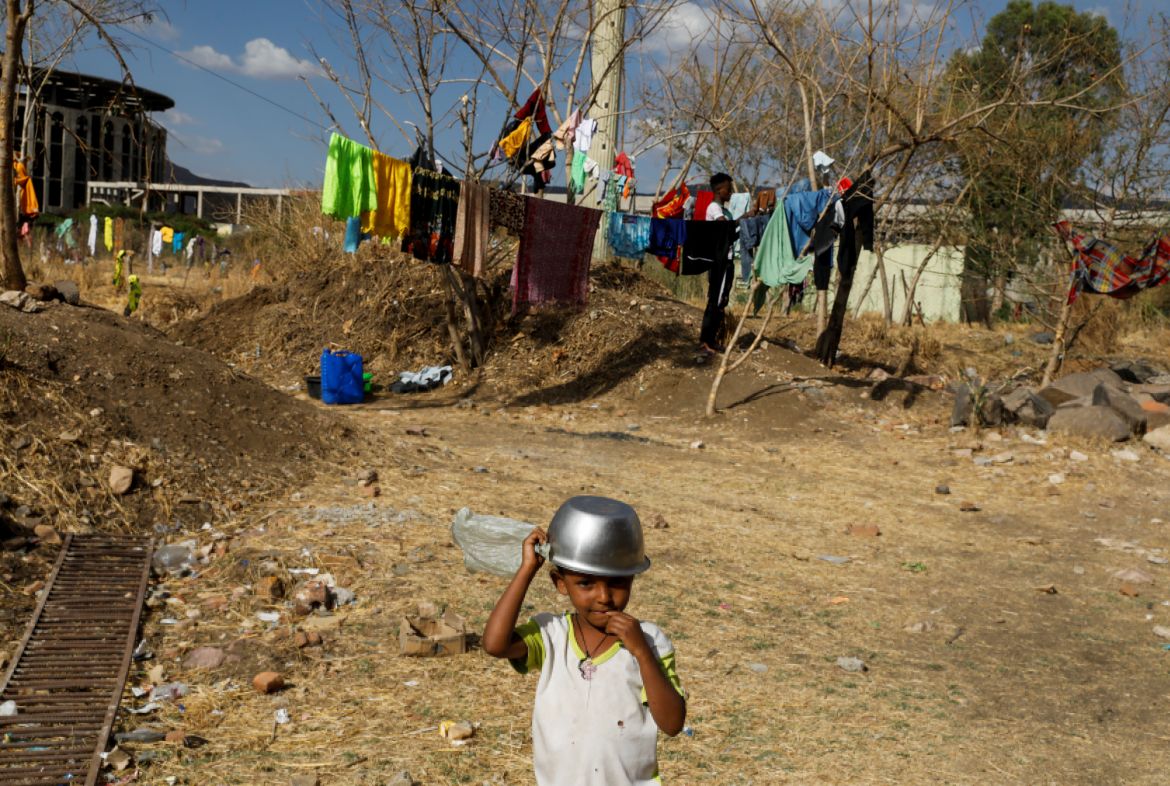
A boy plays at the Shire campus of Aksum University. The fresh exodus from the west of Tigray risks exacerbating a precarious humanitarian situation in the region, with hundreds of thousands of people already uprooted by fighting. [Baz Ratner/Reuters]
Advertisement
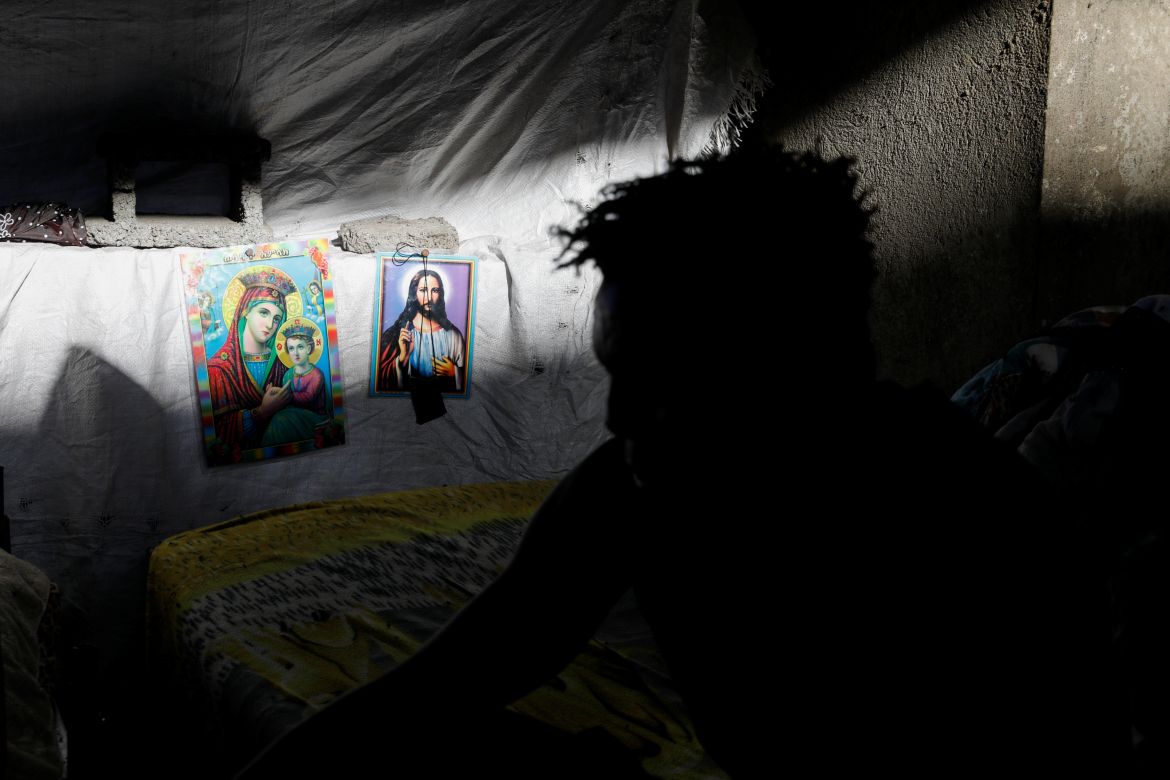
Religious posters hang next to the bed of a man in a building under construction at the Shire campus of Aksum University. [Baz Ratner/Reuters]
A man offloads belongings of people who say they have been forced to leave their homes in western Tigray, after they arrive by bus at a school in Shire that was turned into a temporary shelter. [Baz Ratner/Reuters]
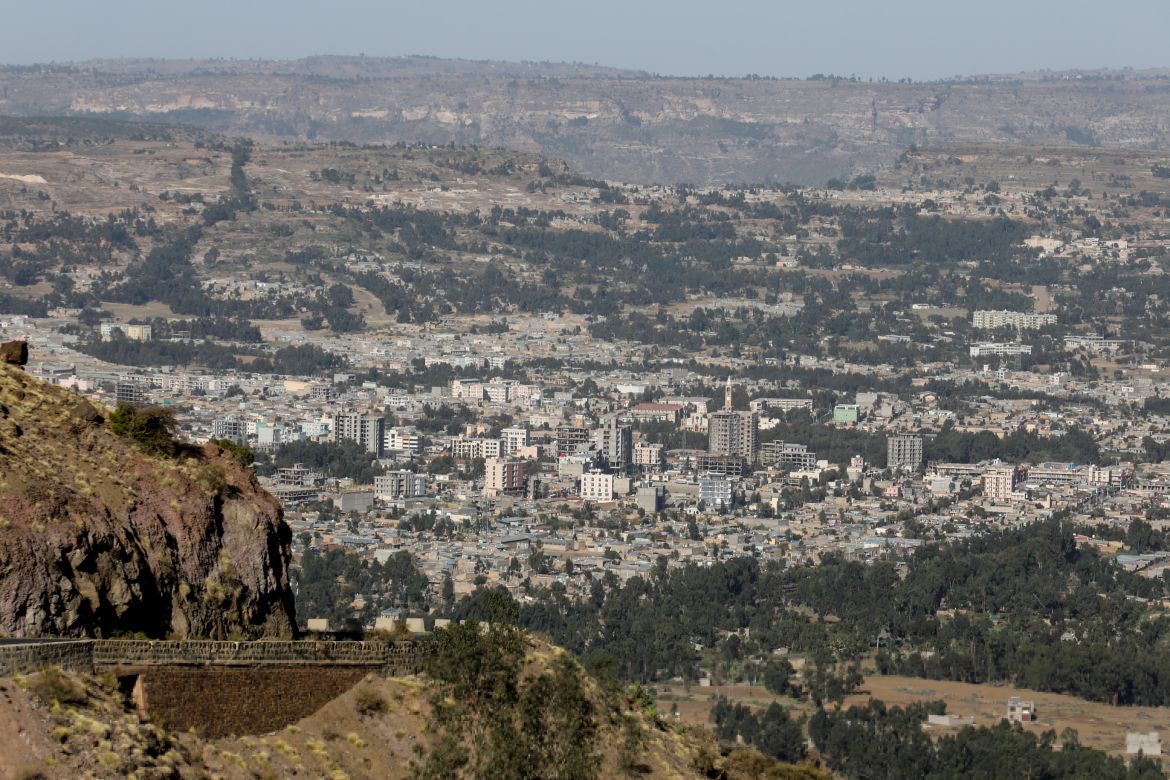
The town of Adigrat, Tigray region. Amhara officials say the disputed lands, equal to about a quarter of Tigray, were taken during the nearly 30 years that the TPLF dominated central government before Prime Minister Abiy Ahmed came to power in 2018. [Baz Ratner/Reuters]
Displaced people at the Shire campus of Aksum University. [Baz Ratner/Reuters]
A man carries a mattress into Tsehaye primary school. Tigrayan officials say the area has long been home to both ethnic groups and that the region's borders are set by the constitution. [Baz Ratner/Reuters]
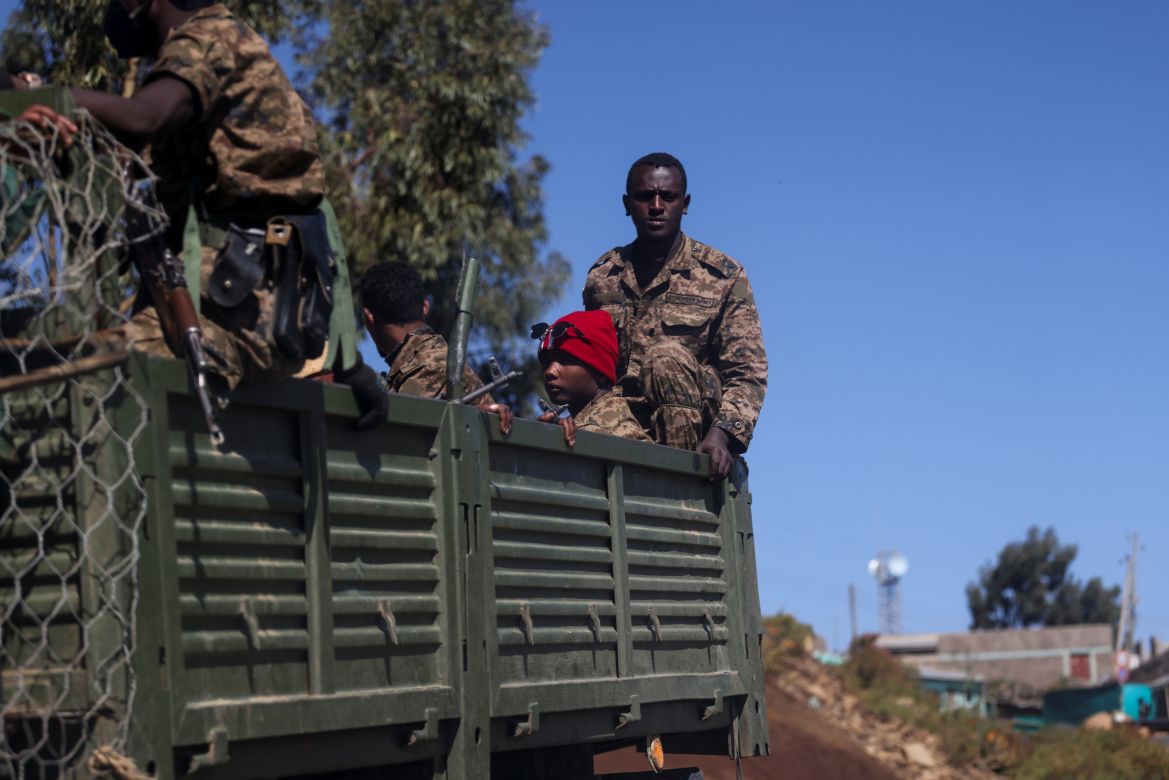
Ethiopian soldiers ride on a truck near the town of Adigrat, Tigray. [Baz Ratner/Reuters]
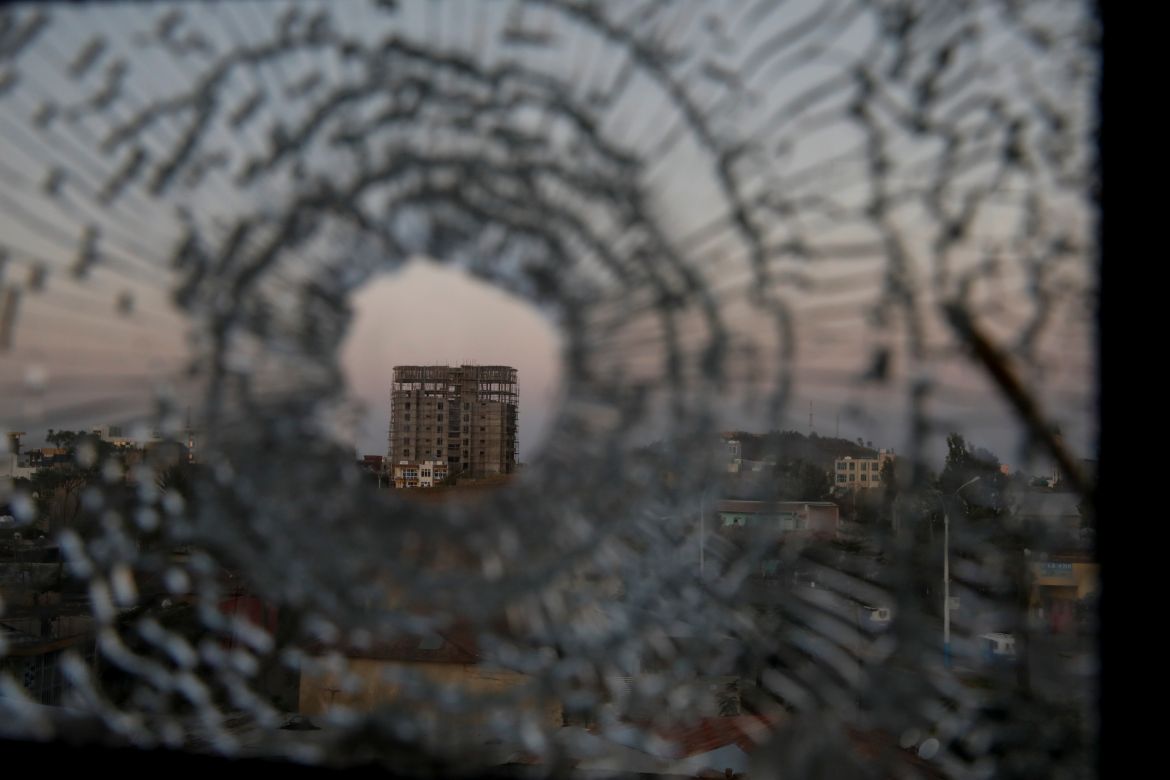
A bullet hole in a window of the Africa Hotel in Shire. Amhara officials say they have taken back a swathe of territory that was historically theirs. [Baz Ratner/Reuters]
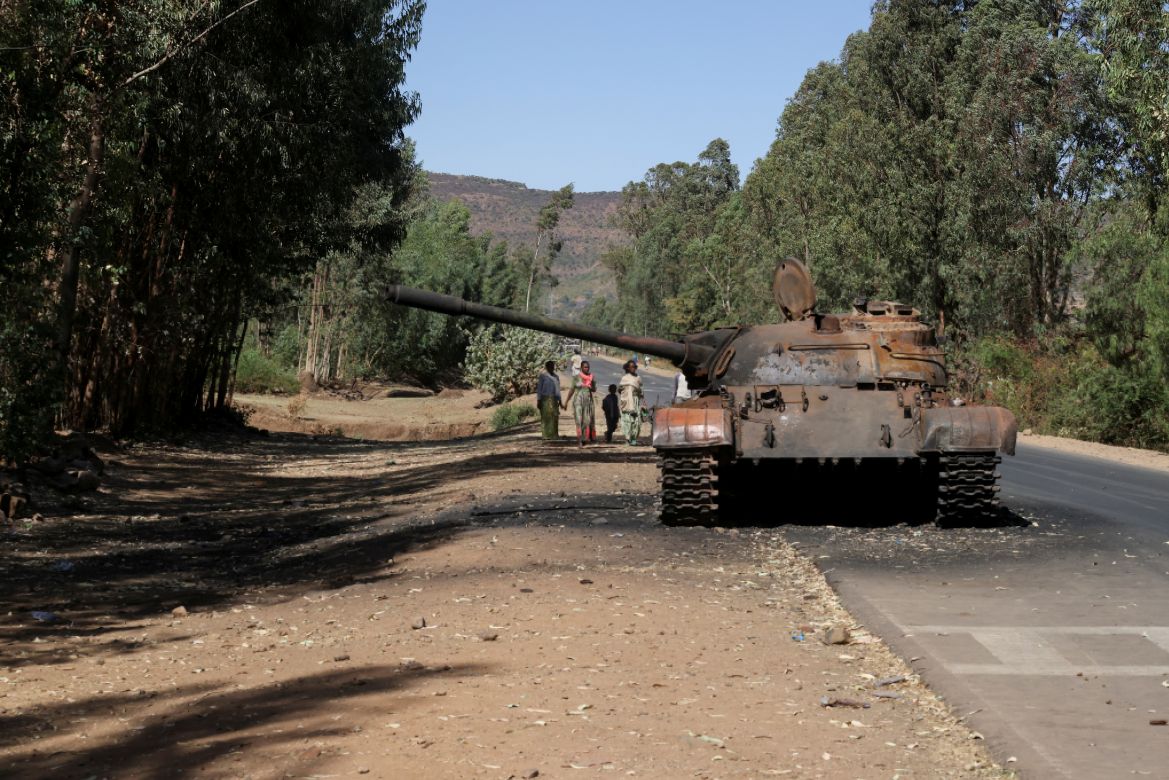
A burned tank stands near the town of Adwa. [Baz Ratner/Reuters]

Related

  • The crisis in Tigray and the struggle to report the conflict

    Foreign journalists are finally allowed into Tigray in Ethiopia – and their findings are shocking.

    Published On 6 Mar 20216 Mar 2021
    Video Duration 25 minutes 15 seconds play-arrow25:15
  • Ethiopia’s Amhara rejects charge of ‘ethnic cleansing’ in Tigray

    Amhara spokesperson dismisses top US diplomat’s accusations of its troops’ involvement in atrocities in Tigray.

    Published On 11 Mar 202111 Mar 2021
    Militia members from Ethiopia's Amhara region head to face the Tigray People's Liberation Front, in Sanja, Amhara region near a border with Tigray [File: Tiksa Negeri/Reuters]
  • OPINIONOPINION,

    Can Eritrea’s Afwerki hold on to power after the Tigray war?

    The Eritrean president finds himself in an increasingly difficult situation.

    Opinion by Abraham T ZereAbraham T Zere
    Published On 28 Mar 202128 Mar 2021
    Ethiopia's Prime Minister Abiy Ahmed travelled to Asmara to meet Eritrea's President Isaias Afwerki on March 25, 2021 [Aron Simeneh/Office of the Prime Minister of Ethiopia via AFP]
    quotes

More from Gallery

  • Photos: Cuba holds May Day celebrations amid US threats

    People hold banners of Che Guevara at a march in Havana
    This gallery article has 8 imagescamera8
  • Photos: Rains revive Iraq’s wetlands after years of drought

    Iraq's marshes revived: long-awaited rains bring life back to wetlands
    This gallery article has 8 imagescamera8
  • Photos: Somalia hunger crisis worsens as drought displaces more than 500,000

    Hawa Moalim, 33, fled Wajid in the Bakool region after the drought destroyed her livelihood. She began the journey to Baidoa with her six children and the few goats that had survived, determined to give her family a chance. One by one, the animals died on the road. By the time the family arrived at Wayamo displacement camp two weeks ago, they had nothing left. "We arrived here hoping for help," she says. "But since we came, we have received nothing. There is no food, no water, and no proper shelter." Wayamo displacement camp, Baidoa, Southwest State, Somalia. [Abdulkadir Mohamed/NRC]
    This gallery article has 14 imagescamera14
  • Photos: North Korea opens museum for troops killed fighting for Russia

    North Korea opens museum for troops killed fighting for Russia
    This gallery article has 9 imagescamera9

Most popular

  • Iran’s military warns US forces of attacks if they try to enter Hormuz

    oil tanker HELGA berthed at one of Iraq's southern offshore oil terminals near Basra
  • How to escape Russia’s army: Soldiers serving in Ukraine seek a way out

    Russian service members take part in a ceremonial handover of humanitarian aid provided by employees of the truckmaker Kamaz, mediated by the People's Front political movement and intended for Russia's army involved in the ongoing military conflict against Ukraine, in Rostov-on-Don, Russia, February 20, 2026. REUTERS/Sergey Pivovarov
  • Oil prices flat as Trump’s plan for Strait of Hormuz fails to calm market

    Gas prices at a Chicago station
  • What’s Iran’s 14-point proposal to end the war? And will Trump accept it?

    People chant slogans during a rally in Tehran, Iran

  • About

    • About Us
    • Code of Ethics
    • Terms and Conditions
    • EU/EEA Regulatory Notice
    • Privacy Policy
    • Cookie Policy
    • Cookie Preferences
    • Accessibility Statement
    • Sitemap
    • Work for us
  • Connect

    • Contact Us
    • User Accounts Help
    • Advertise with us
    • Stay Connected
    • Newsletters
    • Channel Finder
    • TV Schedule
    • Podcasts
    • Submit a Tip
    • Paid Partner Content
  • Our Channels

    • Al Jazeera Arabic
    • Al Jazeera English
    • Al Jazeera Investigative Unit
    • Al Jazeera Mubasher
    • Al Jazeera Documentary
    • Al Jazeera Balkans
    • AJ+
  • Our Network

    • Al Jazeera Centre for Studies
    • Al Jazeera Media Institute
    • Learn Arabic
    • Al Jazeera Centre for Public Liberties & Human Rights
    • Al Jazeera Forum
    • Al Jazeera Hotel Partners

Follow Al Jazeera English:

  • facebook
  • twitter
  • youtube
  • instagram-colored-outline
  • rss
Al Jazeera Media Network logo
© 2026 Al Jazeera Media Network