Skip linksSkip to Content
play
Live
Navigation menu
  • News
    • Africa
    • Asia
    • US & Canada
    • Latin America
    • Europe
    • Asia Pacific
  • Middle East
  • Explained
  • Opinion
  • Sport
  • Video
    • Features
    • Economy
    • Human Rights
    • Climate Crisis
    • Investigations
    • Interactives
    • In Pictures
    • Science & Technology
    • Podcasts
    • Travel
play
Live

In Pictures

Gallery|Weather

Photos: Pakistan’s fishers submerged in ‘climate anxiety’

Deadly floods have triggered ‘climate anxiety’ in the fishing community, a term with no equivalent in their language.
Save

Share

facebookxwhatsapp-strokecopylink
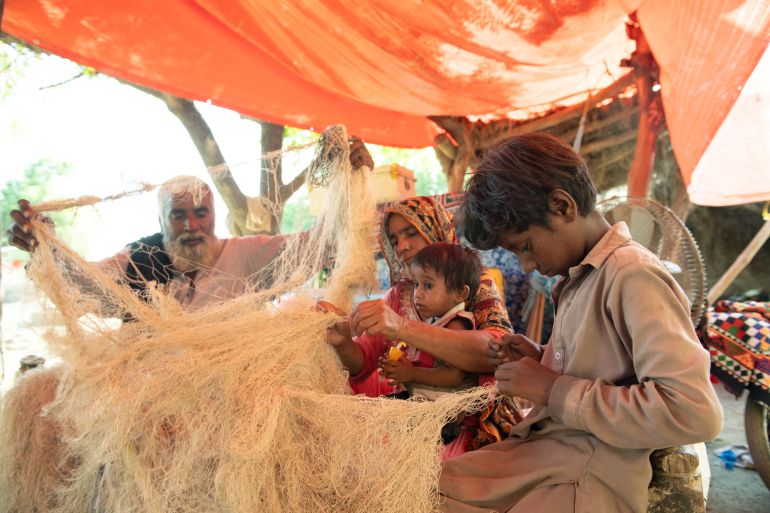
Muhammad Kasim, his wife, and eldest son repair fish nets
Muhammad Kasim, his wife, and eldest son repair fish nets damaged during the recent floods. 'We come from a family of fishers. Fishing is in our blood — it is my badge of honour. It’s also our only source of income,' said Kasim. [Usman Ghani/IOM]
By Maha Akbar
Published On 28 Oct 202228 Oct 2022

Pir Bhakkar, Sindh – Fishing is the centre of Muhammad Kasim’s life. His family has fished near the Indus River for generations. However, the recent floods in Pakistan have turned his village, Pir Bhakkar, into a swamp.

Now, his profession and his large family’s source of income are in jeopardy until the waters recede.

Unprecedented floods have affected the livelihoods of millions of people across Pakistan, destroying crops and livestock, including fish, two primary sources of income for rural households.

The fishing industry, which is worth $650m and is the key source of income for many in Pakistan’s southern province of Sindh, faces an uncertain future. The record rainfall that caused the floods may well be the new normal as climate change supercharges weather patterns.

Rural fishermen like Kasim do not have it easy. Lakes and ponds are often “owned” by landlords, who first demand a fee for locals to fish. Other landlords pay fishermen a daily wage to catch fish, which they keep and sell themselves.

Kasim lives within a 10km radius of a pond and three canals and is 20km (12.5 miles) away from the Indus. When the floods hit his village, locals eager to catch fish without paying landlords set up fishing nets in the inundated areas. Their efforts were in vain. Fish from ponds, lakes and rivers quickly spilled over the nets and disappeared in the floodwaters.

Income from fishing is heavily dependent on the season. The floods struck during peak fishing season, which means that fisherfolk will have to seek other options to put food on the table this year.

Advertisement

The monsoon season in rural Pakistan is typically welcomed with joy, but many now fear the next rains. They are suffering from what could best be described as “climate anxiety” – a term that has not been translated into Sindhi yet.

Kasim worries his son will be forced to abandon the family’s long tradition.

There are other problems too. Decades of overfishing in the Indus has depleted fish stocks, leading the Punjab government to introduce a 10-year ban earlier this year on commercial fishing in the river. Despite this, illegal fishing continues.

Last week, Pakistan’s government launched the “Living Indus” initiative to restore the river’s ecosystem, so the Indus basin can become resilient to climate change.
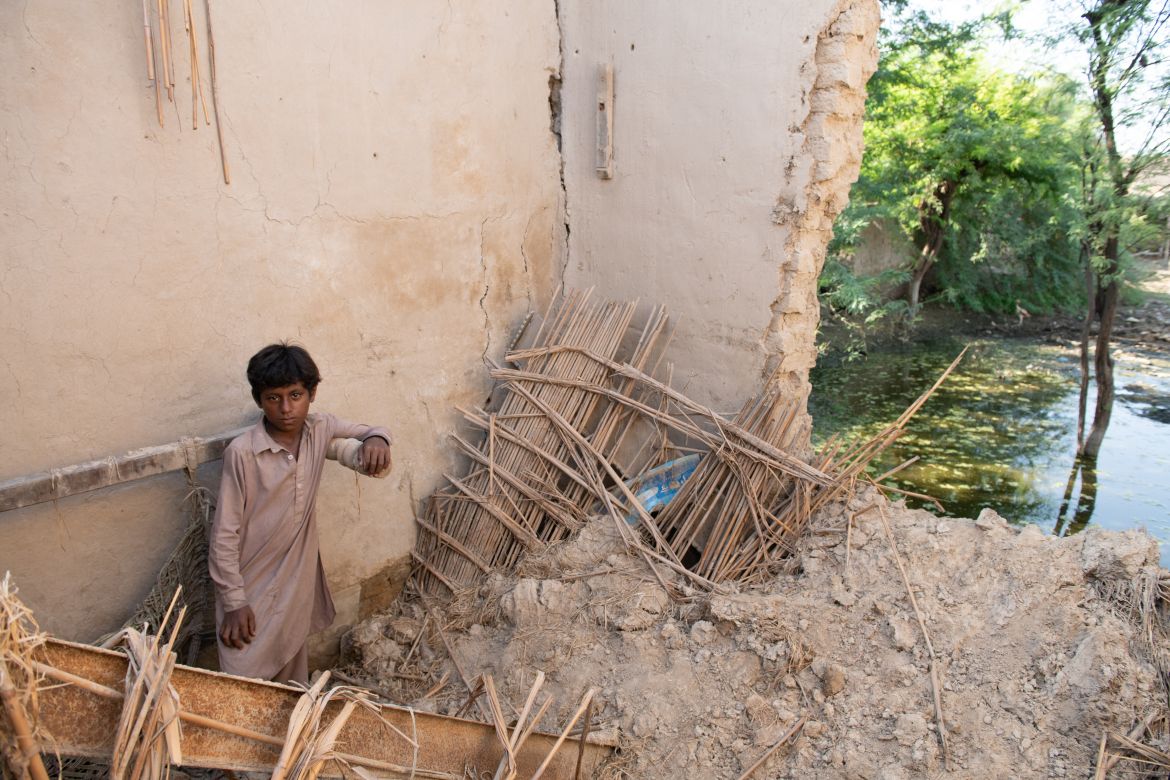
Kasim’s son Babar stands in the debris of their destroyed home whose backyard is still flooded. Water-borne diseases, such as diarrhea, malaria and gastroenteritis in flooded areas are a grave concern.
Kasim’s son Babar stands in the debris of their destroyed home, with the back yard still flooded. Water-borne diseases, such as diarrhoea, malaria and gastroenteritis in flooded areas are a grave concern. [Usman Ghani/IOM]
Advertisement
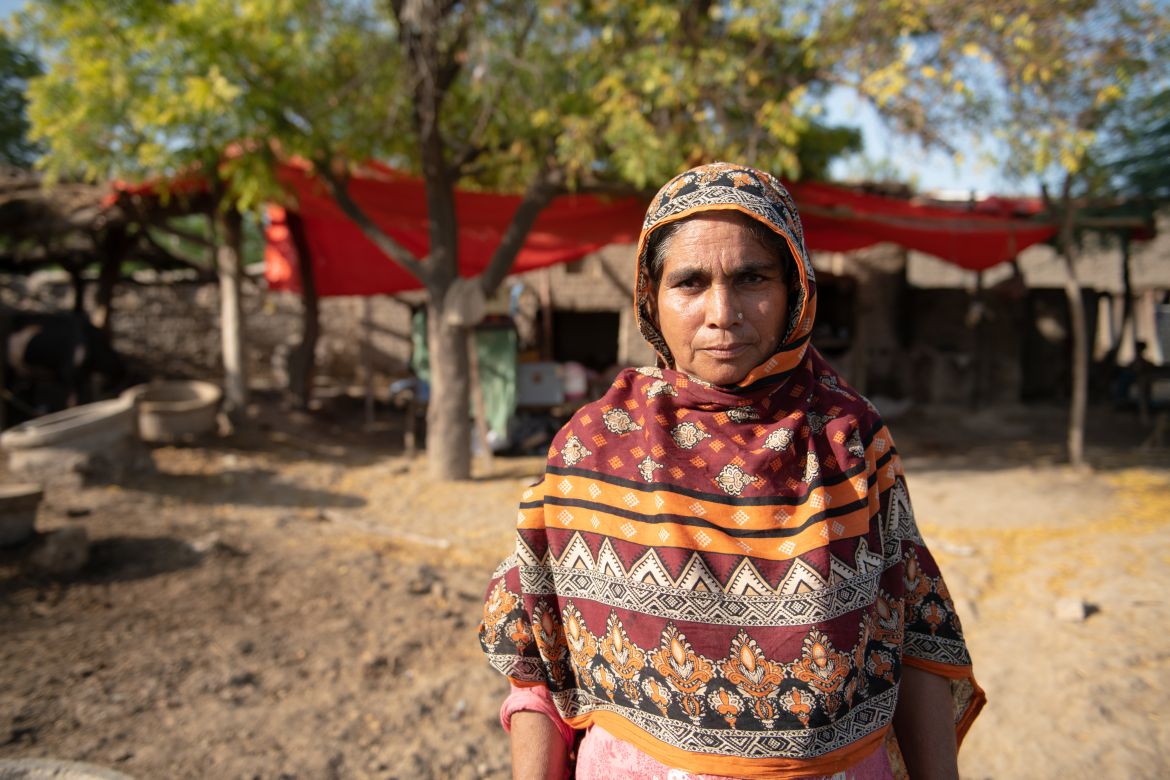
Kasim’s wife, Zeenat Bibi, stands in front of her damaged home. She and her family set up a temporary shelter using tarp and sticks taken from trees nearby, as their house is unsafe.
Kasim’s wife, Zeenat Bibi, stands in front of her damaged home. She and her family set up a temporary shelter using tarpaulins and twigs taken from trees nearby, as their house is unsafe. Their neighbour’s surviving livestock stands in the left corner of their courtyard. [Usman Ghani/IOM]
“I spent my entire lifesavings building this house so my children would have a roof over their heads. Now, it’s all gone
'I spent my entire life's savings building this house so my children would have a roof over their heads. Now, it’s all gone. We can’t rebuild without assistance.' Kasim is not alone in this predicament – floods have damaged or destroyed more than two million homes across the country. [Usman Ghani/IOM]
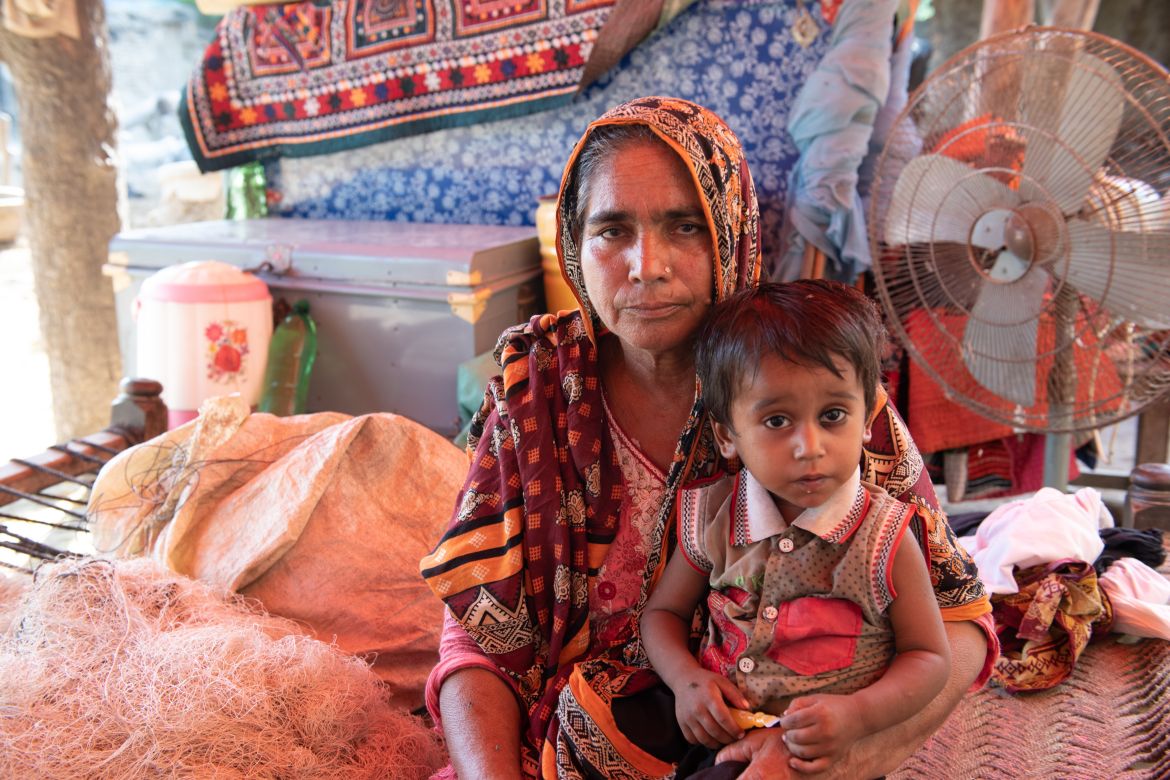
“My youngest son is constantly sick. We are using local remedies to treat him as there are no health facilities near us,” said Zeenat Bibi, holding her four-year-old son, Hussain.
'My youngest son is constantly sick. We are using local remedies to treat him as there are no health facilities near us,' said Zeenat Bibi, holding her four-year-old son, Hussain. 'We have been lucky otherwise. Some of our neighbours were bitten by snakes.' [Usman Ghani/IOM]
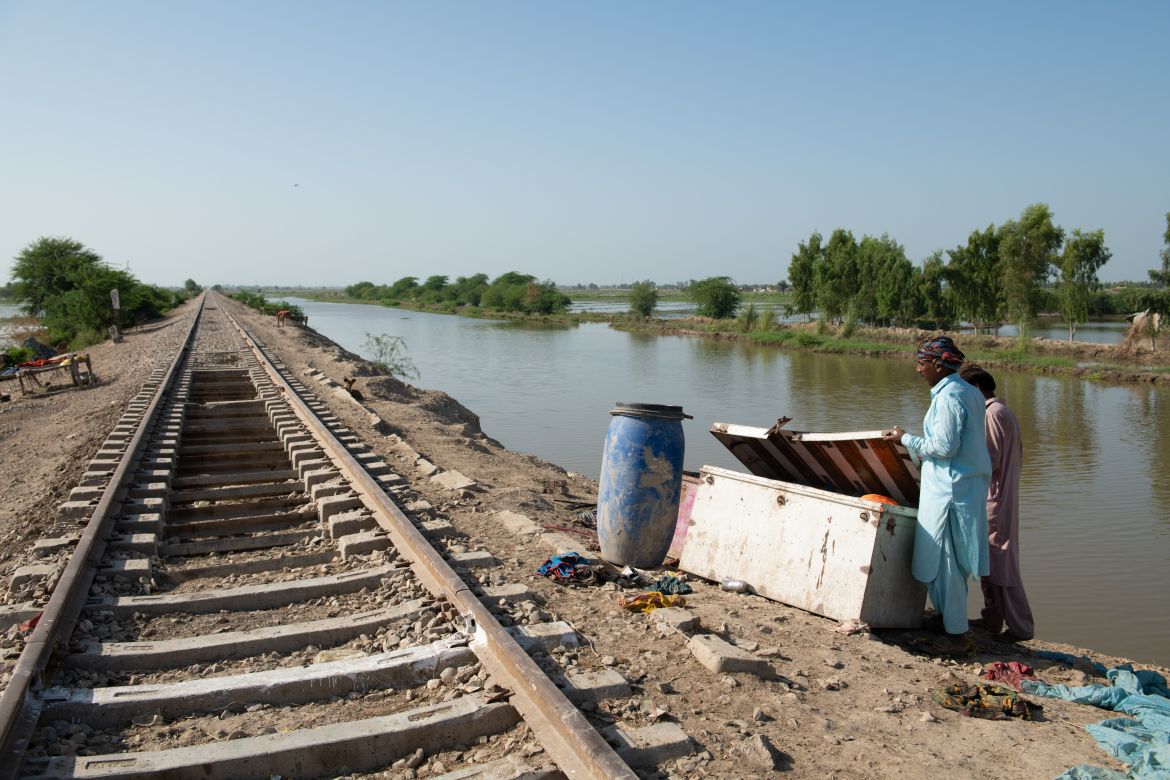
Other members of Kasim and Bibi’s community in Pir Bhakkar, seek shelter next to elevated railway tracks. Until recently, the family lived in a makeshift shelter there. When water levels began to slightly recede, they moved their shelter to the front yard of their home.
Other members of Kasim and Zeenat Bibi's community in Pir Bhakkar seek shelter next to elevated railway tracks. Until recently, the family lived in a makeshift shelter there. When the water levels began to recede, they moved their shelter to the front yard of their home. [Usman Ghani/IOM]
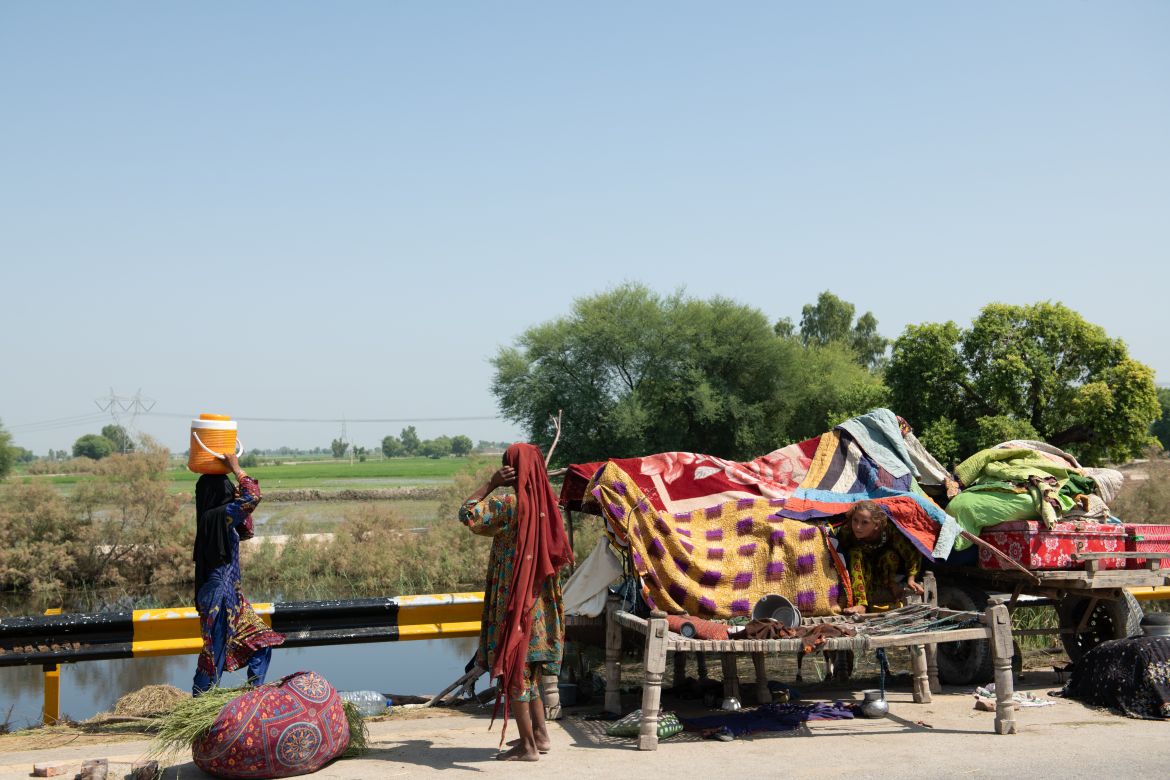
A young girl carries her family's supply of drinking water on her head. When disasters like this occur, the burden of labour on women and girls increases tremendously.
A young girl carries her family's supply of drinking water on her head. When disasters like this occur, the burden of labour on women and girls increases. [Usman Ghani/IOM]
Advertisement
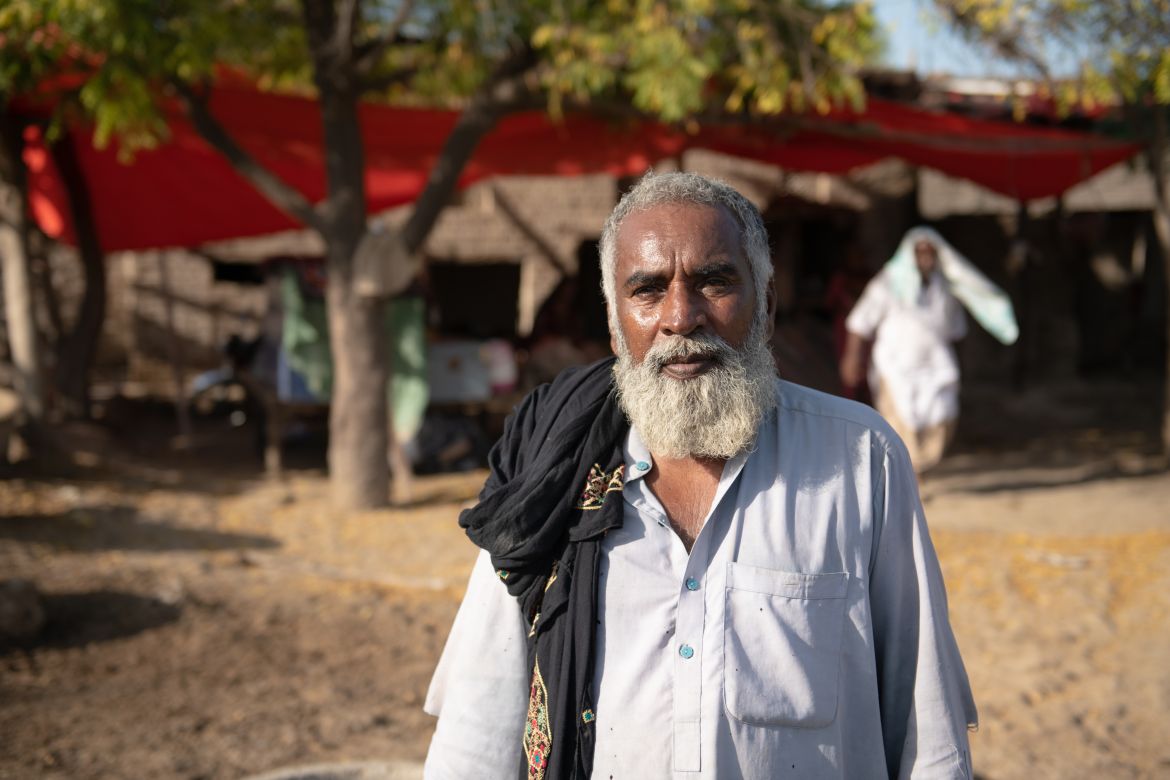
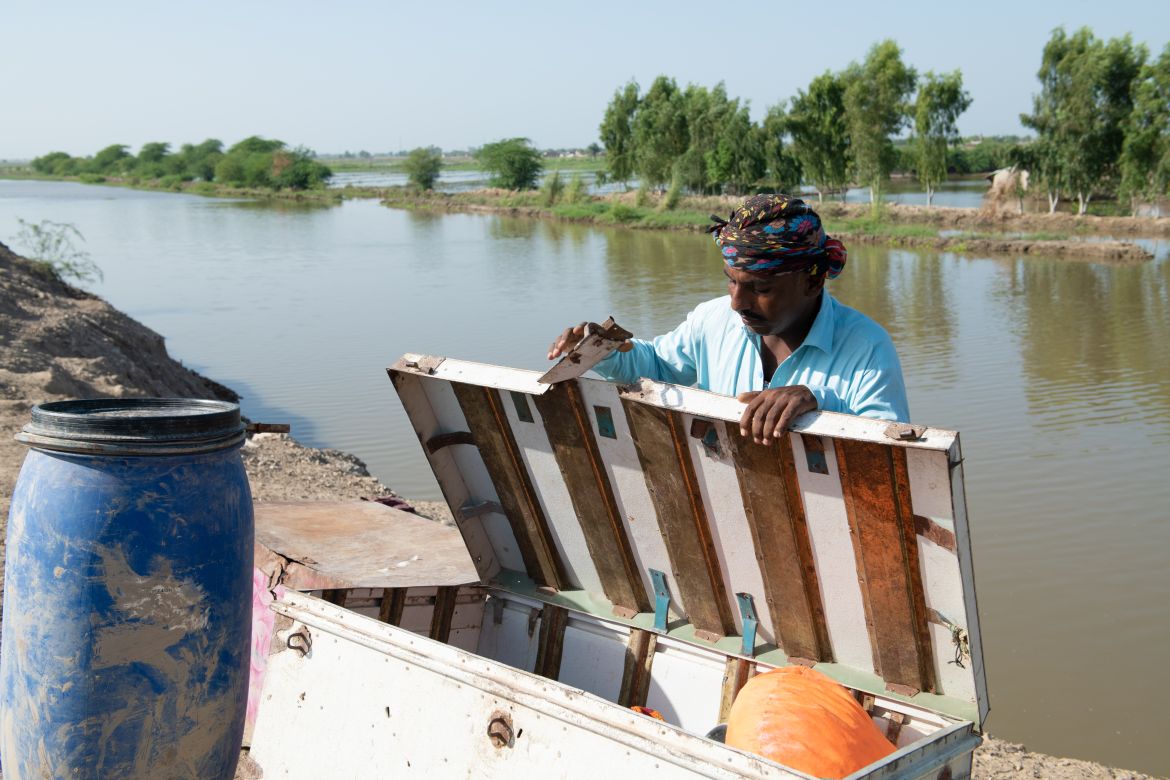
All that remains of Pir Bhakkar community leader Abdul Wahid’s belongings are stored in this trunk. “We have seen some tough times, but this is unprecedented. Who knows what the next floods will bring?”
All that remains of Pir Bhakkar community leader Abdul Wahid’s belongings are stored in this trunk. 'We have seen some tough times, but this is unprecedented. Who knows what the next floods will bring?' [Usman Ghani/IOM]
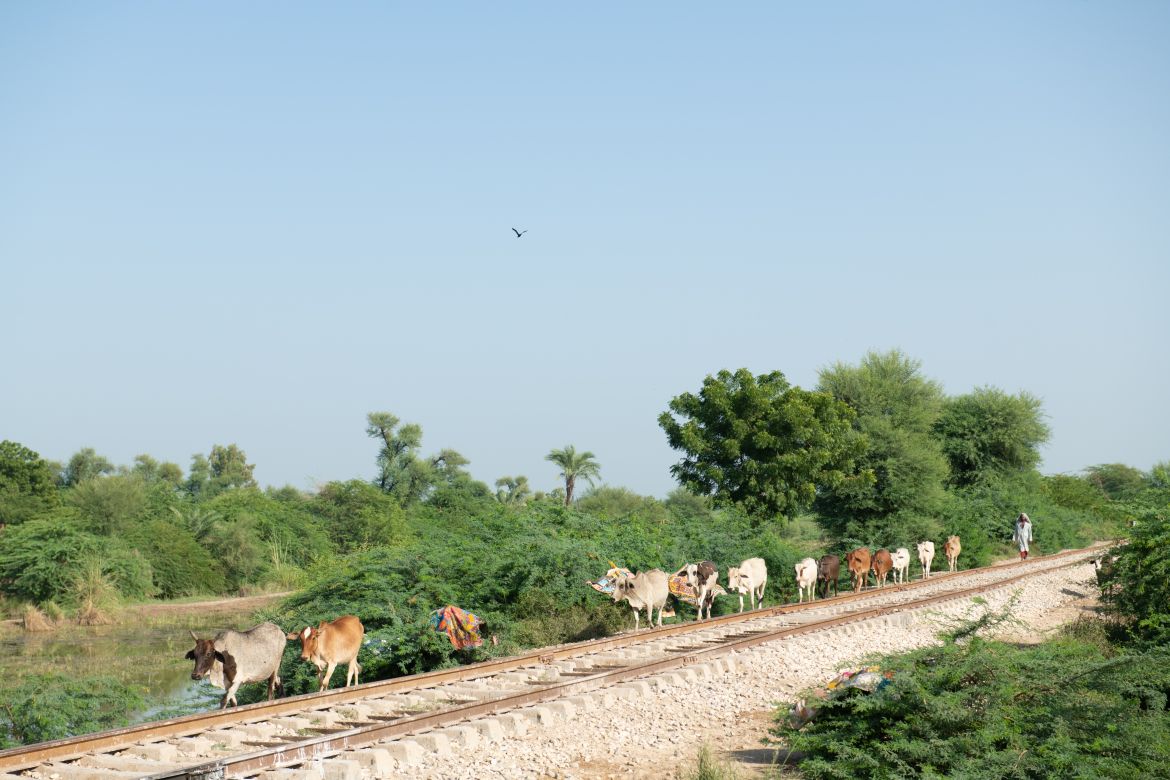
A shepherd herds cattle along an elevated railway track. In this rural area, fishery and livestock are the main sources of income.
A shepherd herds cattle along an elevated railway track. In this rural area, fishery and livestock are the main sources of income. In addition to the loss of fisheries, more than 1.2 million livestock have been lost during the floods. [Usman Ghani/IOM]
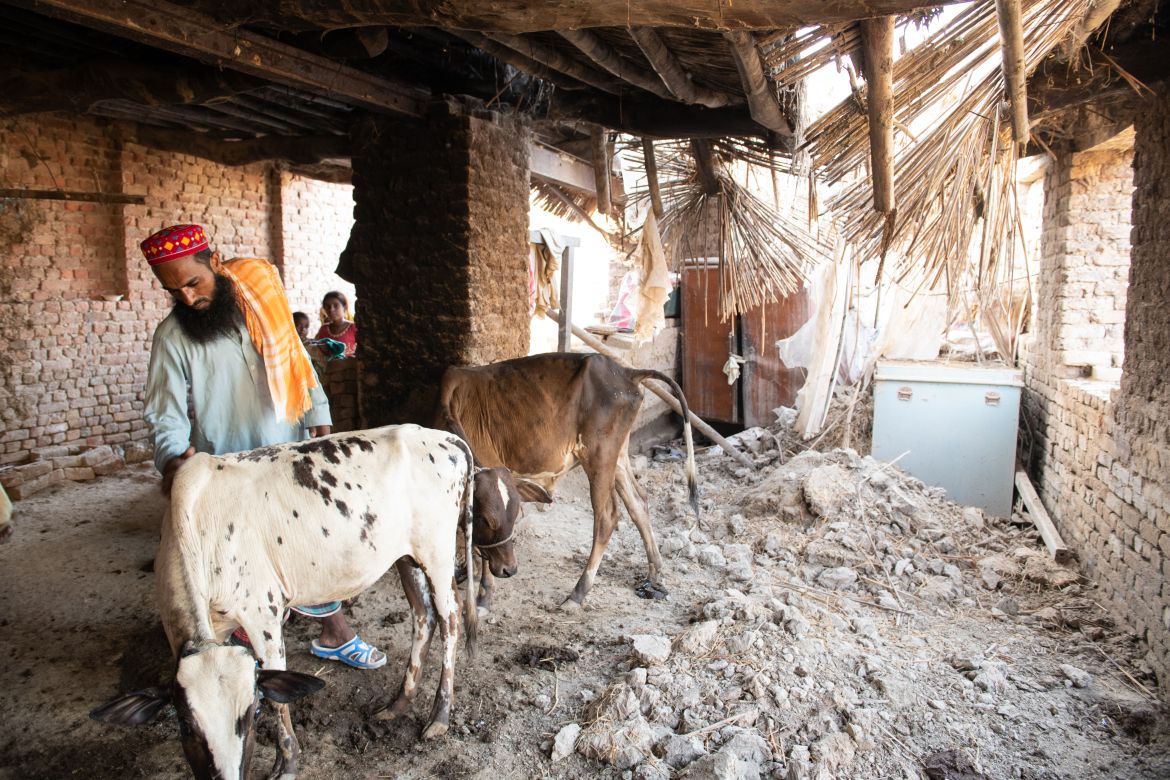
Owners of livestock are struggling to keep their animals safe after the destruction of animal shelters.
Owners of livestock are struggling to keep their animals safe after the destruction of animal shelters. The cattle are at risk of starvation as the floods have wiped out the fodder supply. For many, the livestock they managed to save from the flooded areas during the evacuation is their only remaining source of income. [Usman Ghani/IOM]
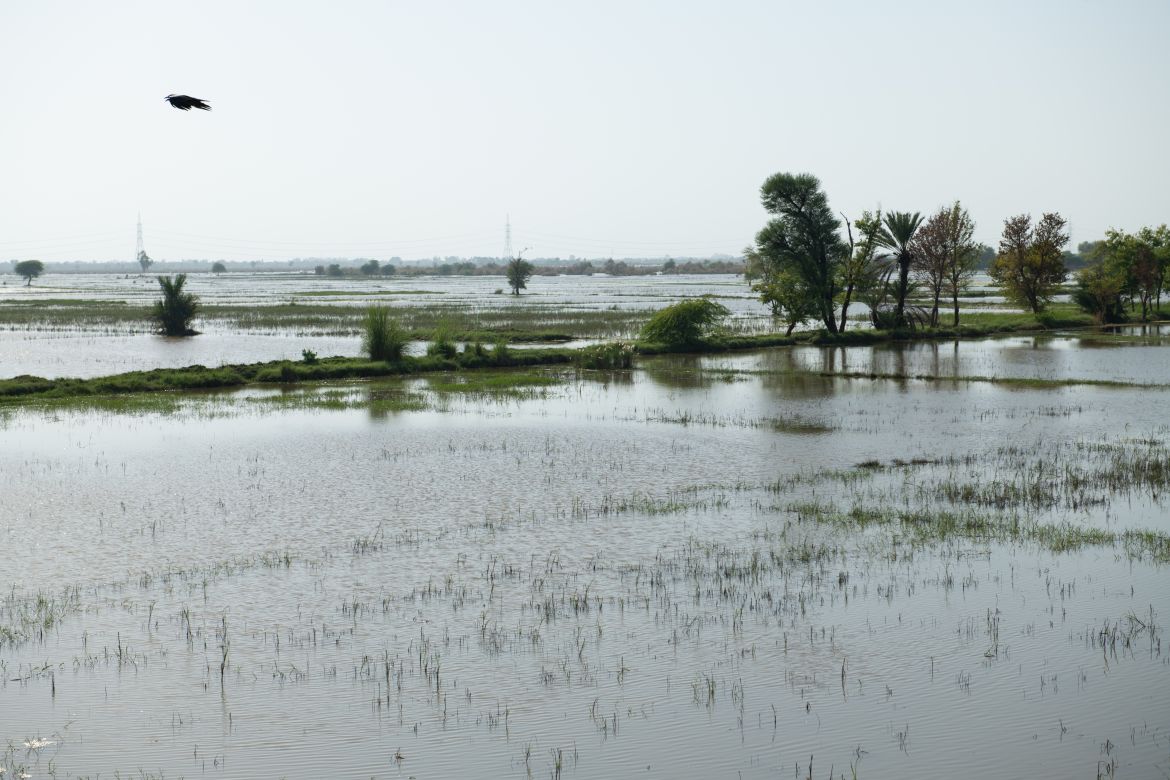
“Gone are the days when our kids used to run freely in these fields,” said Kasim. The surrounding area is still inundated. It could take months before the water completely disappears
'Gone are the days when our kids used to run freely in these fields,' said Kasim. The surrounding area is still inundated. It could take months before the floodwater completely disappears. [Usman Ghani/IOM]
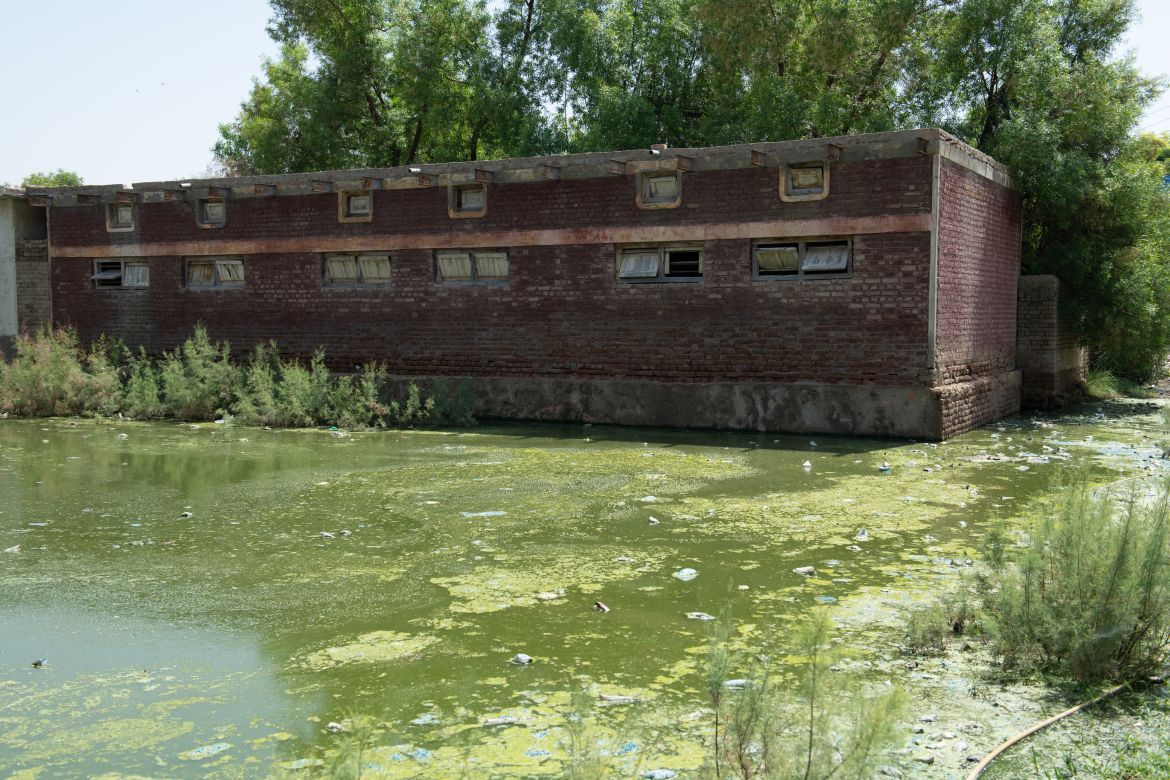
The local school Babar and other children in the community attended is now surrounded by dirty water and has been shut indefinitely. The future of many young children has been put on hold.
The local school Babar and other children in the community attended is now surrounded by dirty water and has been shut indefinitely. The future of many young children has been put on hold. [Usman Ghani/IOM]
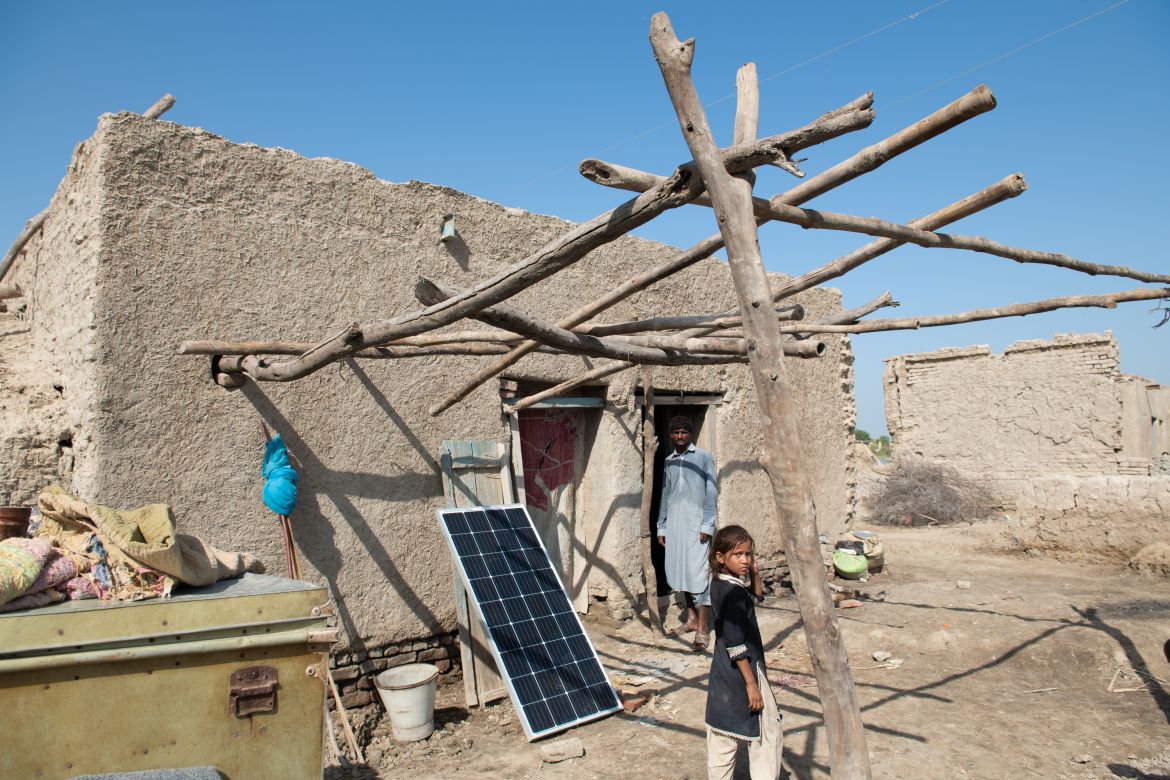
Flood-affected areas cut off from the power grid have no reliable supply of electricity. Solar panels are seen in some areas. The absence of carbon-emitting vehicles reminds us that those contributing the least to climate change are impacted the most.
Flood-affected areas cut off from the power grid have no reliable supply of electricity. Solar panels are seen in some areas. The absence of carbon-emitting vehicles reminds us that those contributing the least to climate change are affected the most. [Usman Ghani/IOM]
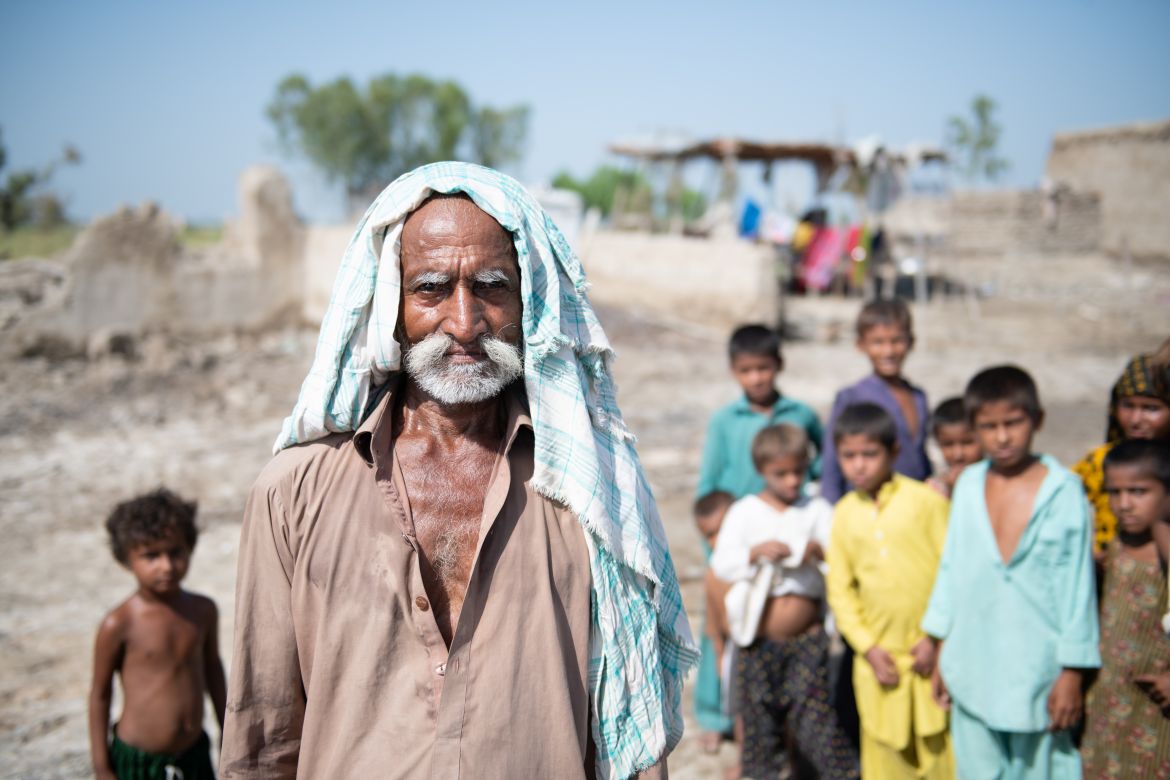
The elderly in the community are worried about the future of the next generations. They worry their children and grandchildren may not be able to take up the traditional profession
The elderly in the community are worried about the future of the next generations. They are concerned that their children and grandchildren may not be able to take up the traditional profession. [Usman Ghani/IOM]

Related

  • OPINIONOPINION,

    How Pakistan can prevent another flood disaster

    There are a number of science-based actions Pakistan can take to improve its capacity to deal with floods.

    Opinion by Mohsin HafeezMohsin Hafeez
    Published On 11 Oct 202211 Oct 2022
    A man pulls his animals while others go to salvage their belongings amid rising flood water, following rains and floods during the monsoon season on the outskirts of Bhan Syedabad, Pakistan September 8, 2022.
    quotes
  • The Full Report: Pakistan – The Great Deluge

    A ‘monsoon on steroids’ has affected 33 million Pakistanis and caused unprecedented flooding linked to climate change.

    Published On 8 Oct 20228 Oct 2022
    Flooding in Pakistan
    Video Duration play-arrow
  • Pakistan flood losses estimated at $40bn: Ex-finance minister

    Al Jazeera looks into the extent and cost of the recent floods that triggered humanitarian and financial crises.

    Published On 7 Oct 20227 Oct 2022
    Pakistan flood

More from Gallery

  • Photos: Somalia hunger crisis worsens as drought displaces more than 500,000

    Hawa Moalim, 33, fled Wajid in the Bakool region after the drought destroyed her livelihood. She began the journey to Baidoa with her six children and the few goats that had survived, determined to give her family a chance. One by one, the animals died on the road. By the time the family arrived at Wayamo displacement camp two weeks ago, they had nothing left. "We arrived here hoping for help," she says. "But since we came, we have received nothing. There is no food, no water, and no proper shelter." Wayamo displacement camp, Baidoa, Southwest State, Somalia. [Abdulkadir Mohamed/NRC]
    This gallery article has 14 imagescamera14
  • Photos: North Korea opens museum for troops killed fighting for Russia

    North Korea opens museum for troops killed fighting for Russia
    This gallery article has 9 imagescamera9
  • Photos: Bomb attack on Colombia highway kills 19 ahead of election

    Bomb attack on Colombia highway kills 19 ahead of election
    This gallery article has 9 imagescamera9
  • Photos: Chornobyl’s ‘liquidators’ return 40 years after nuclear disaster

    Survivors return to Chernobyl, 40 years after devastating explosion
    This gallery article has 15 imagescamera15

Most popular

  • Trump says Iran requesting end to US blockade; Israel kills three medics

    People inside a destroyed building, amid a temporary ceasefire between Lebanon and Israel, in Tyre, southern Lebanon, April 28, 2026.
  • UAE leaves OPEC in blow to oil cartel during war on Iran

    Window of OPEC building with the blue logo.
  • Trump scolds Germany’s Merz for criticism of Iran war

    Trump
  • What are OPEC and OPEC +, and why has the UAE quit?

    FILE - A photographer takes pictures of the Khurais oil field during a tour for journalists, 150 km east-northeast of Riyadh, Saudi Arabia, June 28, 2021. A cut in oil production is on the table when OPEC oil-producing countries meet Wednesday. The OPEC+ alliance that includes Saudi Arabia and Russia is weighing a cut of a million barrels per day or more. The idea is to boost oil prices that have fallen from summer highs of over $100 to around $80 for U.S. crude. (AP Photo/Amr Nabil, File)

  • About

    • About Us
    • Code of Ethics
    • Terms and Conditions
    • EU/EEA Regulatory Notice
    • Privacy Policy
    • Cookie Policy
    • Cookie Preferences
    • Accessibility Statement
    • Sitemap
    • Work for us
  • Connect

    • Contact Us
    • User Accounts Help
    • Advertise with us
    • Stay Connected
    • Newsletters
    • Channel Finder
    • TV Schedule
    • Podcasts
    • Submit a Tip
    • Paid Partner Content
  • Our Channels

    • Al Jazeera Arabic
    • Al Jazeera English
    • Al Jazeera Investigative Unit
    • Al Jazeera Mubasher
    • Al Jazeera Documentary
    • Al Jazeera Balkans
    • AJ+
  • Our Network

    • Al Jazeera Centre for Studies
    • Al Jazeera Media Institute
    • Learn Arabic
    • Al Jazeera Centre for Public Liberties & Human Rights
    • Al Jazeera Forum
    • Al Jazeera Hotel Partners

Follow Al Jazeera English:

  • facebook
  • twitter
  • youtube
  • instagram-colored-outline
  • rss
Al Jazeera Media Network logo
© 2026 Al Jazeera Media Network