Skip linksSkip to Content
play
Live
Navigation menu
  • News
    • Africa
    • Asia
    • US & Canada
    • Latin America
    • Europe
    • Asia Pacific
  • Middle East
  • Explained
  • Opinion
  • Sport
  • Video
    • Features
    • Economy
    • Human Rights
    • Climate Crisis
    • Investigations
    • Interactives
    • In Pictures
    • Science & Technology
    • Podcasts
    • Travel
play
Live
Navigation menu
  • Russia-Ukraine war
  • What are Russia’s gains from the Iran war?
  • ‘We are not losers; we are winners’
  • Four years later: War in Ukraine
  • How Putin stays strong in Russia

In Pictures

Gallery|Russia-Ukraine war

Photos: Ukrainian civilians train for possible war with Russia

Some of Kharkiv’s million-plus people say they stand ready to wage an armed campaign if Russia invades.
Save

Share

facebookxwhatsapp-strokecopylink
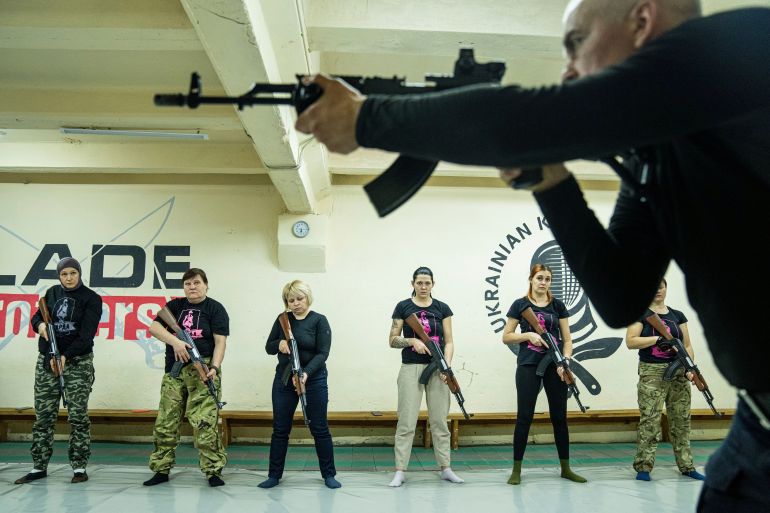
An instructor shows how to use weapons to a group of women during training in Kharkiv
An instructor shows a group of women how to use weapons during training in Kharkiv, Ukraine. [Evgeniy Maloletka/AP Photo]
By AP
Published On 3 Feb 20223 Feb 2022

A table tennis coach, a chaplain’s wife, a dentist and a firebrand nationalist have little in common except a desire to defend their hometown.

And their halting effort to speak Ukrainian instead of Russian, the language that had dominated till recently.

They are among the Ukrainians in Kharkiv who are training for a war with Russia.

If Russia invades, some of the million-plus people here are ready to abandon civilian life and wage an armed campaign against one of the world’s greatest military powers. And they expect many Ukrainians will do the same.

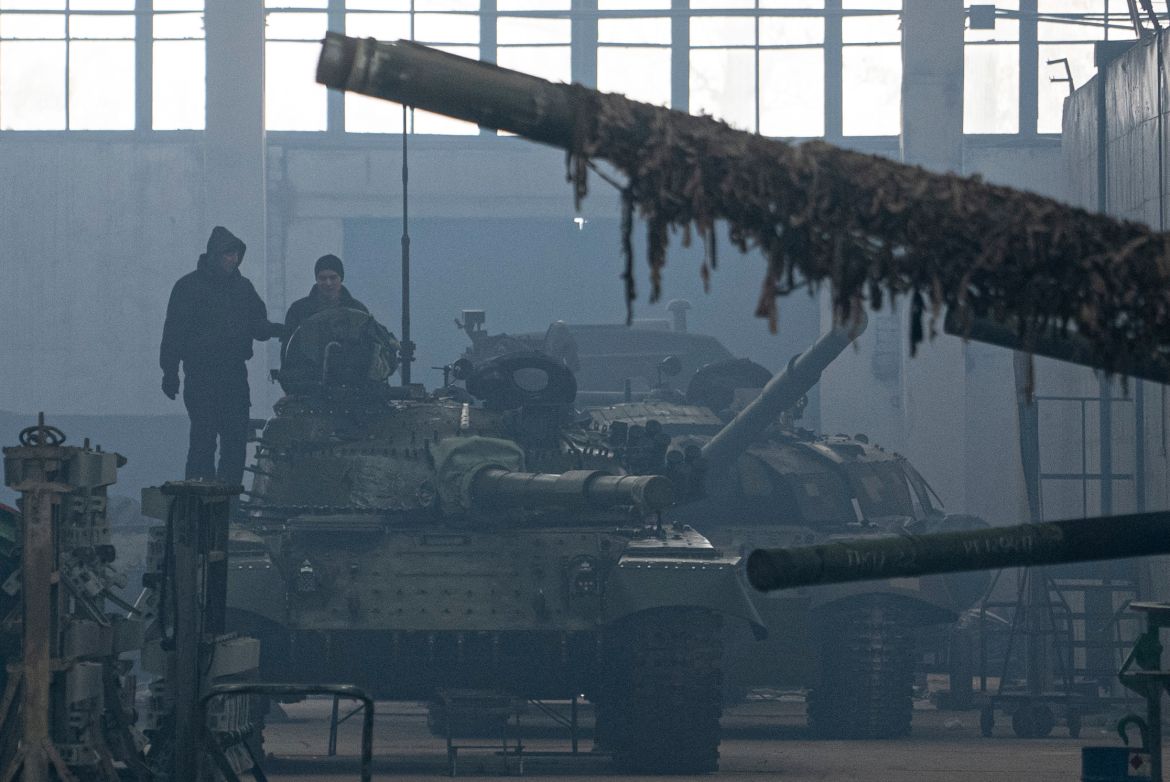
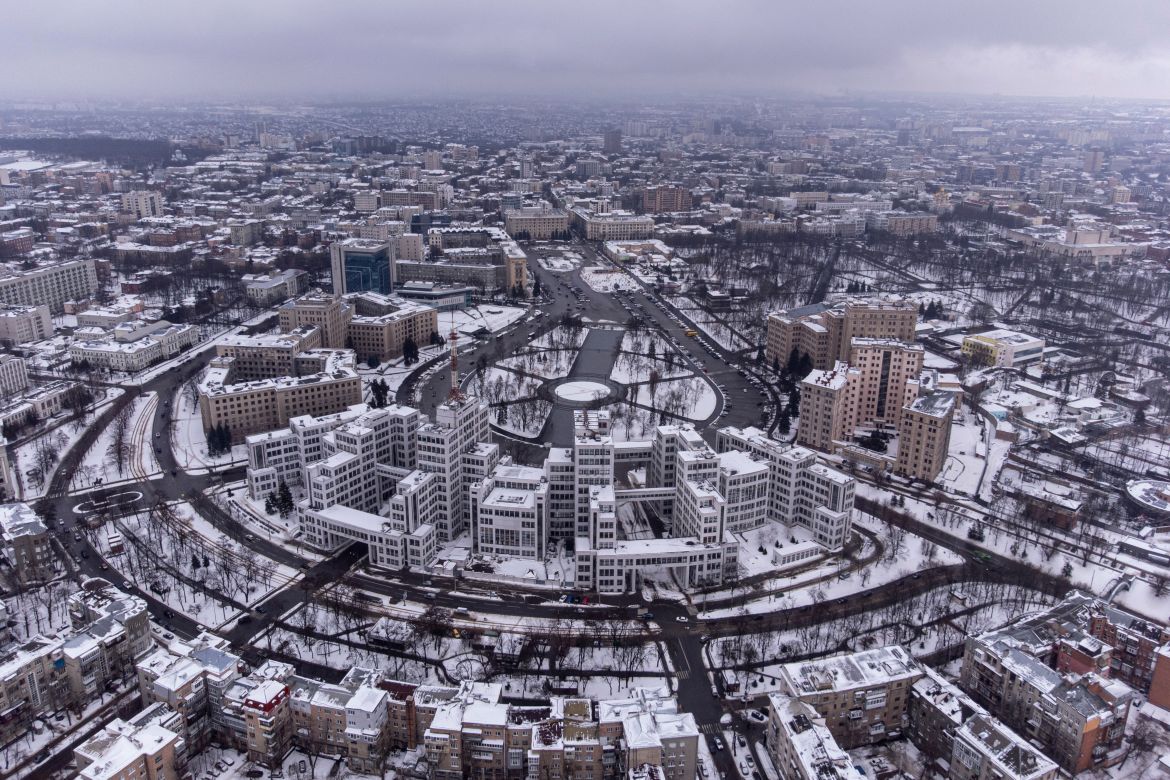
The situation in Kharkiv, just 40km (25 miles) from some of the tens of thousands of Russian troops massed at their border, feels particularly perilous. Ukraine’s second-largest city is one of its industrial centres and includes two factories that restore old Soviet-era tanks or build new ones.

It is also a city of fractures between Ukrainian speakers and those who stick with Russian, between those who enthusiastically volunteer to resist a Russian offensive and those who just want to live their lives.

Which side wins out in Kharkiv could well determine the fate of Ukraine.

The conflict that began in Ukraine’s Donbas region has subsided into low-level trench warfare after agreements brokered by France and Germany. Most of the estimated 14,000 dead were killed in 2014 and 2015, but every month brings new casualties.

An armed resistance by regular citizens defending a hometown of a thousand basement shelters would be a nightmare for Russian military planners, according to analysts and US intelligence officials.

Advertisement

“The Russians want to destroy Ukraine’s combat forces. They don’t want to be in a position where they have to occupy ground, where they have to deal with civilians, where they have to deal with an insurgency,” said James Sherr, an analyst of Russian military strategy who testified last week before a British parliamentary committee.

Russia denies having plans for an offensive but it has demanded guarantees from NATO to keep Ukraine out of the alliance, halt the deployment of NATO weapons near Russian borders and roll back NATO forces from Eastern Europe. NATO and the US call those demands impossible.

Ukrainian President Volodymyr Zelenskyy said recently that any escalation could hinge on Kharkiv. The city is also the base for Yevheniy Murayev, identified by British intelligence as the person Russia was considering installing as president.

“Kharkiv has over 1 million citizens,” Zelenskyy recently told The Washington Post. “It’s not going to be just an occupation; it’s going to be the beginning of a large-scale war.”
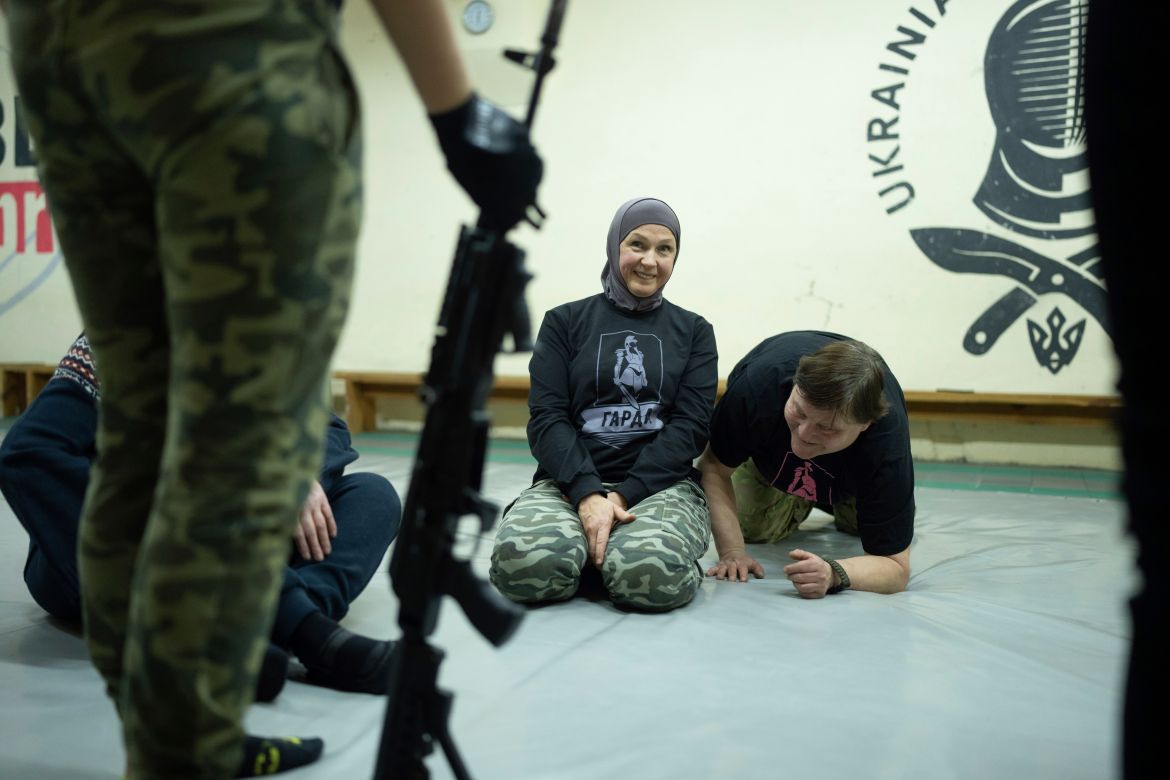
Svetlana Putilina smiles as she listens to an instructor during the training in Kharkiv,
Svetlana Putilina smiles as she listens to an instructor during the training. Putilina, 50, whose husband is a Muslim chaplain in the Ukrainian military, has set emergency plans for her family and for her unit, outlining who will take the children to safety outside the city, who will accompany elderly parents and grandparents to one of the hundreds of mapped bomb shelters and what resistance the women will deploy. [Evgeniy Maloletka/AP Photo]
Advertisement
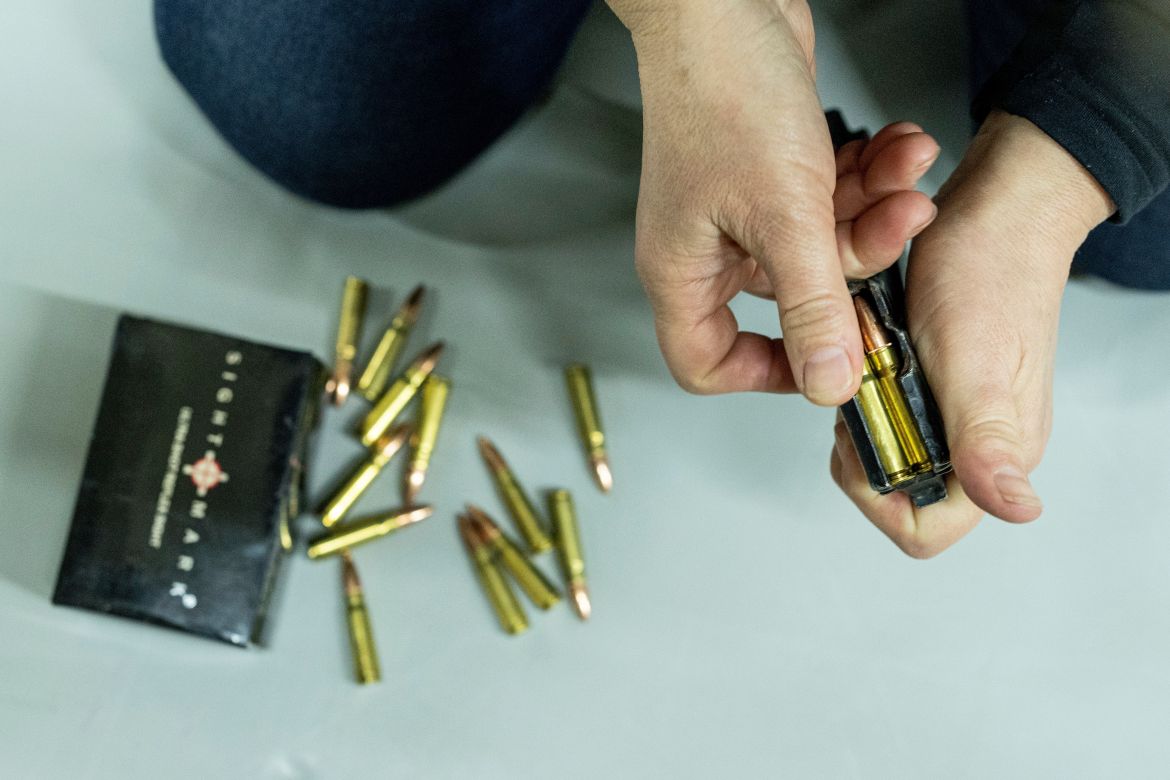
A woman loads ammunition for a Kalashnikov assault rifle during training
A woman loads ammunition for a Kalashnikov assault rifle during training. Kharkiv is just 40km (25 miles) from some of the tens of thousands of Russian troops massed at the border. [Evgeniy Maloletka/AP Photo]
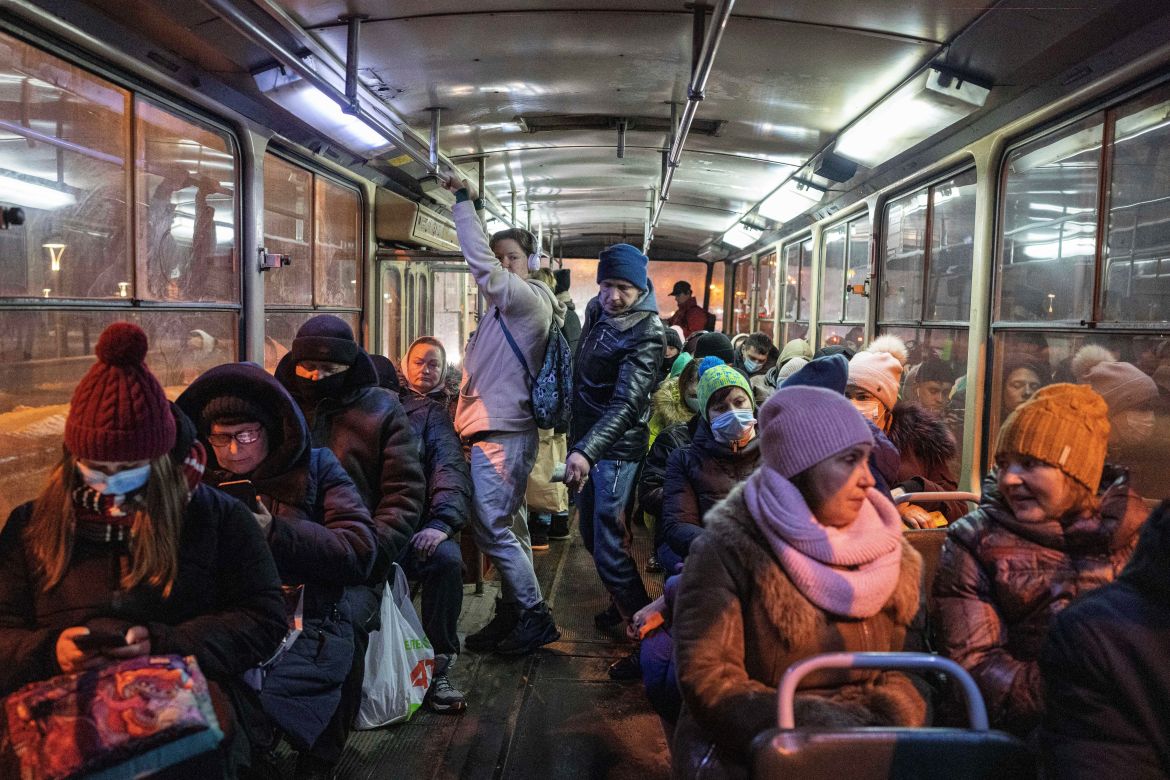
Passengers ride a bus in Kharkiv
Passengers ride a bus in Kharkiv. Ukraine's second-largest city is one of its industrial centres. [Evgeniy Maloletka/AP Photo]
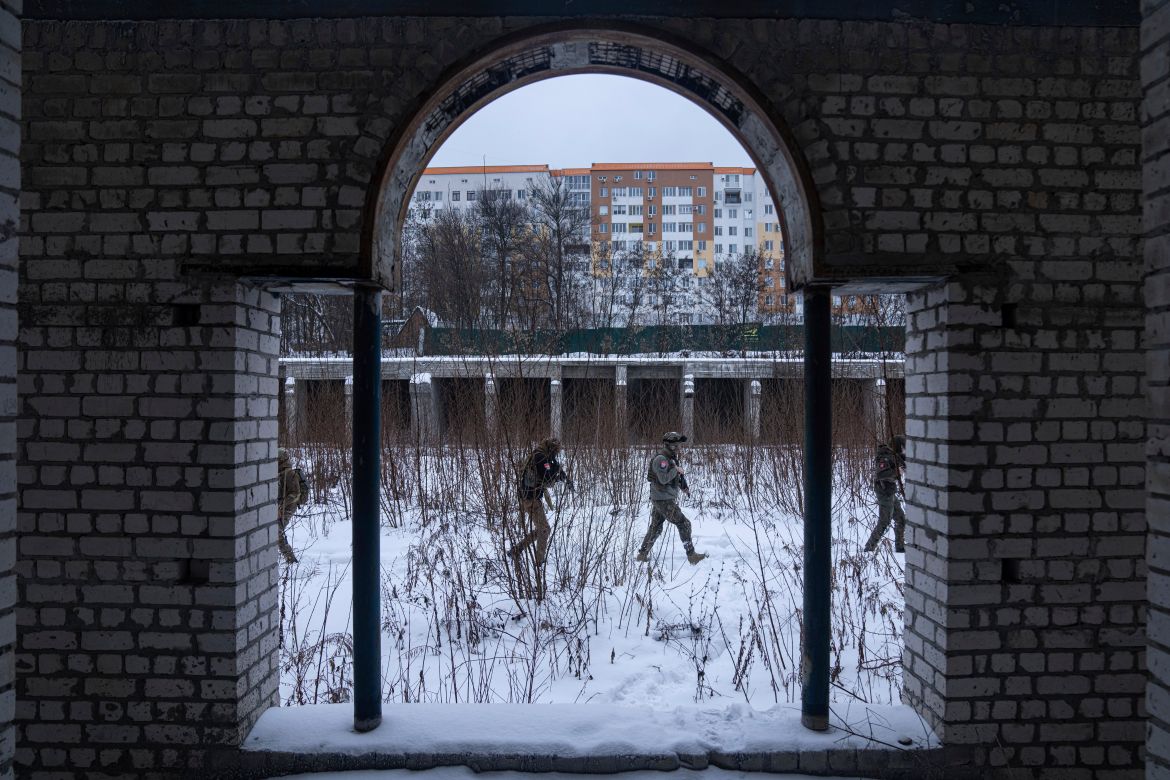
Members of a Ukrainian far-right group train in Kharkiv
Members of a Ukrainian nationalist youth group train in an abandoned construction site in Kharkiv. [Evgeniy Maloletka/AP Photo]
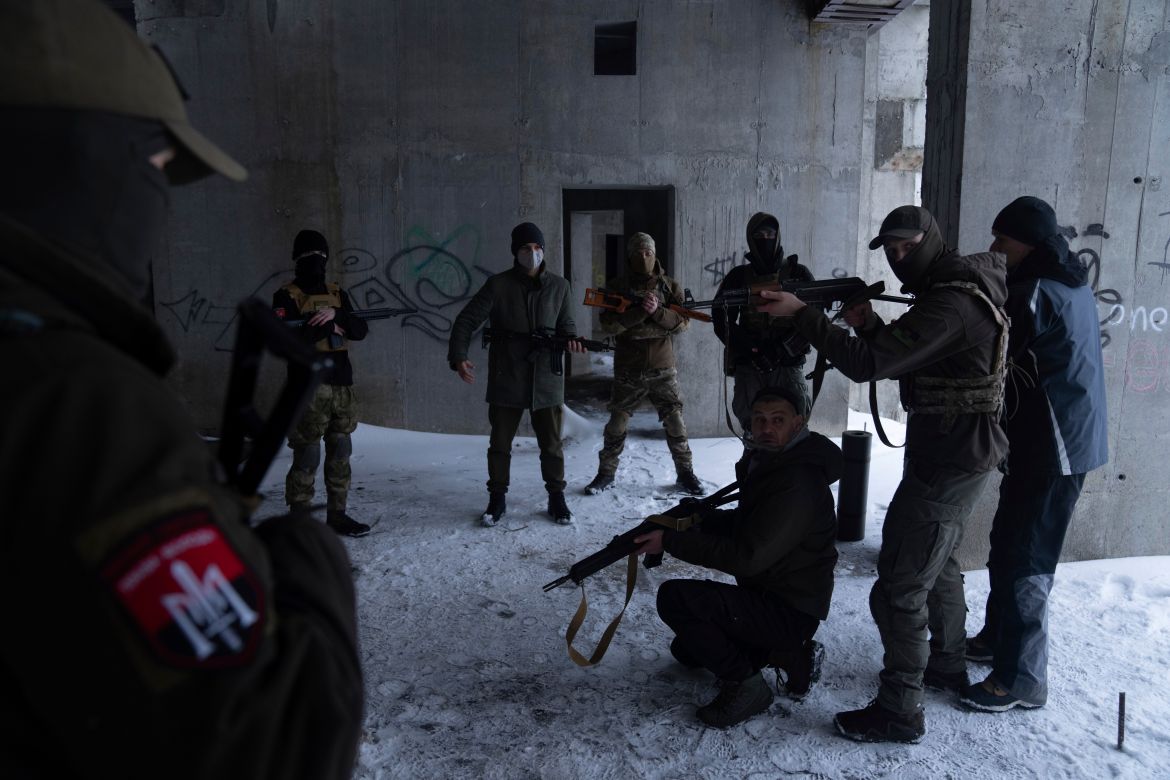
Members of a Ukrainian far-right group train in Kharkiv
The men who join the nationalist youth group or the government-run units have already shown themselves to be up for the challenge to come, said one of the trainers, who identified himself by the nom de guerre Pulsar. [Evgeniy Maloletka/AP Photo]
Workers stand atop a tank T-64 on Repair Tank Factory in Kharkiv,
Workers stand atop a T-64 tank at Repair Tank Factory. The city has two factories that restore old Soviet-era tanks or build new ones. [Evgeniy Maloletka/AP Photo]
Advertisement
An aerial view on the center of Kharkiv
An aerial view of the centre of Kharkiv, Ukraine's second-largest city. [Evgeniy Maloletka/AP Photo]

Related

  • On Ukraine’s front line, Britons battle Russia-backed separatists

    A handful of British soldiers fighting against Russia-backed separatists say they are motivated by a sense of duty.

    Published On 1 Feb 20221 Feb 2022
    Aiden, a British soldier in Ukraine
  • War-weary residents lament homes lost in eastern Ukraine shelling

    Destruction of homes in a small village near frontlines in Donbas raises fears of a worsening humanitarian crisis.

    Published On 30 Jan 202230 Jan 2022
    An abandoned house in Nevelske village. Ukraine
  • Ukraine crisis: US to deploy more troops to Eastern Europe

    Pentagon stresses US forces are not going to Ukraine, but to bolster security of NATO nations in Eastern Europe.

    Published On 2 Feb 20222 Feb 2022
    Troops training on snow
  • Ukraine-Russia crisis: Ceasefire violations rise at contact line

    Ukraine and Russia-backed separatists break truce as tensions soar, but UN diplomat says no sign of major operations.

    Published On 1 Feb 20221 Feb 2022
    A serviceman takes his position in a trench at the line of separation in Yasne village

More from Gallery

  • Photos: Mughal-era pigeon training survives in heart of India’s capital

    Mughal-era pigeon training survives in heart of India's capital
    This gallery article has 11 imagescamera11
  • Photos: Displaced Lebanese families return home despite Israeli attacks

    Tens of thousands return to southern Lebanon despite warnings and risks
    This gallery article has 13 imagescamera13
  • Photos: Afghan villagers turn to gold-panning to sustain livelihoods

    Afghan villagers turn to gold panning to sustain livelihoods
    This gallery article has 9 imagescamera9
  • Photos: Families across Sudan endure years of displacement, hunger, loss

    Crowd of children sits under a tree and listens to a teacher.
    This gallery article has 17 imagescamera17

Most popular

  • Trump says suspect in custody after shooting at correspondents’ dinner

    Secret service agents respond during the White House Correspondents Dinner, Saturday, April 25, 2026, in Washington.
  • Trump unhurt after shots fired at White House correspondents’ dinner

    Trump
  • Iran says no talks under siege; Trump cancels envoys’ trip to Pakistan

    A woman walks past images of Iran's late supreme leaders Ayatollah Ruhollah Khomeini (above L) and Ayatollah Ali Khamenei (Above C) next to newly elected supreme leader Mojtaba Khamenei (above R), and photos strung along the wall of children killed on the first day of the war in an alleged US-Israeli missile strike on a school in the southern Iranian city of Minab, outside a mosque in the capital Tehran on April 25, 2026. On February 28, Israel and the United States launched strikes on Iran, killing its supreme leader and triggering a war that spread across the Middle East.
  • Iran war updates: Trump cancels Witkoff, Kushner trip to Pakistan for talks

    In this photo provided by the Pakistan Ministry of Foreign Affairs, Iranian Foreign Minister Abbas Araghchi, center, is greeted by Pakistan Foreign Minister Ishaq Dar, second right, and Army Chief Field Marshal Asim Munir, third left, upon his arrival at Nur Khan airbase in Rawalpindi, Pakistan, Friday, April 24, 2026. (Pakistan Ministry of Foreign Affairs via AP)

  • About

    • About Us
    • Code of Ethics
    • Terms and Conditions
    • EU/EEA Regulatory Notice
    • Privacy Policy
    • Cookie Policy
    • Cookie Preferences
    • Accessibility Statement
    • Sitemap
    • Work for us
  • Connect

    • Contact Us
    • User Accounts Help
    • Advertise with us
    • Stay Connected
    • Newsletters
    • Channel Finder
    • TV Schedule
    • Podcasts
    • Submit a Tip
    • Paid Partner Content
  • Our Channels

    • Al Jazeera Arabic
    • Al Jazeera English
    • Al Jazeera Investigative Unit
    • Al Jazeera Mubasher
    • Al Jazeera Documentary
    • Al Jazeera Balkans
    • AJ+
  • Our Network

    • Al Jazeera Centre for Studies
    • Al Jazeera Media Institute
    • Learn Arabic
    • Al Jazeera Centre for Public Liberties & Human Rights
    • Al Jazeera Forum
    • Al Jazeera Hotel Partners

Follow Al Jazeera English:

  • facebook
  • twitter
  • youtube
  • instagram-colored-outline
  • rss
Al Jazeera Media Network logo
© 2026 Al Jazeera Media Network