Skip linksSkip to Content
play
Live
Navigation menu
  • News
    • Africa
    • Asia
    • US & Canada
    • Latin America
    • Europe
    • Asia Pacific
  • Middle East
  • Explained
  • Opinion
  • Sport
  • Video
    • Features
    • Economy
    • Human Rights
    • Climate Crisis
    • Investigations
    • Interactives
    • In Pictures
    • Science & Technology
    • Podcasts
    • Travel
play
Live

In Pictures

Gallery|Climate Crisis

Photos: Mothers at the searing edge of climate crisis in Pakistan

As Jacobabad becomes hottest city on Earth, studies say pregnant women are at a higher risk of suffering complications.

Save

Share

facebookxwhatsapp-strokecopylink
A woman drinks a plum and tamarind drink to cool off during a heatwave, in Jacobabad
A woman drinks a plum and tamarind drink to cool off during a heatwave, in Jacobabad. [Akhtar Soomro/Reuters]
By Reuters
Published On 14 Jun 202214 Jun 2022

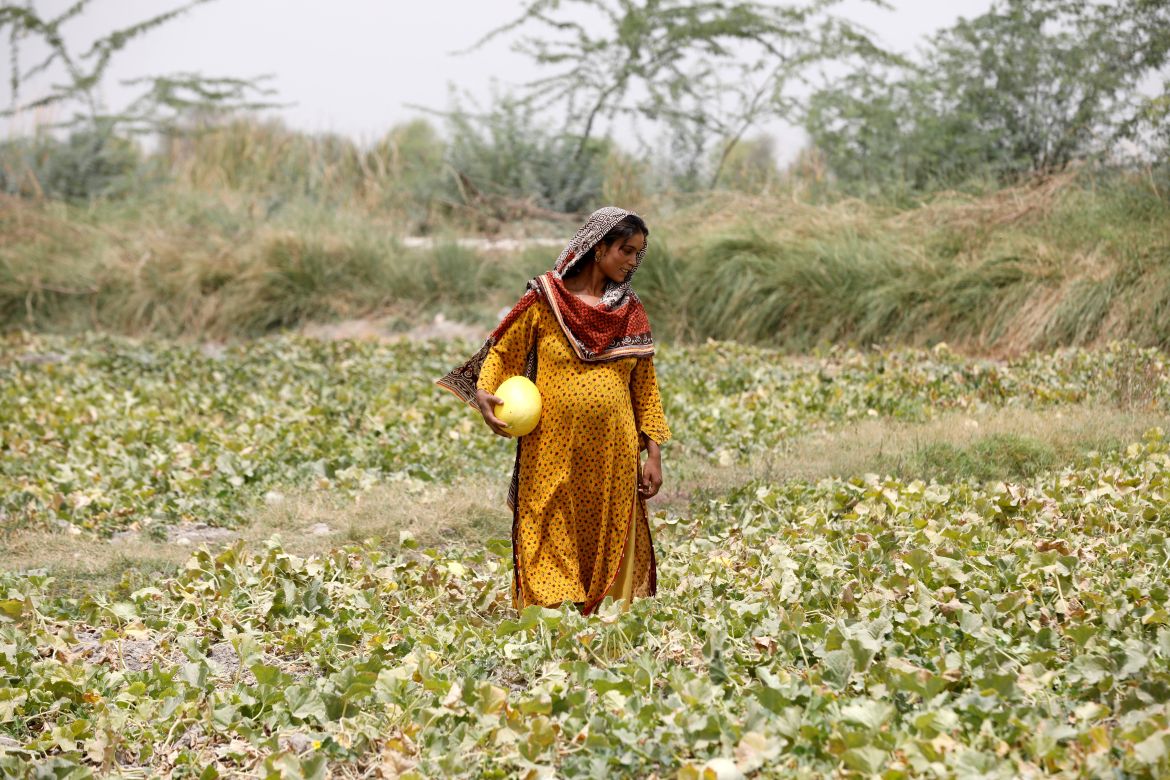
Heavily pregnant Sonari toils under the burning sun in fields dotted with bright yellow melons in Pakistan’s Jacobabad, which last month became the hottest city on Earth.

Her 17-year-old neighbour Waderi, who gave birth a few weeks ago, is back working in temperatures that can exceed 50 degrees Celsius (122 degrees Fahrenheit), with her newborn lying on a blanket in the shade nearby so she can feed him when he cries.

“When the heat is coming and we are pregnant, we feel stressed,” said Sonari, who is in her mid-20s.

These women in southern Pakistan and millions like them around the world are at the searing edge of climate change.

Pregnant women exposed to heat for prolonged periods of time have a higher risk of suffering complications, an analysis of 70 studies conducted since the mid-1990s on the issue found.

For every 1C (1.8F) rise in temperature, the number of stillbirths and premature deliveries increases by about 5 percent, according to a study carried out by several research institutions globally and published in the British Medical Journal in September 2020.

Women are especially vulnerable to rising temperatures in poor countries on the front lines of climate change because many have little choice but to work through their pregnancies and soon after giving birth, according to interviews with more than a dozen female residents in the Jacobabad area as well as half a dozen development and human rights experts.

South Asia has suffered unseasonably hot temperatures in recent months. An extreme heatwave that scorched Pakistan and India in April was 30 times more likely to happen due to climate change, according to scientists at World Weather Attribution, an international research collaboration.

Advertisement

Jacobabad’s roughly 200,000 residents are well aware of its reputation as one of the world’s hottest cities. “If we go to hell, we’ll take a blanket” is a common joke told in the area.

Sonari, who is in her 20s, and Waderi work alongside about a dozen other women, several of them pregnant, in the melon fields about 10km (6.2 miles) from Jacobabad’s centre.

They begin work each day at 6am with a short afternoon break for housework and cooking before returning to the field to work until sundown. They describe leg pains, fainting episodes and discomfort while breastfeeding.

“It feels like no one sees them, no one cares about them,” aid worker Liza Khan said more broadly about the plight facing many women in Jacobabad and the wider Sindh region which straddles the border of Pakistan and India.

The harsh conditions facing many women were brought into tragic focus on May 14, the day temperatures in Jacobabad hit 51C (124F), making it the world’s hottest city at that time.

Widespread poverty and frequent power cuts mean many people cannot afford or use air conditioning or at times even a fan to cool down.

Potential strategies recommended by experts include providing clean-energy stoves to replace open-fire cooking, offering women’s medical and social services during early morning or evening hours when it is cooler and replacing tin roofs with cooler material in white to reflect solar radiation away from the home.

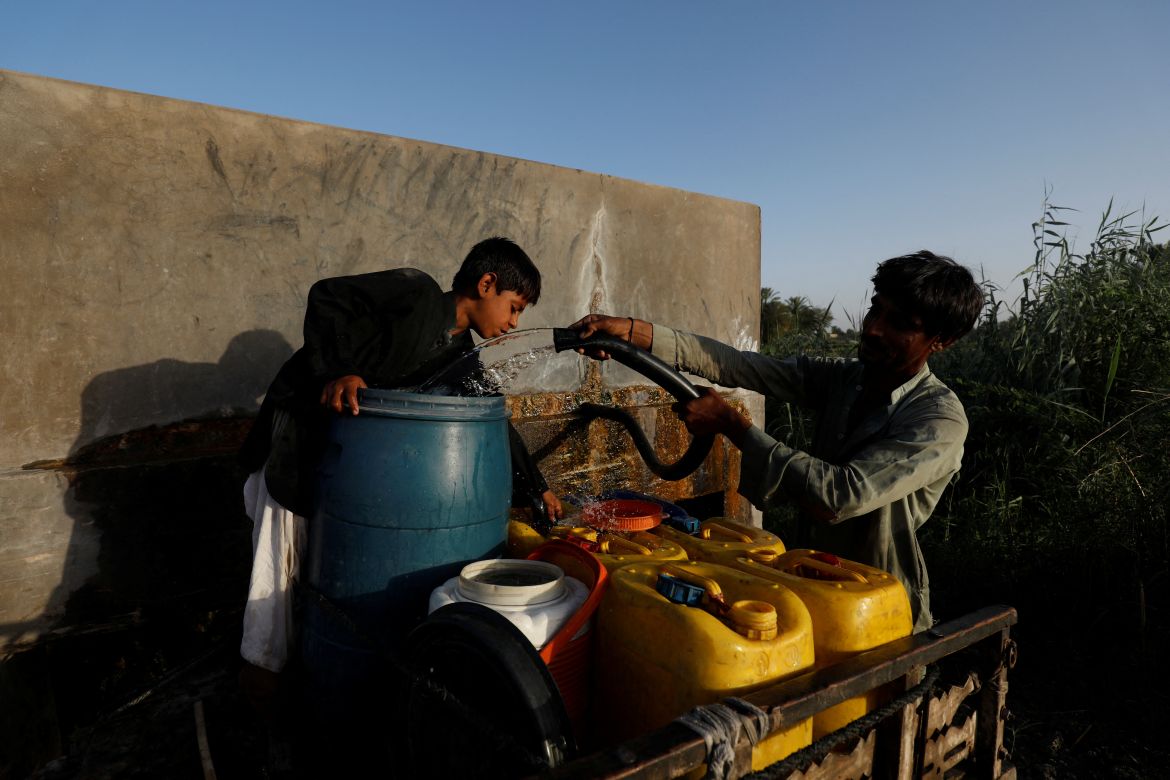
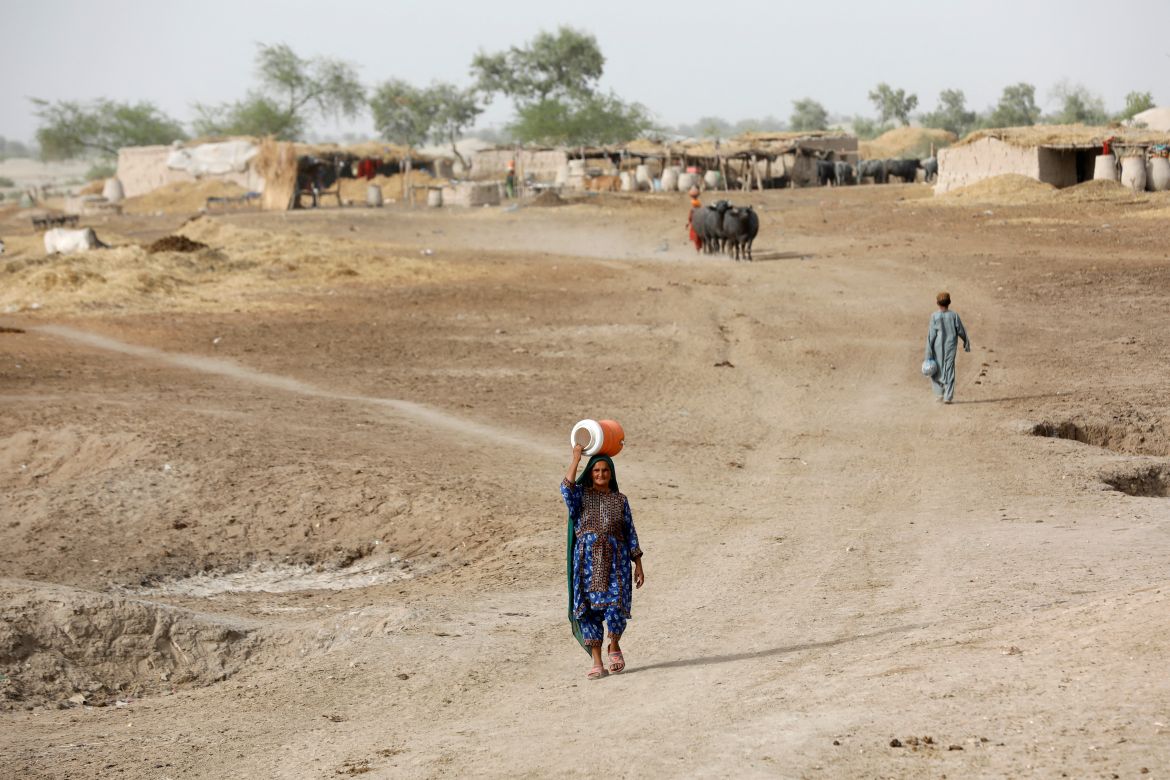
Most residents of Jacobabad rely on water deliveries, which can cost between a fifth and an eighth of a household’s meagre income. Still, it is often not enough, and some families are forced to ration.

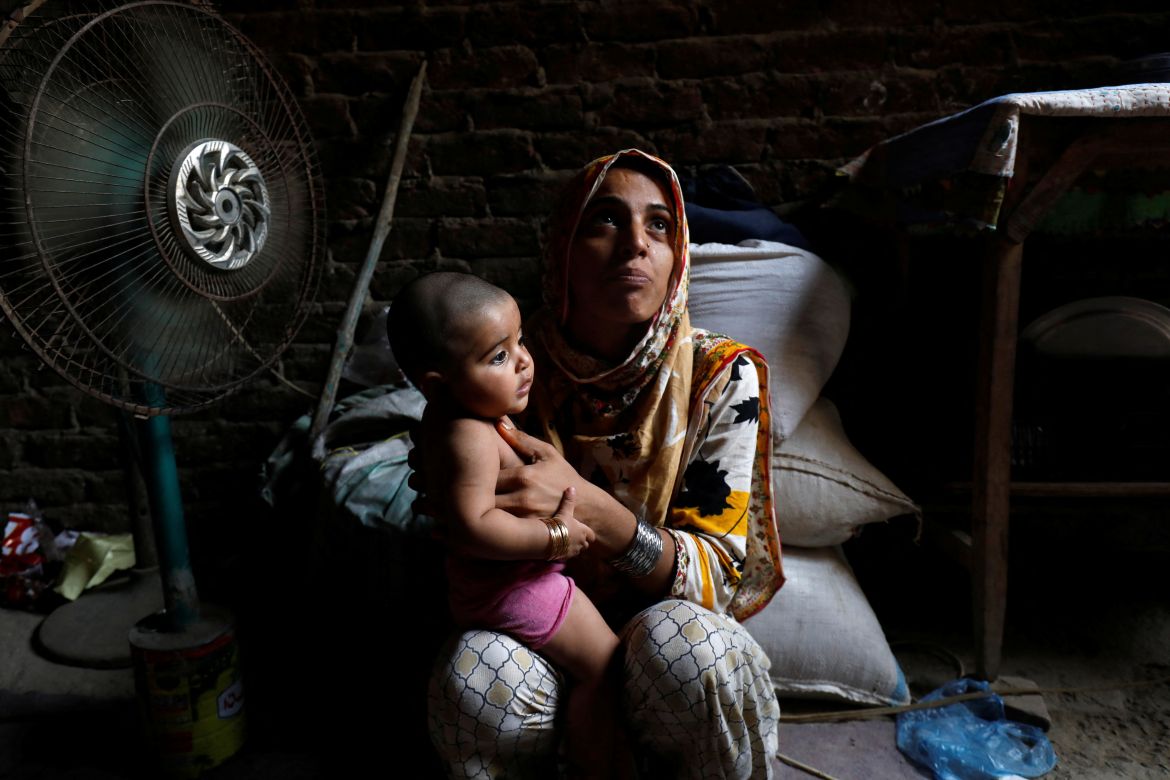
For young mother Razia, the sound of her six-month-old Tamanna crying in the afternoon heat was enough to persuade her to pour some of her precious water over the baby. She then sat Tamanna in front of a fan, and the child was visibly calmer, playing with her mother’s scarf.

Local officials said water shortages were partly due to electricity cuts, which means water cannot be filtered and sent via pipes throughout the city.

Climate Change Minister Sherry Rehman told Reuters news agency that women were likely to bear the brunt of rising temperatures which continue to scorch the country, adding that climate change policies in the future needed to address the specific needs of women.

“A megatrend like climate change … poses a significant threat to the wellbeing of unempowered women in rural areas and urban slums,” she said. “Pakistani women, especially on the margins, will be impacted the most.”

Advertisement

Rubina, who is Razia’s neighbour, fries onions and okra over an open fire, explaining she usually felt dizzy in the heat and tried to soak herself in water each time she cooked to prevent herself from fainting. There was not always enough water to do so, though.

“Most of the time, it ends before it’s time to buy more and we must wait,” Rubina said as she supervised her children and grandchildren sharing a cup of water. “On the hot days with no water, no electricity, we wake up and the only thing we do is pray to God.”

Women and children wash themselves after work at a muskmelon farm
Women and children wash after a day of work at a muskmelon farm in Jacobabad. [Akhtar Soomro/Reuters]
Advertisement
Heavily Pregnant, Sonari, collects muskmelons during a heatwave, at a farm on the outskirts of Jacobabad
Sonari collects muskmelons at a farm on the outskirts of Jacobabad. 'When the heat is coming and we're pregnant, we feel stressed,' said Sonari, who is in her mid-20s. [Akhtar Soomro/Reuters]
Siraj, 8, carries bags of ice purchased for his family from a nearby stall, in a residential area in Jacobabad
Siraj, 8, carries bags of ice bought for his family from a nearby stall, in a residential area in Jacobabad. 'If we go to hell, we'll take a blanket' is a common joke told in the area. [Akhtar Soomro/Reuters]
People in a rickshaw carry a solar panel, during a heatwave, in Jacobabad
People in a rickshaw carry a solar panel. Temperatures hit 51C (124F) on May 14, which local meteorological officials say was highly unusual for that time of year. [Akhtar Soomro/Reuters]
A father and his son fill water canisters from a private pump to sell door-to-door,
A man and his son fill water canisters from a private pump to sell door-to-door. [Akhtar Soomro/Reuters]
Rubina, 35, prepares food for her family during a heatwave, at home in Jacobabad
Rubina, 35, prepares food for her family. Rubina said she usually felt dizzy in the heat and tried to soak herself in water each time she cooked to prevent herself from fainting. 'On the hot days with no water, no electricity, we wake up, and the only thing we do is pray to God.' [Akhtar Soomro/Reuters]
Advertisement
Rehmat, 30, helps Razia, 25, bathe her six-month-old daughter Tamanna to cool off during a heatwave
Rehmat, 30, helps Razia, 25, bathe her six-month-old daughter Tamanna to cool off during a heatwave. [Akhtar Soomro/Reuters]
Razia, 25, and her six-month-old daughter Tamanna, sit in front of a fan to cool off
Razia, 25, and her six-month-old daughter Tamanna sit in front of a fan to cool off. [Akhtar Soomro/Reuters]
Men sleep on charpoy rope beds,
Men sleep on charpoy rope beds on a roof in Jacobabad. [Akhtar Soomro/Reuters]
A woman walks to fetch water from a nearby hand-pump
A woman walks to fetch water from a nearby hand pump. [Akhtar Soomro/Reuters]

Related

  • ‘Perfect climate storm’: Pakistan reels from extreme heat

    ‘Torrid’ heatwave with temperatures reaching mid-40°s Celsius has renewed debate over the climate crisis.

    Published On 21 May 202221 May 2022
    Two young men next to a water canal
  • Water crisis, power cuts worsen misery in Pakistan’s hottest city

    Jacobabad in arid Sindh province is in the grip of an intense heatwave – peaking at 51 degrees Celsius at the weekend.

    Published On 16 May 202216 May 2022
    Pakistan heatwave
  • Pakistan city hits nearly 50C as blistering heatwave grips nation

    Parts of nation scorched by temperatures of nearly 50C as officials warn of acute water shortages.

    Published On 13 May 202213 May 2022
    Pakistan heatwave
  • Climate crisis made South Asia heatwaves ’30 times more likely’

    Study says heatwaves in the region should be ‘rare’ but current level of global warming made them 30 times more likely.

    Published On 24 May 202224 May 2022
    India heatwave

More from Gallery

  • Photos: Mughal-era pigeon training survives in heart of India’s capital

    Mughal-era pigeon training survives in heart of India's capital
    This gallery article has 11 imagescamera11
  • Photos: Displaced Lebanese families return home despite Israeli attacks

    Tens of thousands return to southern Lebanon despite warnings and risks
    This gallery article has 13 imagescamera13
  • Photos: Afghan villagers turn to gold-panning to sustain livelihoods

    Afghan villagers turn to gold panning to sustain livelihoods
    This gallery article has 9 imagescamera9
  • Photos: Families across Sudan endure years of displacement, hunger, loss

    Crowd of children sits under a tree and listens to a teacher.
    This gallery article has 17 imagescamera17

Most popular

  • Iran says no talks ‘under shadow of threats’; Trump says blockade to remain

    Relatives pray by the graves of Hussein Dbouk, 80, and his Son Rabih Dbouk, 32, victims retrieved from the rubble of a building hit by an Israeli strike just before the ceasefire, following a funeral ceremony, amid a 10-day ceasefire between Lebanon and Israel, in Tyre, southern Lebanon, April 20, 2026.
  • Iran war updates: Uncertainty over talks, Trump says deal to come ‘quickly’

    A view of Iranian-flagged cargo ship M/V Touska as the U.S. Navy Arleigh Burke-class Aegis guided missile destroyer USS Spruance conducts its interception in a location given as the north Arabian Sea, in this screen capture from a video released April 19, 2026.
  • Technofacism? Why Palantir’s pro-West ‘manifesto’ has critics alarmed

    Protesters hold up signs to "defund Palantir" and "free DC"
  • Japan lifts ban on lethal weapons exports in major shift of pacifist policy

    FILE PHOTO: FILE PHOTO: Sanae Takaichi, Japan’s prime minister, speaks during a press conference at the prime minister’s office in Tokyo, Japan, on Wednesday, Feb. 18, 2026. Kiyoshi Ota/Pool via REUTERS/File Photo/File Photo/File Photo

  • About

    • About Us
    • Code of Ethics
    • Terms and Conditions
    • EU/EEA Regulatory Notice
    • Privacy Policy
    • Cookie Policy
    • Cookie Preferences
    • Accessibility Statement
    • Sitemap
    • Work for us
  • Connect

    • Contact Us
    • User Accounts Help
    • Advertise with us
    • Stay Connected
    • Newsletters
    • Channel Finder
    • TV Schedule
    • Podcasts
    • Submit a Tip
    • Paid Partner Content
  • Our Channels

    • Al Jazeera Arabic
    • Al Jazeera English
    • Al Jazeera Investigative Unit
    • Al Jazeera Mubasher
    • Al Jazeera Documentary
    • Al Jazeera Balkans
    • AJ+
  • Our Network

    • Al Jazeera Centre for Studies
    • Al Jazeera Media Institute
    • Learn Arabic
    • Al Jazeera Centre for Public Liberties & Human Rights
    • Al Jazeera Forum
    • Al Jazeera Hotel Partners

Follow Al Jazeera English:

  • facebook
  • twitter
  • youtube
  • instagram-colored-outline
  • rss
Al Jazeera Media Network logo
© 2026 Al Jazeera Media Network