Skip linksSkip to Content
play
Live
Navigation menu
  • News
    • Africa
    • Asia
    • US & Canada
    • Latin America
    • Europe
    • Asia Pacific
  • Middle East
  • Explained
  • Opinion
  • Sport
  • Video
    • Features
    • Economy
    • Human Rights
    • Climate Crisis
    • Investigations
    • Interactives
    • In Pictures
    • Science & Technology
    • Podcasts
    • Travel
play
Live

In Pictures

News|Environment

Photos: Iraq’s mighty Tigris river is drying up

Drying riverbeds mean Iraqi authorities have had to sharply cut the area of cultivated land in the country.

Save

Share

facebookxwhatsapp-strokecopylink
Iraqi fisherman Naim Haddad
Iraqi fisherman Naim Haddad, 40, stands on his boat on Shatt al-Arab, the confluence of the Tigris and Euphrates rivers that empties into the Gulf, near the city of Basra in southern Iraq. [Ayman Henna/AFP]
By AFP
Published On 21 Sep 202221 Sep 2022

It was the river that is said to have watered the biblical Garden of Eden and helped give birth to civilisation itself.

But today the Tigris is dying.

Human activity and climate change have choked its once mighty flow through Iraq, where, with its twin river the Euphrates, it made Mesopotamia a cradle of civilisation thousands of years ago.

Iraq may be oil rich but the country is plagued by poverty after decades of war and by droughts and desertification.

Battered by one natural disaster after another, it is one of the five countries most exposed to climate change, according to the United Nations.

From April onwards, temperatures exceed 35 degrees Celsius (95 degrees Fahrenheit) and intense sandstorms often turn the sky orange, covering the country in a film of dust.

Hellish summers see the mercury top a blistering 50 degrees Celsius, near the limit of human endurance, with frequent power cuts shutting down air conditioning for millions.

The Tigris, the lifeline connecting the storied cities of Mosul, Baghdad and Basra, has been choked by dams, most of them upstream in Turkey, and falling rainfall.

The Tigris’s course through Iraq begins in the mountains of northern Iraq’s Kurdish region, near the borders of Turkey and Syria, where local people raise sheep and grow potatoes.

Iraq’s government and Kurdish farmers accuse Turkey, where the Tigris has its source, of withholding water in its dams, dramatically reducing the flow into Iraq.

According to Iraqi official statistics, the level of the Tigris entering Iraq has dropped to just 35 percent of its average over the past century.

Advertisement

Baghdad regularly asks Ankara to release more water.

But Turkey’s ambassador to Iraq, Ali Riza Guney, urged Iraq to “use the available water more efficiently”, tweeting in July that “water is largely wasted in Iraq”.

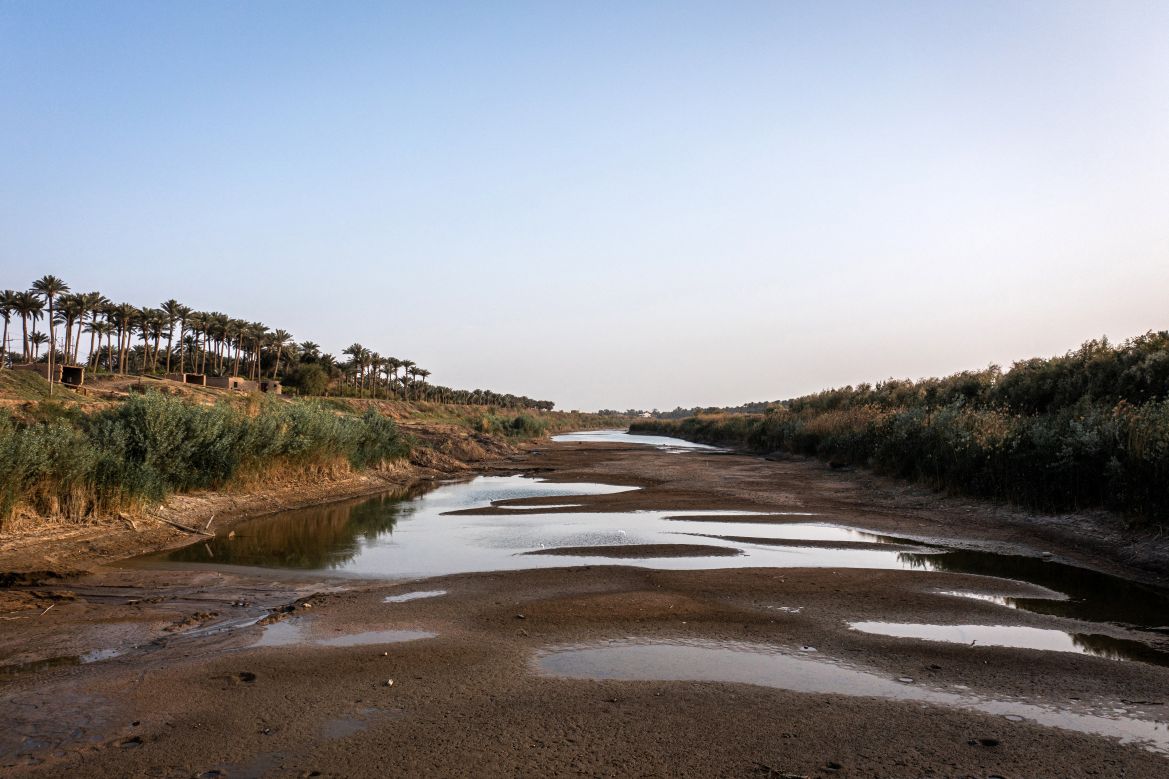
All that is left of the river Diyala, a tributary that meets the Tigris near the capital, Baghdad, in the central plains, are puddles of stagnant water dotting its parched bed.

Drought has dried up the watercourse that is crucial to the region’s agriculture.

This year authorities have been forced to reduce Iraq’s cultivated areas by half, meaning no crops will be grown in the badly-hit Diyala governorate.

The World Bank warned last year that much of Iraq is likely to face a similar fate.

“By 2050 a temperature increase of one degree Celsius and a precipitation decrease of 10 percent would cause a 20 percent reduction of available freshwater,” it said.

The International Organization for Migration said last month that “climate factors” had displaced more than 3,300 families in Iraq’s central and southern areas in the first three months of this year.

This summer in Baghdad, the level of the Tigris dropped so low that people played volleyball in the middle of the river, splashing barely waist-deep through its waters.

Iraq’s Ministry of Water Resources blames silt because of the river’s reduced flow, with sand and soil once washed downstream now settling to form sandbanks.

Until recently the Baghdad authorities used heavy machinery to dredge the silt, but with cash tight, work has slowed.

Years of war have destroyed much of Iraq’s water infrastructure, with many cities, factories, farms and even hospitals left to dump their waste straight into the river.

As sewage and rubbish from Greater Baghdad pour into the shrinking Tigris, the pollution creates a concentrated toxic soup that threatens marine life and human health.

Environmental policies have not been a high priority for Iraqi governments struggling with political, security and economic crises.

Ecological awareness also remains low among the general public, said activist Hajer Hadi of the Green Climate group, even if “every Iraqi feels climate change through rising temperatures, lower rainfall, falling water levels and dust storms,” she said.

But another threat is affecting the Shatt al-Arab: salt water from the Gulf is pushing ever further upstream as the river flow declines.

The United Nations and local farmers say rising salination is already hitting farm yields, in a trend set to worsen as global warming raises sea levels.

Advertisement

Last month local authorities reported that salt levels in the river north of Basra reached 6,800 parts per million, nearly seven times that of fresh water.
Tigris river
The Tigris river, in the village of Bajid Kandala, some 50 kilometres (31 miles) west of the northern Iraqi city of Duhok. [Ismael Adnan/AFP]
Advertisement
Tigris river
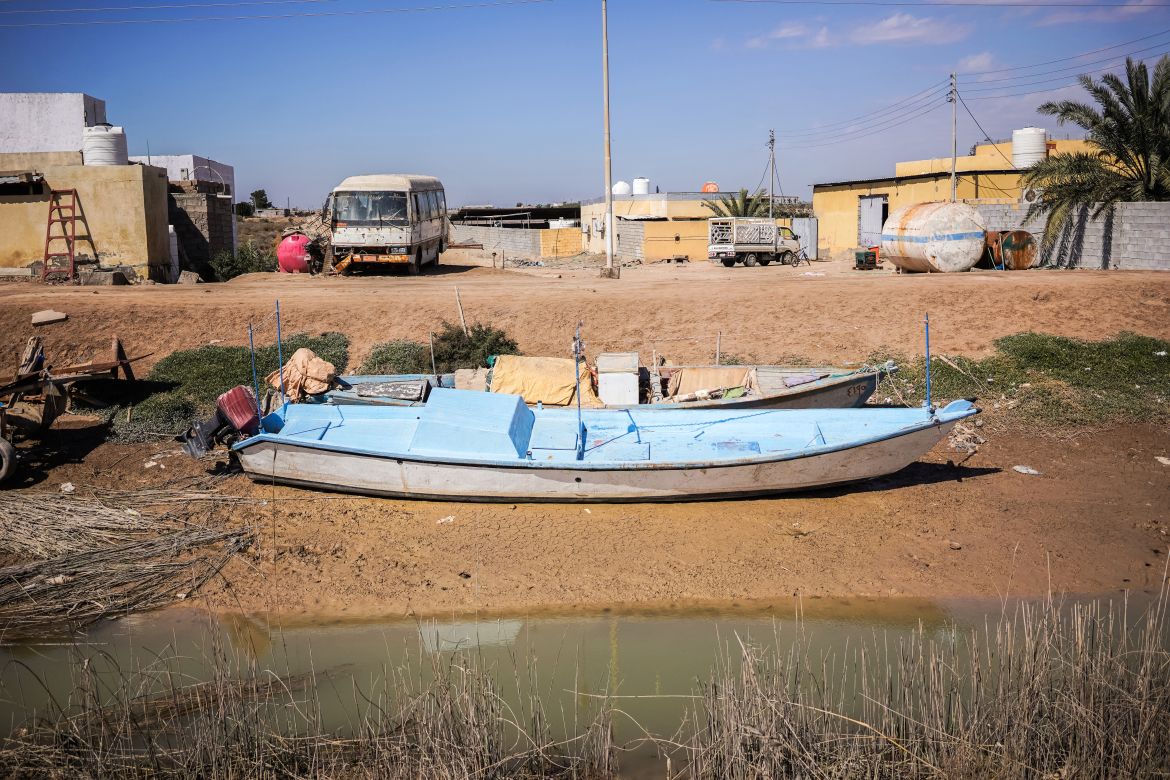
A drying irrigation canal near the village of Ras al-Bisha in southern Iraq. [Ayman Henna/AFP]
Tigris river
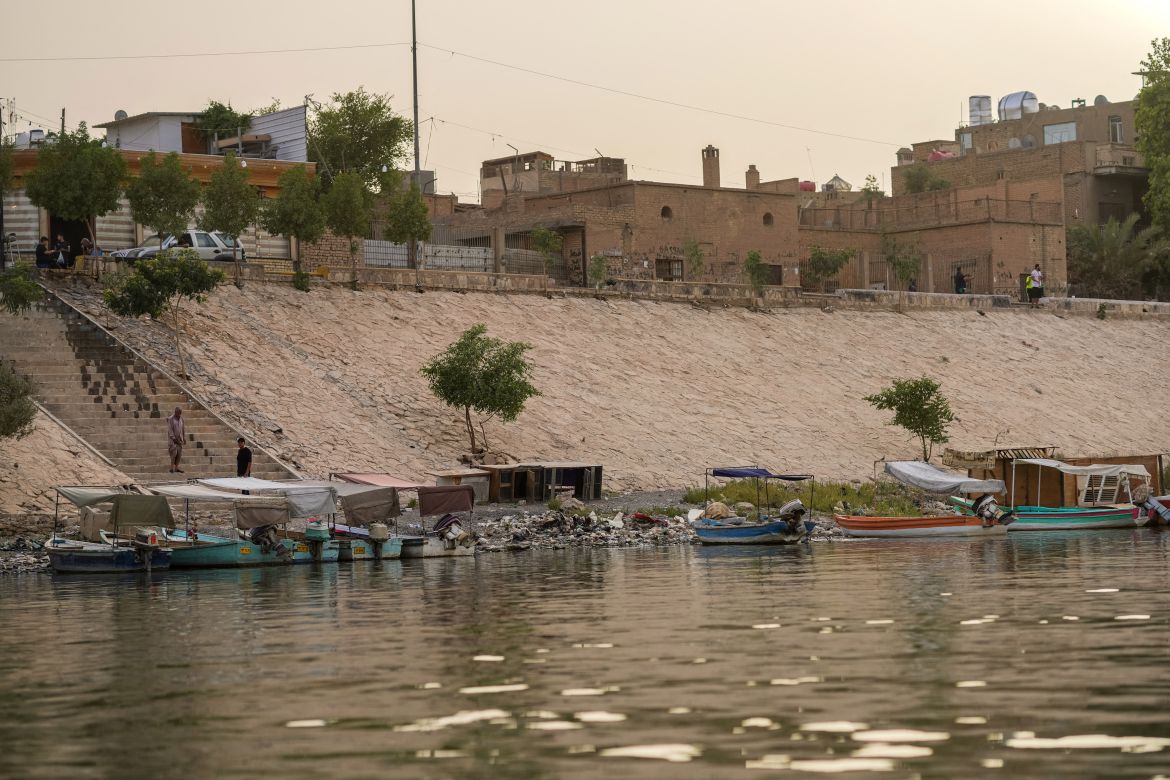
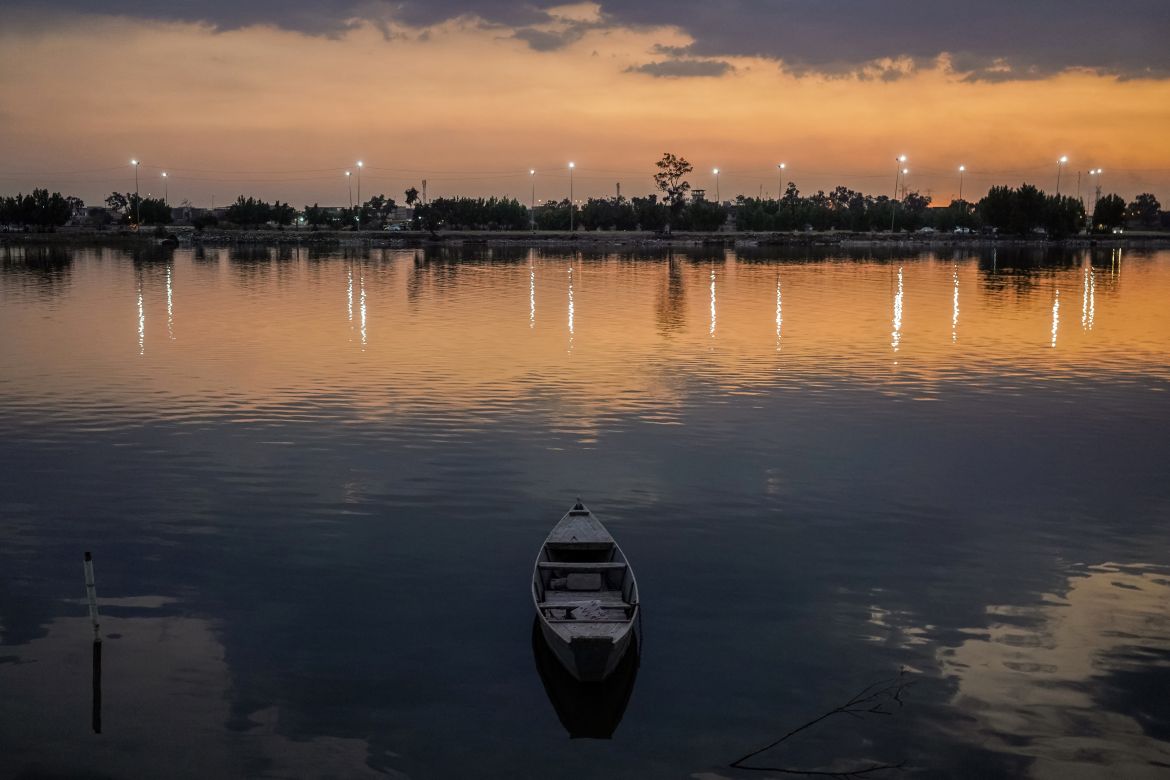
The Tigris river flows in the central Karkh district of the Iraqi capital, Baghdad. [Ayman Henna/AFP]
Tigris river
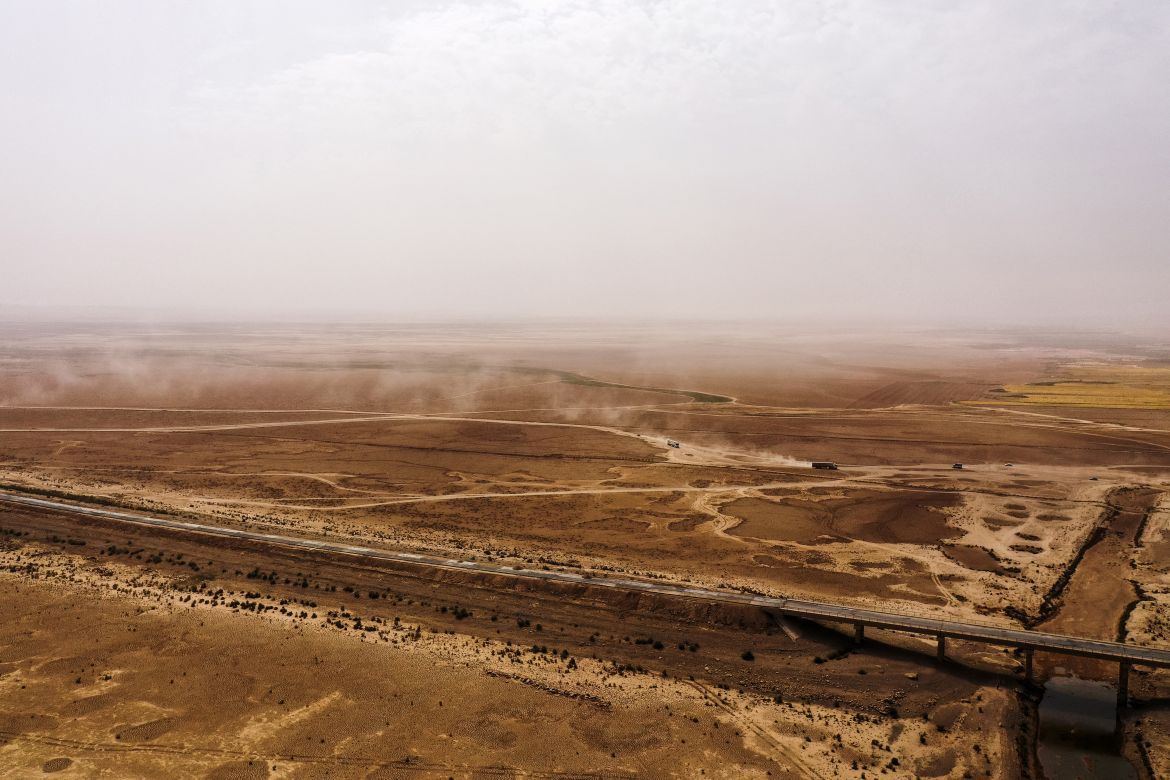
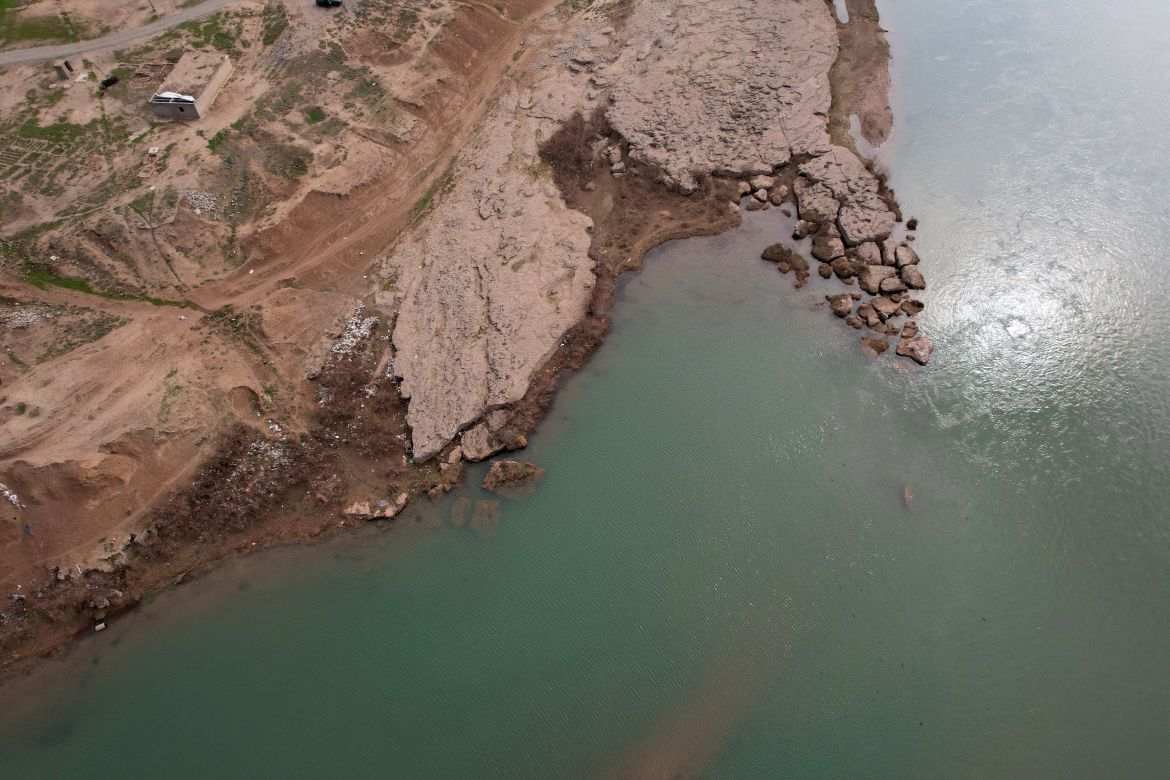
Aerial view of what remains from the dried-up Hamrin artificial lake that received water from the Sirwan river, a tributary of the Tigris, in Dyala province northeast of Baghdad. [Ayman Henna/AFP]
Tigris river
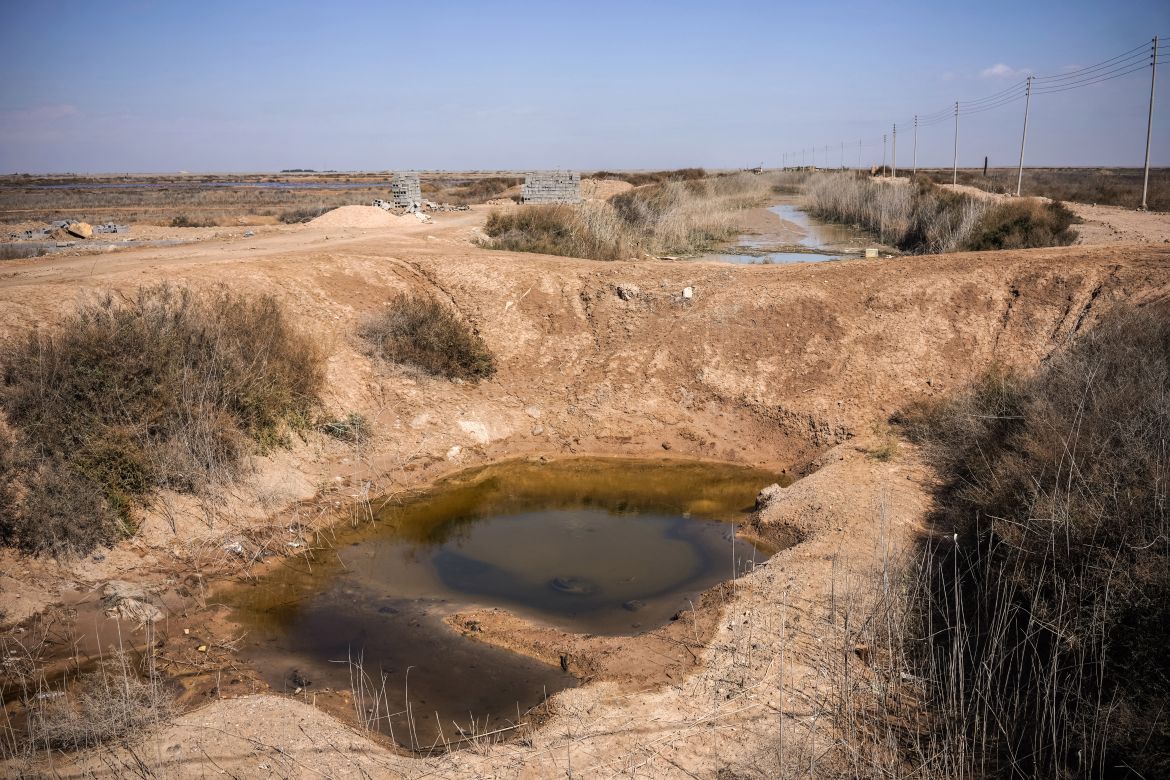
A dried-up artificial irrigation lake in the village of Ras al-Bisha in southern Iraq. [Ayman Henna/AFP]
Tigris river
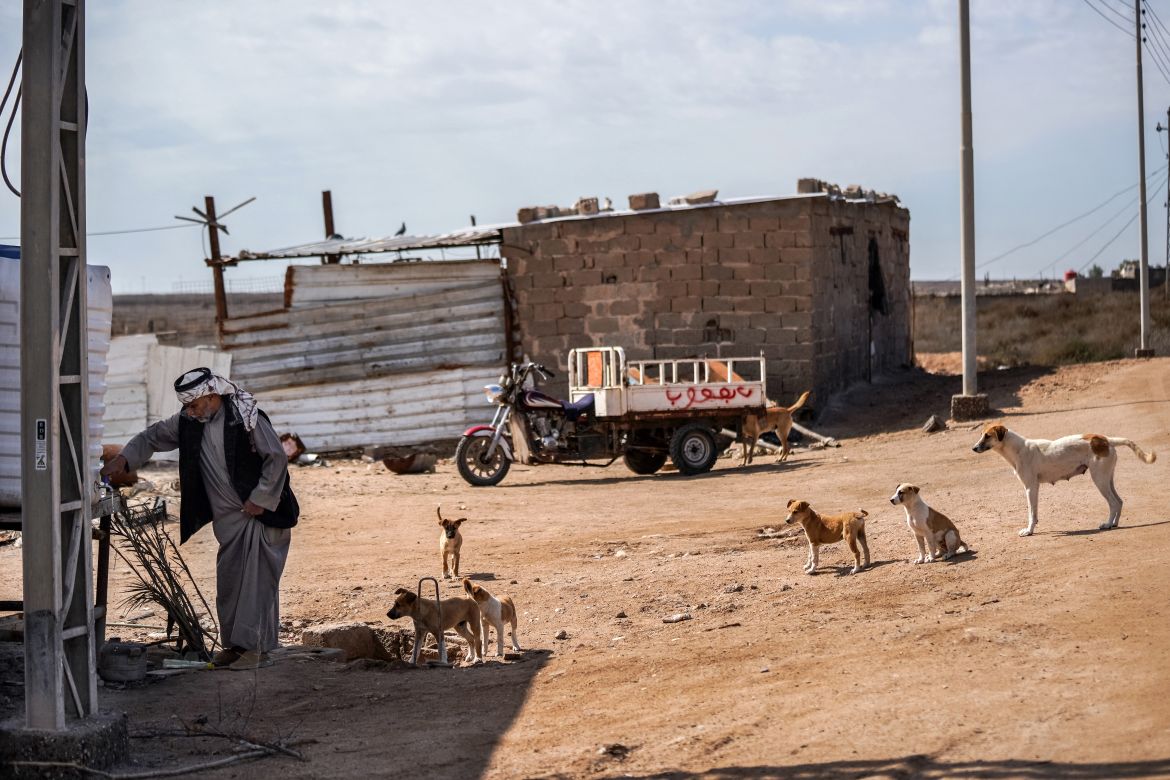
Molla al-Rached, a 65-year-old farmer, with his dogs in the village of Ras al-Bisha. [Ayman Henna/AFP]
Advertisement
Tigris river
A dried-up part of the Diyala river, which is a tributary of the Tigris, in the central province of the same name near the Iraqi capital, Baghdad. [Ayman Henna/AFP]
Tigris river
A fishing boat floats on the water of Shatt al-Arab, the confluence of the Tigris and Euphrates rivers that empties into the Gulf, near the city of Basra. [Ayman Henna/AFP]

Related

  • Heatwaves scorch Iraq as protracted political crisis grinds on

    Temperatures have soared to nearly 50 degrees Celsius in Baghdad on an almost daily basis amid heated political crisis.

    Published On 6 Aug 20226 Aug 2022
    Supporters of Moqtada al-Sadr gather for mass Friday prayer at Grand Festivities Square within the Green Zone, in Baghdad, Iraq on August 5, 2022 [Thaier Al-Sudani/Reuters]
  • Iraq’s climate conundrum: Oil reliance versus vanishing water

    The country could suffer a 20 percent drop in water resources by 2050 with nearly one-third of irrigated land parched.

    Published On 28 Jan 202228 Jan 2022
    A man walks near his home in the Chebayesh marsh, Dhi Qar province in Iraq
  • ‘Vicious cycle’: Storms intensify in the Gulf as climate changes

    Recent ecologically disastrous conditions in the Gulf are latest sign of climate danger to the MENA region.

    Published On 2 Jun 20222 Jun 2022
    A man walks on a bridge during a sandstorm in Baghdad, Iraq.
  • ‘All the trees have died’: Iraqis face intensifying water crisis

    Iraqis struggle to cope with depleted water resources, exacerbated by climate change and disputes with neighbours.

    Published On 5 Nov 20215 Nov 2021
    Sheep graze next to a dried out gulley usually flowing with natural spring water in the Palestinian village of al-Auja, near the West Bank city of Jericho March 7, 2014. The Middle East's driest winter in several decades could pose a threat to global food prices, with local crops depleted along with farmers' livelihoods, U.N. experts and climatologists say. Varying degrees of drought are hitting almost two thirds of the limited arable land across Syria, Lebanon, Jordan, the Palestinian territories and Iraq. To match analysis CLIMATE-DROUGHT/MIDDLEAST REUTERS/Ammar Awad (WEST BANK - Tags: ENVIRONMENT ANIMALS AGRICULTURE)

More from News

  • Pope Leo heads to Angola in landmark Africa visit amid Trump clash

    Pope Leo XIV greets people as he arrives to hold a holy Mass near Japoma Stadium in Douala, Cameroon, April 17, 2026. REUTERS/Guglielmo Mangiapane TPX IMAGES OF THE DAY
  • Iran war day 50: What’s happening in Tehran, Strait of Hormuz and Lebanon?

    Houthi supporters in Yemen rally round a Lebanese flag during a demonstration in Sanaa to show solidarity with Lebanon [Khaled Abdullah/Reuters]
  • NBA: Jalen Green, Suns shoot past Warriors, will play Thunder in playoffs

    Stephen Curry reacts.
  • Iran warns US blockade of ports must end as Strait of Hormuz opens

    People walk near an anti-U.S. billboard on a building in Tehran, Iran, April 16, 2026. REUTERS/Thaier Al-Sudani Foreign media in Iran operate under guidelines set by the Ministry of Culture and Islamic Guidance, which regulates press activity and permissions. TPX IMAGES OF THE DAY

Most popular

  • Lebanon president says country is no longer a pawn amid Israel ceasefire

    A photograph released by the Lebanese Presidency on April 17, 2026, shows Lebanon's President Joseph Aoun delivering a televised address to the Lebanese people from the Baabda Presidential Palace, east of the capital Beirut.
  • Ukraine’s long-range strikes prompt new Russian threat against Europe

    Russia oil
  • World reacts to Strait of Hormuz reopening amid US-Iran conflict

    Cargo ships in the Gulf, near the Strait of Hormuz
  • Fifteen South American people deported from the US arrive in DR Congo

    SAN PEDRO SULA, HONDURAS - JANUARY 31: US Air force flight carrying deported migrants by the US government arrive at Ramon Villeda Morales International Airport on January 31, 2025 in San Pedro Sula, Honduras. Honduras receives 126 migrants in two different flights as part of mass deportation plans by the Trump's administration. People were captured once they got into the US or during the raids conducted by the authorities. (Photo by Jorge Salvador Cabrera/Getty Images)

  • About

    • About Us
    • Code of Ethics
    • Terms and Conditions
    • EU/EEA Regulatory Notice
    • Privacy Policy
    • Cookie Policy
    • Cookie Preferences
    • Accessibility Statement
    • Sitemap
    • Work for us
  • Connect

    • Contact Us
    • User Accounts Help
    • Advertise with us
    • Stay Connected
    • Newsletters
    • Channel Finder
    • TV Schedule
    • Podcasts
    • Submit a Tip
    • Paid Partner Content
  • Our Channels

    • Al Jazeera Arabic
    • Al Jazeera English
    • Al Jazeera Investigative Unit
    • Al Jazeera Mubasher
    • Al Jazeera Documentary
    • Al Jazeera Balkans
    • AJ+
  • Our Network

    • Al Jazeera Centre for Studies
    • Al Jazeera Media Institute
    • Learn Arabic
    • Al Jazeera Centre for Public Liberties & Human Rights
    • Al Jazeera Forum
    • Al Jazeera Hotel Partners

Follow Al Jazeera English:

  • facebook
  • twitter
  • youtube
  • instagram-colored-outline
  • rss
Al Jazeera Media Network logo
© 2026 Al Jazeera Media Network