Skip linksSkip to Content
play
Live
Navigation menu
  • News
    • Africa
    • Asia
    • US & Canada
    • Latin America
    • Europe
    • Asia Pacific
  • Middle East
  • Explained
  • Opinion
  • Sport
  • Video
    • Features
    • Economy
    • Human Rights
    • Climate Crisis
    • Investigations
    • Interactives
    • In Pictures
    • Science & Technology
    • Podcasts
    • Travel
play
Live

In Pictures

Gallery|In Pictures

‘Dying every two hours’: Afghan women risk life to give birth

Afghanistan is among the worst countries in the world for deaths in childbirth, with one woman dying every two hours.
Save

Share

facebookxwhatsapp-strokecopylink
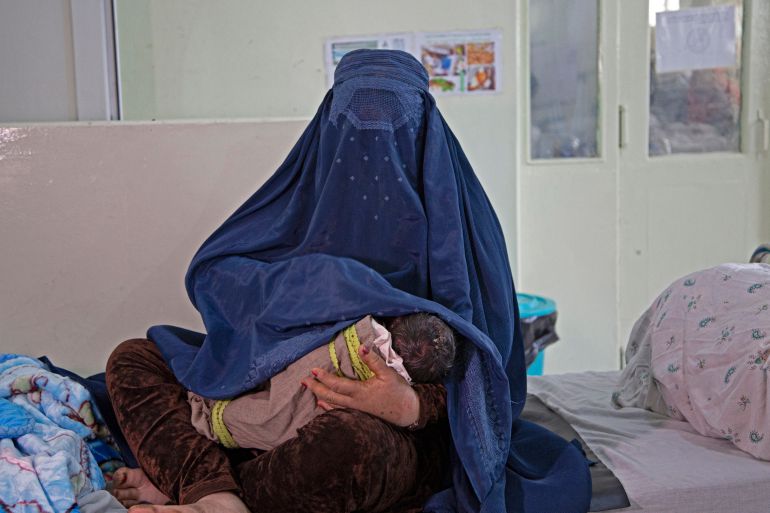
In this photograph taken on December 8, 2023, Afghan woman Basa holds her newborn child at the Doctors Without Borders (MSF)-run maternity hospital in Khost.
An estimated 40 percent of Afghan women give birth at home, but that figure increases to 80 percent in remote areas, where they go through the process often with the help of their mother-in-law or a local matriarch, but sometimes alone. [Kobra Akbari/AFP]
By AFP
Published On 27 Dec 202327 Dec 2023

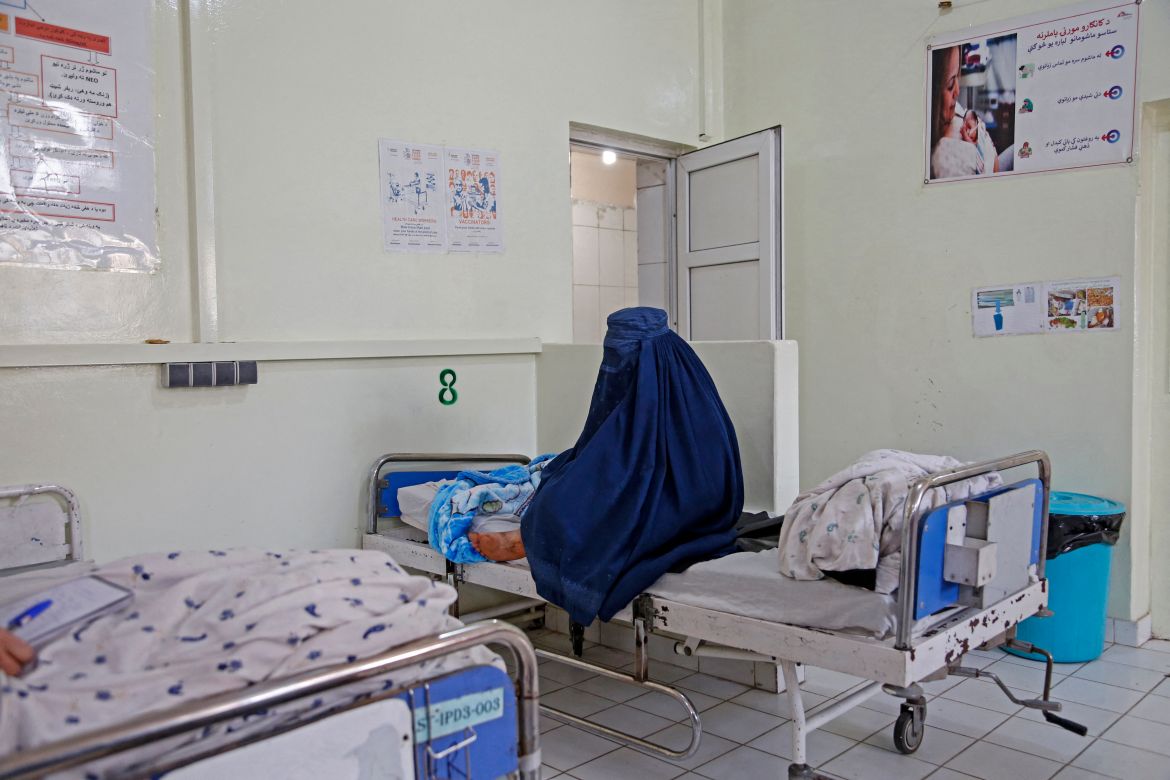
Zubaida travelled from the rural outskirts of Khost in eastern Afghanistan to give birth at a maternity hospital specialising in complicated cases, fearing a fate all too common among pregnant Afghan women – either her death or that of her child.

She lay dazed, surrounded by the unfamiliar bustle of the hospital run by international medical charity Doctors Without Borders, known by its French initials MSF. She was exhausted from the delivery the day before, but also relieved.

Her still-weak newborn slept nearby in an iron crib with peeling paint, the child’s eyes lined with kohl to ward off evil.

“If I had given birth at home, there could have been complications for the baby and for me,” said Zubaida, who doesn’t know her age.

Not all women who make it to the hospital are so lucky.

“Sometimes we receive patients who come too late to save their lives” after delivering at home, said Therese Tuyisabingere, the head of midwifery at MSF in Khost, the capital of the eastern province of Khost.

The facility delivers 20,000 babies a year, nearly half of those born in the province, and it only takes on high-risk and complicated pregnancies, many involving mothers who haven’t had any check-ups.

“This is a big challenge for us to save lives,” said Tuyisabingere.

She and the some 100 midwives at the clinic are on the front lines of a battle to reduce the maternal mortality rate in Afghanistan, where every birth carries major risks and with the odds against women mounting.

Afghanistan is among the worst countries in the world for deaths during childbirth, “with one woman dying every two hours”, said Stephane Dujarric, the spokesperson of United Nations Secretary-General Antonio Guterres, this month.

Advertisement

The Afghan Ministry of Public Health did not respond to requests for comment.

According to the latest World Health Organization (WHO) figures, from 2017, 638 women died in Afghanistan for every 100,000 viable births, compared with 19 in the United States.

That figure conceals the huge disparities between rural and urban areas.

Terje Watterdal, country director for the non-profit Norwegian Afghanistan Committee (NAC), said they saw 5,000 maternal deaths per 100,000 births in remote parts of the country.

“Men carry the women over their shoulders, and the women die over the mountain trying to reach a hospital,” he said.
In this photograph taken on December 8, 2023, Afghan woman Basa holds her newborn child at the Doctors Without Borders (MSF)-run maternity hospital in Khost.
Before the return to power of the Taliban in August 2021, women would sometimes have to brave the front lines to reach help, but now there are new challenges - including a 'brain drain' of expertise. [Kobra Akbari/AFP]
Advertisement
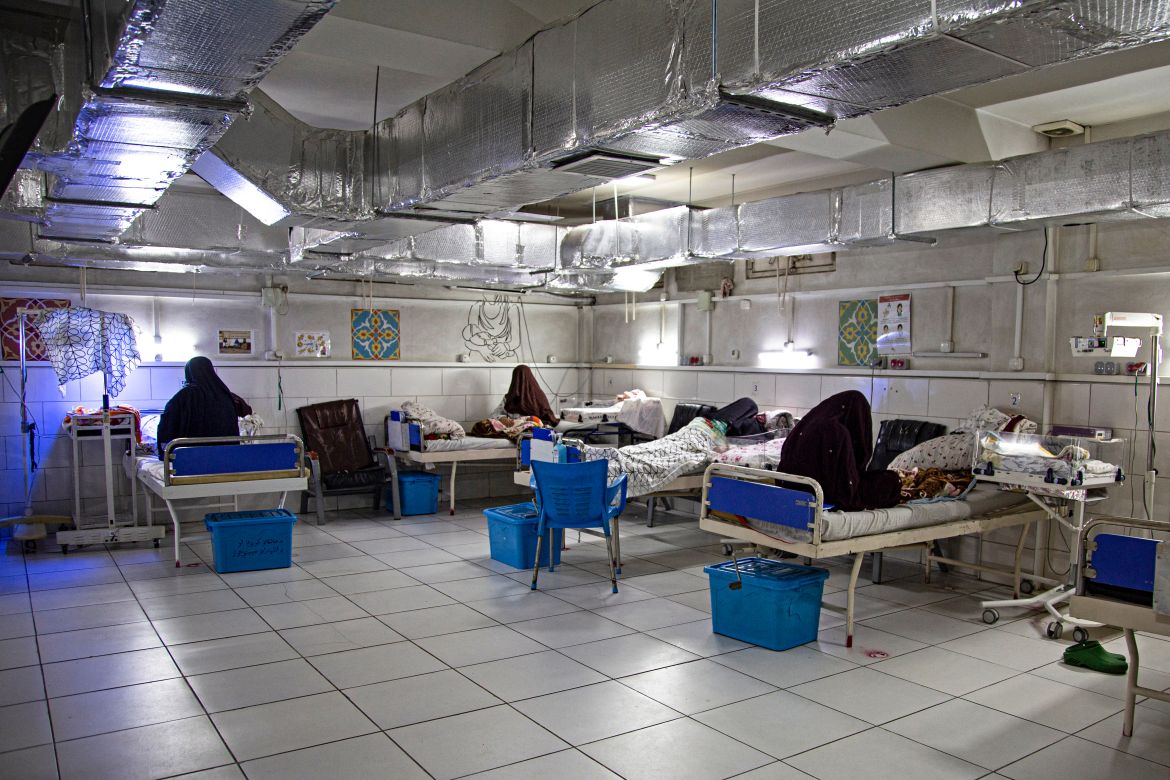
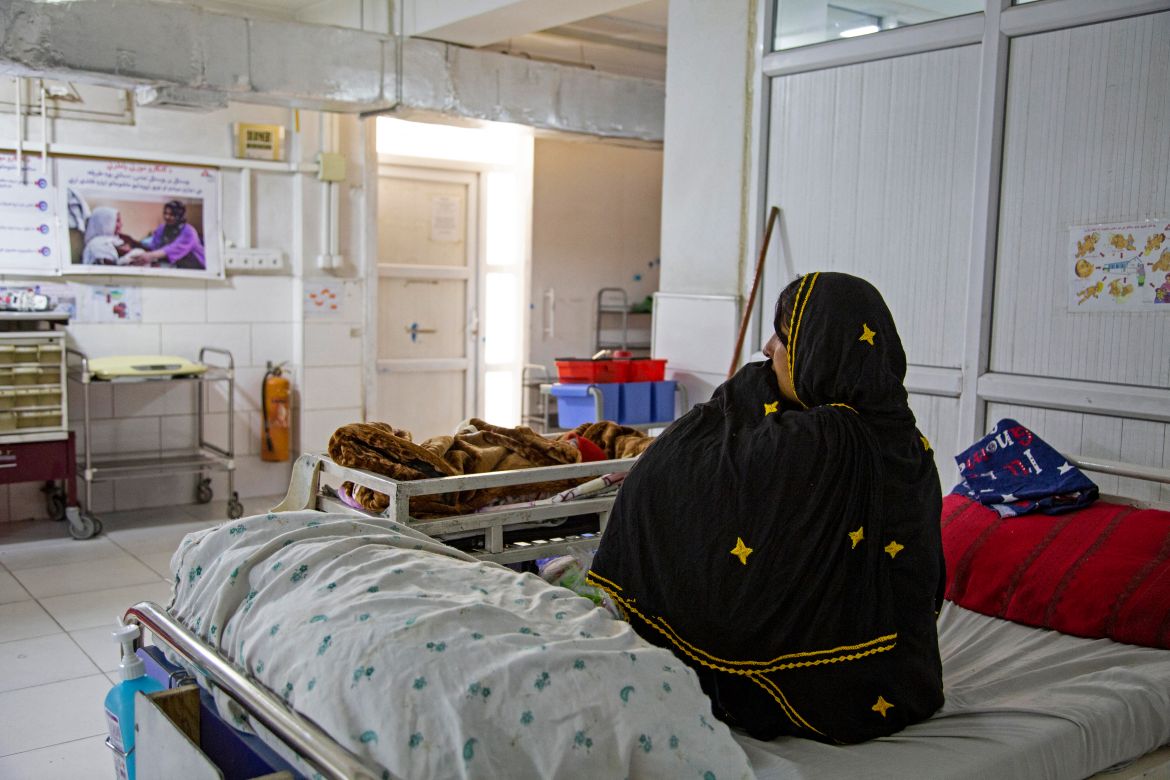
In this photograph taken on December 8, 2023, Afghan women sit beside their newborns at the Doctors Without Borders (MSF)-run maternity hospital in Khost.
'A lot of gynaecologists have left the country,' said Terje Watterdal, country director for the non-profit Norwegian Afghanistan Committee (NAC). Taliban authorities also want to get rid of the mobile medical teams visiting women because 'they cannot control the health messages they were giving', he added. [Kobra Akbari/AFP]
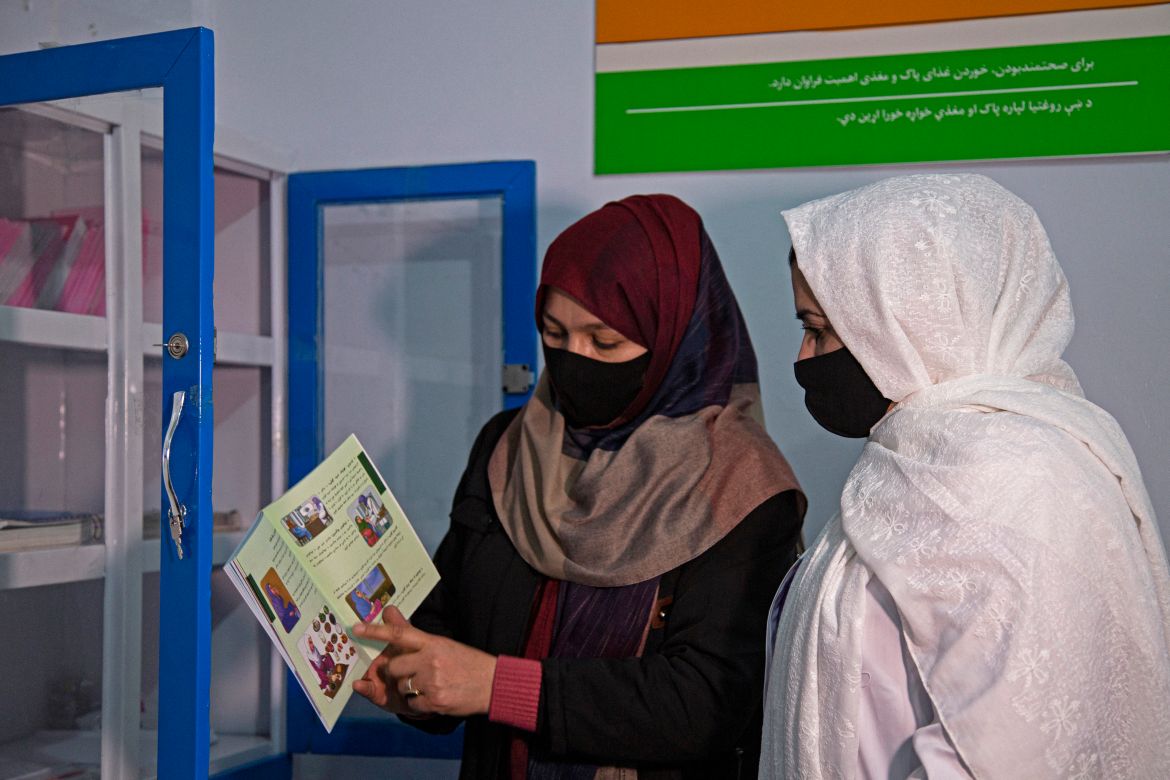
In this photograph taken on December 7, 2023, Momina Kohistani (L), head midwife at Norwegian Afghanistan Committee (NAC)-run Comprehensive-Continuum of Care Centre, a maternity hospital, shows a catalogue to fellow midwife Zainab Dawlatzai, in the facility at Gardez, the capital of Afghanistan's Paktia province.
Under the Taliban government, women have been squeezed out of public life and their access to education has been severely restricted, threatening the future of the medical field in a country where many families avoid sending women to male doctors. [Kobra Akbari/AFP]
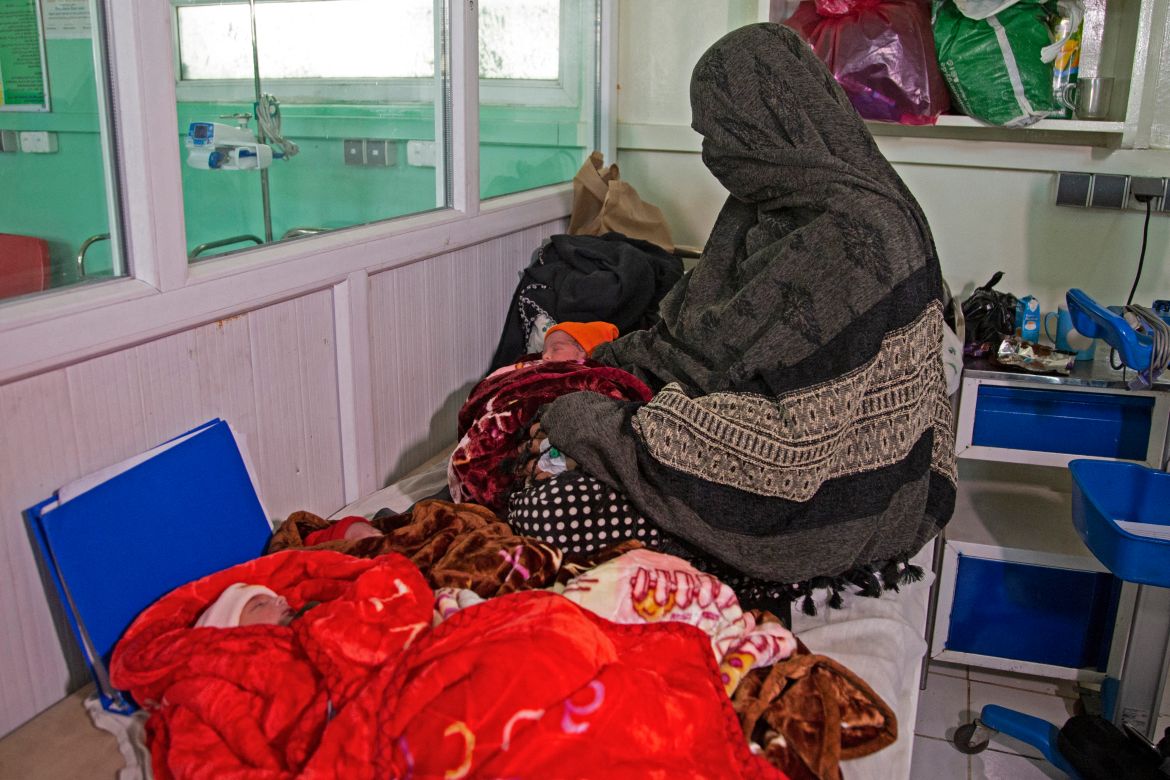
In this photograph taken on December 8, 2023, an Afghan woman holds the hand of her newborn child at the Doctors Without Borders (MSF)-run maternity hospital in Khost.
'Access to antenatal and postnatal care for a woman was [always] extremely complicated. It's even more complicated today,' said Filipe Ribeiro, MSF director in Afghanistan. [Kobra Akbari/AFP]
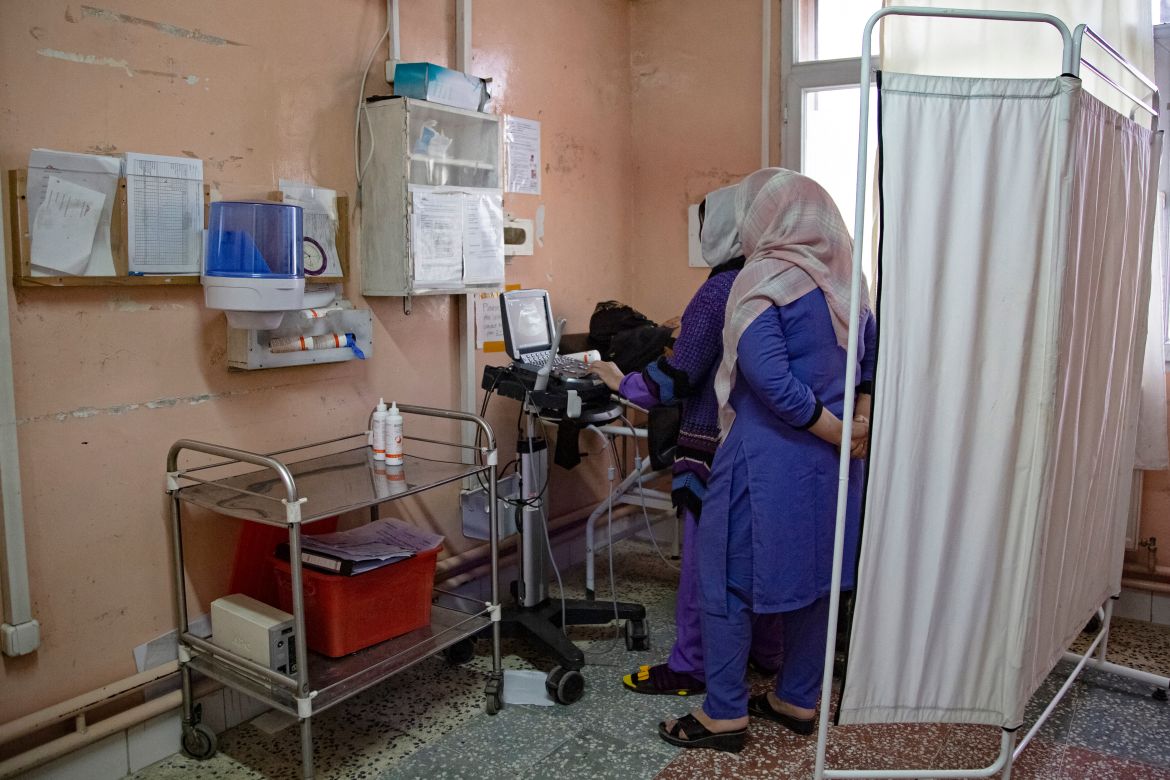
In this photograph taken on December 8, 2023, nurses conduct an ultrasound test for a patient (L) at the Doctors Without Borders (MSF)-run maternity hospital in Khost.
The financial strain on families amid the country's economic crisis increases the risks, said Noor Khanum Ahmadzai, health coordinator for nongovernmental organisation Terre des Hommes in Kabul. Despite the risks, 'women who used to go to the public sector now prefer to deliver at home, because they don't have money', said Ahmadzai. [Kobra Akbari/AFP]
In this photograph taken on December 8, 2023, Afghan women sit beside their newborns at the Doctors Without Borders (MSF)-run maternity hospital in Khost.
In a public hospital, where the midwives are overworked and poorly paid, women have to bring their own medicine. A delivery costs about 2,000 Afghanis ($29) - a significant sum for many families. [Kobra Akbari/AFP]
Advertisement
In this photograph taken on December 8, 2023, Islam Bibi, mother of six children and newborn triplets, sits beside her three babies at the Doctors Without Borders (MSF)-run maternity hospital in Khost.
Islam Bibi, pregnant with triplets, went to the MSF facility in Khost in pain, and empty-handed. 'I was sick, my husband didn't have any money. I was told, 'Go to this hospital, they do everything for free',' said the 38-year-old, one of hundreds of thousands of Afghans who fled Pakistan in recent months, fearing deportation. [Kobra Akbari/AFP]
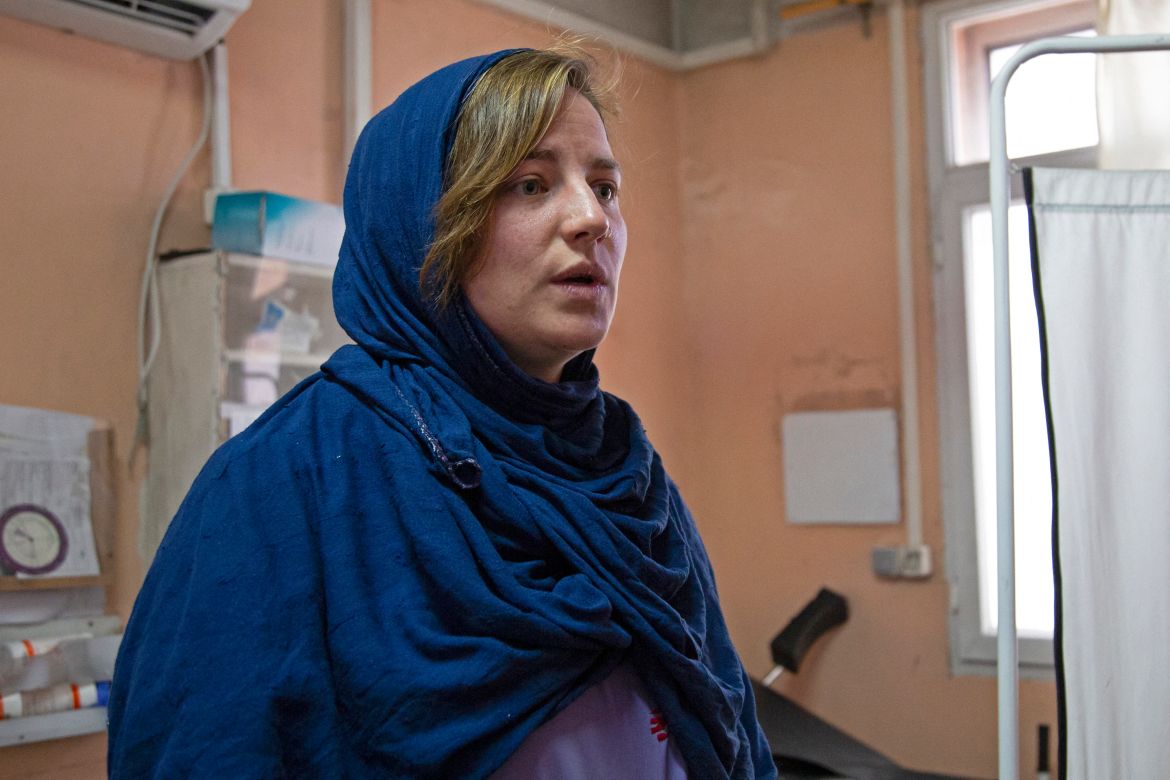
In this photograph taken on December 8, 2023, Argentinian gynecologist Tania Allekotte speaks during an interview with AFP at the Doctors Without Borders (MSF)-run maternity hospital in Khost.
Multiple births like Islam Bibi's are common, said Tania Allekotte, an MSF gynaecologist from Argentina. 'It is valued here to have many children and many women take a treatment to stimulate their fecundity. We often have twins here,' she said. [Kobra Akbari/AFP]
In this photograph taken on December 8, 2023, an Afghan woman sits beside her newborn child at the Doctors Without Borders (MSF)-run maternity hospital in Khost.
Women, on average, have six children in Afghanistan, but multiple pregnancies, repeated caesarean sections or miscarriages increase the risk of death. [Kobra Akbari/AFP]
In this photograph taken on December 8, 2023, pregnant women wait at the corridor of the Doctors Without Borders (MSF)-run maternity hospital in Khost.
Women in neighbouring Paktia province may have fewer risks now, thanks to a first-of-its-kind maternity centre opened recently by NAC in the small provincial capital Gardez - a clinic run by women for women. [Kobra Akbari/AFP]
In this photograph taken on December 8, 2023, Afghan women sit beside their newborns at the Doctors Without Borders (MSF)-run maternity hospital in Khost.
'This type of clinic doesn't exist in the majority of provinces,' Khair Mohammad Mansoor, the Taliban-appointed provincial health director, told an all-male audience. 'We have created a system for them in which sharia law and all medical principles will be observed.' [Kobra Akbari/AFP]
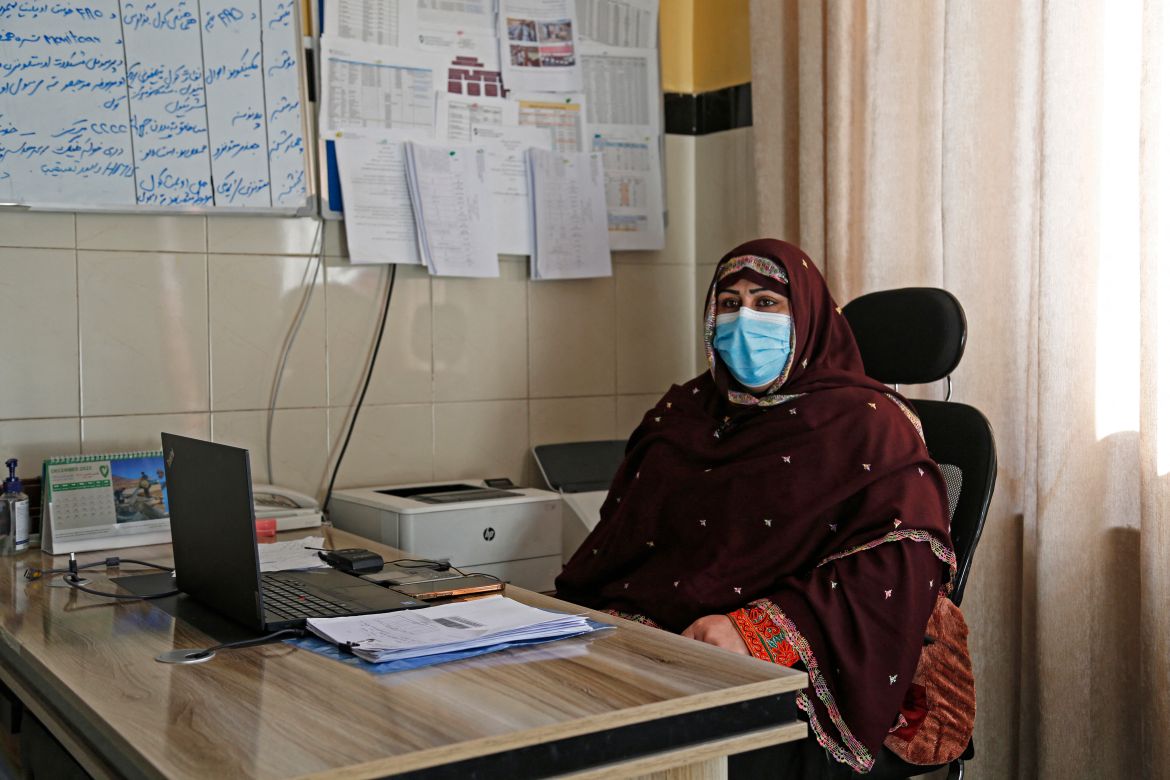
In this photograph taken on December 7, 2023, Nasrin Oryakhil, manager at Norwegian Afghanistan Committee (NAC)-run Comprehensive-Continuum of Care Centre, a maternity hospital, speaks during an interview with AFP at her office in the facility at Gardez, the capital of Afghanistan's Paktia province.
The NAC facility aims to help 'many of our sisters who live in isolated areas', manager Nasrin Oryakhil said, with similar clinics planned for four other provinces in the coming months. [Kobra Akbari/AFP]

Related

  • Photos: The ‘silent bravery’ of Afghanistan’s healthcare workers

    Afghan health professionals – thousands of female among them – are defying daily challenges to provide critical care.

    Published On 19 Sep 202319 Sep 2023
    Keeping Afghanistan’s Healthcare System Afloat
    This gallery article has 13 imagescamera13
  • OPINIONOPINION,

    The benefits of Afghanistan’s mineral riches may not be so forthcoming

    Mining contracts could help Afghanistan develop, but they could also hurt its people if they are mismanaged.

    Opinion by Nadia Ahmad and Luke DanielsonNadia Ahmad|Luke Danielson
    Published On 23 Sep 202323 Sep 2023
    Installations used by Chinese excavators and engineers are seen at a copper mine in Mes Aynak, Logar province February 14, 2015. China and Afghanistan remain deadlocked over a stalled $3 billion copper mine five months after Beijing demanded royalties be slashed by almost a half, underlining Kabul's struggles to support itself as foreign aid dries up. The copper, lying beneath the ancient Buddhist ruins of Mes Aynak, is one of the world's largest untapped deposits. But the project has been mired in delays since state-run China Metallurgical Group Corp (MCC) won the contract to develop it in 2007. Resurgent Taliban insurgents have tightened control over the area around Aynak, and after threats, rocket attacks and the risk of land mines, MCC withdrew its Chinese workers from the heavily guarded copper camp last year. And then there are the Buddhist ruins. Archeological work to preserve treasures from the crumbling monastries and stupas is dangerous and slow, and must be finished before mining can begin. Picture taken on February 14, 2015. REUTERS/Omar Sobhani
    quotes
  • Rare public joy in Kabul after Afghanistan’s World Cup win over Pakistan

    Kabul skies were aglow with fireworks as Afghans celebrated stunning Cricket World Cup victory over Pakistan.

    Published On 24 Oct 202324 Oct 2023
    Afghanistan's players acknowledge the crowd after winning their match against Pakistan during the ICC Men's Cricket World Cup in Chennai, India

More from Gallery

  • Photos: Ebola tensions rise as treatment centre torched in DRC’s Ituri

    Ebola tensions rise as treatment center torched in Congo's Ituri
    This gallery article has 9 imagescamera9
  • Photos: Kenya transport strike paused after deadly protests

    MAY 19: Kenyan security forces intervene to disperse demonstrators blocking roads during a protest against the increase in fuel prices in Nairobi, Kenya on May 19, 2026. Crowds gather across the capital to voice their anger over the rising cost of living and energy tariffs.
    This gallery article has 7 imagescamera7
  • Photos: Thousands demand president’s resignation in Bolivia’s La Paz

    Mass protests and road blockades choking the Bolivian capital
    This gallery article has 10 imagescamera10
  • Photos: Somaliland marks first independence day since Israeli recognition

    Somaliland marks first independence day amid Israel ties and divisions
    This gallery article has 9 imagescamera9

Most popular

  • Iran’s FM, Pakistan army chief hold talks on ending ‘imposed’ US-Israel war

    This handout photograph taken and released on May 22, 2026 by Pakistan's Inter-Services Public Relations (ISPR) shows visiting Pakistan’s Army Chief Syed Asim Munir (2nd L) being greeted by Iran’s Interior Minister Eskandar Momeni upon his arrival in Tehran as part of ongoing mediation efforts between Iran and the United States. (Photo by HANDOUT / Inter-Services Public Relations / AFP) / RESTRICTED TO EDITORIAL USE - MANDATORY CREDIT "AFP PHOTO/Inter-Services Public Relations" - HANDOUT - NO MARKETING NO ADVERTISING CAMPAIGNS - DISTRIBUTED AS A SERVICE TO CLIENTS
  • Not just the US: India to Brazil, 51 nations armed Israel amid Gaza war

    An Israeli soldier rides in a tank
  • Iran weighs US peace proposal despite ‘deep and significant’ disagreements

    Vessels are seen anchored in the Strait of Hormuz, off the port city of Khasab on Oman’s northern Musandam Peninsula on May 17, 2026.
  • Iran war updates: Tehran says US uranium handover demand will kill the deal

    Raheleh, an Iranian woman who lost two of her children in Minab school strike on February 28, reacts at their grave in Minab, Iran, May 21, 2026. Majid Asgaripour/WANA (West Asia News Agency) via REUTERS ATTENTION EDITORS - THIS PICTURE WAS PROVIDED BY A THIRD PARTY 


  • About

    • About Us
    • Code of Ethics
    • Terms and Conditions
    • EU/EEA Regulatory Notice
    • Privacy Policy
    • Cookie Policy
    • Cookie Preferences
    • Accessibility Statement
    • Sitemap
    • Work for us
  • Connect

    • Contact Us
    • User Accounts Help
    • Advertise with us
    • Stay Connected
    • Newsletters
    • Channel Finder
    • TV Schedule
    • Podcasts
    • Submit a Tip
    • Paid Partner Content
  • Our Channels

    • Al Jazeera Arabic
    • Al Jazeera English
    • Al Jazeera Investigative Unit
    • Al Jazeera Mubasher
    • Al Jazeera Documentary
    • Al Jazeera Balkans
    • AJ+
  • Our Network

    • Al Jazeera Centre for Studies
    • Al Jazeera Media Institute
    • Learn Arabic
    • Al Jazeera Centre for Public Liberties & Human Rights
    • Al Jazeera Forum
    • Al Jazeera Hotel Partners

Follow Al Jazeera English:

  • facebook
  • twitter
  • youtube
  • instagram-colored-outline
  • rss
Al Jazeera Media Network logo
© 2026 Al Jazeera Media Network