Skip linksSkip to Content
play
Live
Navigation menu
  • News
    • Africa
    • Asia
    • US & Canada
    • Latin America
    • Europe
    • Asia Pacific
  • Middle East
  • Explained
  • Opinion
  • Sport
  • Video
    • Features
    • Economy
    • Human Rights
    • Climate Crisis
    • Investigations
    • Interactives
    • In Pictures
    • Science & Technology
    • Podcasts
    • Travel
play
Live

In Pictures

Gallery|In Pictures

Newly released footage shows wreckage of the ‘unsinkable’ Titanic

Timed to the 25th anniversary of the film Titanic, the release offers a look at one of the earliest dives to the wreck.
Save

Share

facebookxwhatsapp-strokecopylink
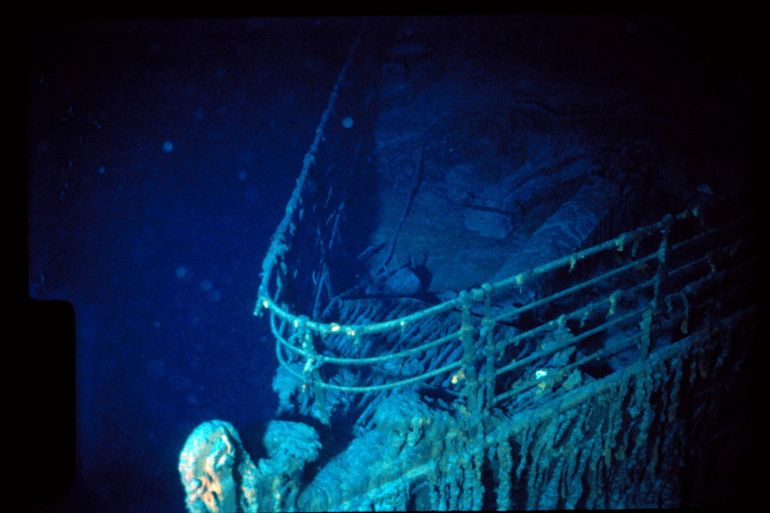
Bow of the Titanic wreck which looks an aqua colour with barnacles on it. The ocean water is a deep, dark blue
The wreckage of the Titanic was found in 1985 off the coast of Newfoundland in Canada [Woods Hole Oceanographic Institution/Handout via Reuters]
Published On 16 Feb 202316 Feb 2023

Out of the gloom of the ocean depths, it suddenly appeared before the oceanographers: an expanse of steel dotted with rivets and portholes, forming the remains of the infamous “unsinkable” ocean liner, the Titanic.

On Wednesday, video of one of the earliest visits to the Titanic’s deep-sea wreckage was released to the public on YouTube, offering 80 minutes of uncut footage showing the ship as explorers would have seen it in 1986.

The RMS Titanic was on its maiden voyage from Southhampton in the United Kingdom on April 15, 1912, when it struck an iceberg on the way to New York City in the United States. The collision would be fatal.

The largest ocean liner of its time, the Titanic was considered to be a state-of-the-art ship, with watertight compartments that could be sealed if disaster struck. This and other innovations led its parent company to insist the ship “will not go down”, even after its employees lost contact with the damaged ocean liner.

Of the more than 2,200 people who boarded the Titanic, an estimated 1,500 died as the ship sank into the Atlantic Ocean. Wednesday’s footage was published in conjunction with the 25th anniversary re-release of the 1997 film Titanic, which dramatised the final moments of those on board.

The movie won 11 Academy Awards, including for best picture, and helped propel actors Kate Winslet and Leonardo DiCaprio to stardom.

For decades, the remnants of the Titanic remained lost, hidden below fathoms of icy ocean water. But on September 1, 1985, a team from the Woods Hole Oceanographic Institution (WHOI) and the French National Institute of Oceanography discovered the ship’s wreckage off the coast of Newfoundland in Canada. Its bow split from its stern, the Titanic was buried 3,780 metres (12,400 feet) below the water’s surface.

Advertisement

The team returned in July 1986 to make 11 more dives, using a submersible that could carry human passengers plus a small remote vessel that could be used to navigate smaller spaces. Both vessels used cameras to film the discovery.

In an interview with the Associated Press news agency on Wednesday, Robert Ballard — one of the leaders behind the joint expedition that finally found the Titanic — recalled sitting in a three-person submersible named Alvin, seeing the giant ship with his own eyes.

Faced with a wall of portholes and items that belonged to the passengers — including a set of shoes that made him think of a mother and child — Ballard felt the weight of the tragedy that unfolded there. He and his crew even held a “small memorial service” at one point for the dead.

“It was like people looking back at us. It was pretty haunting actually,” Ballard said.
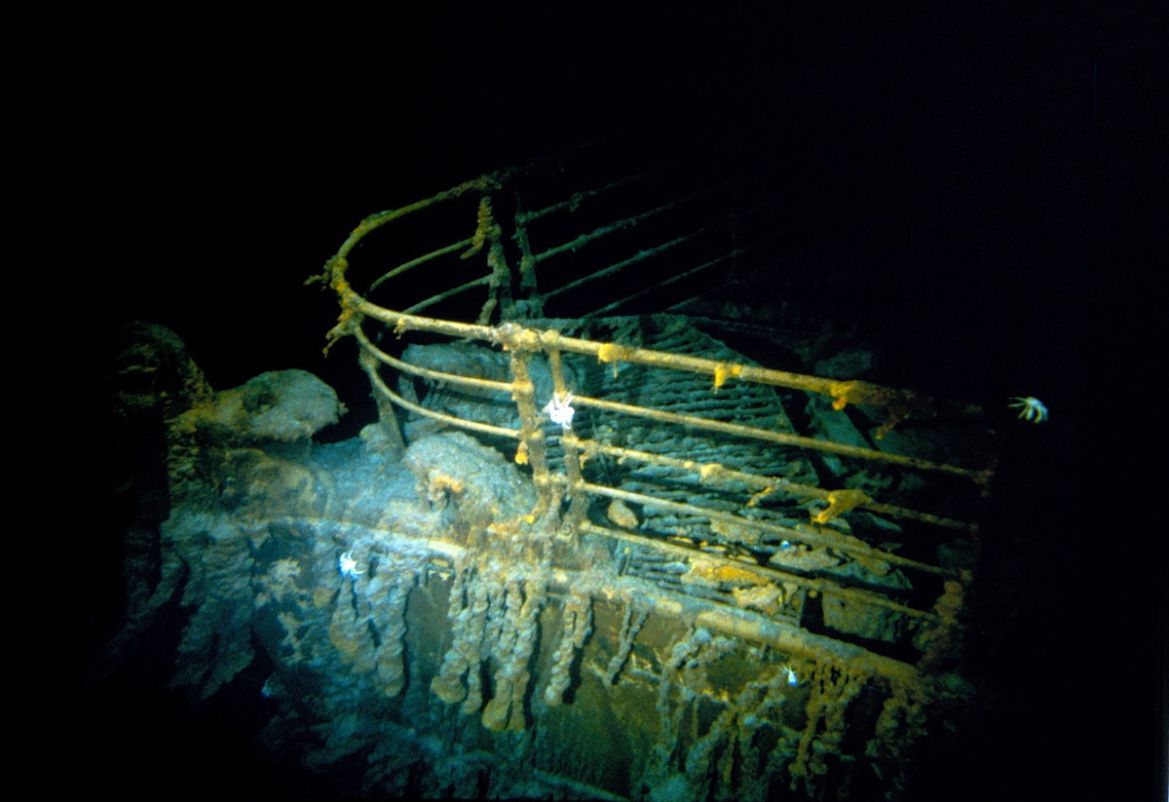
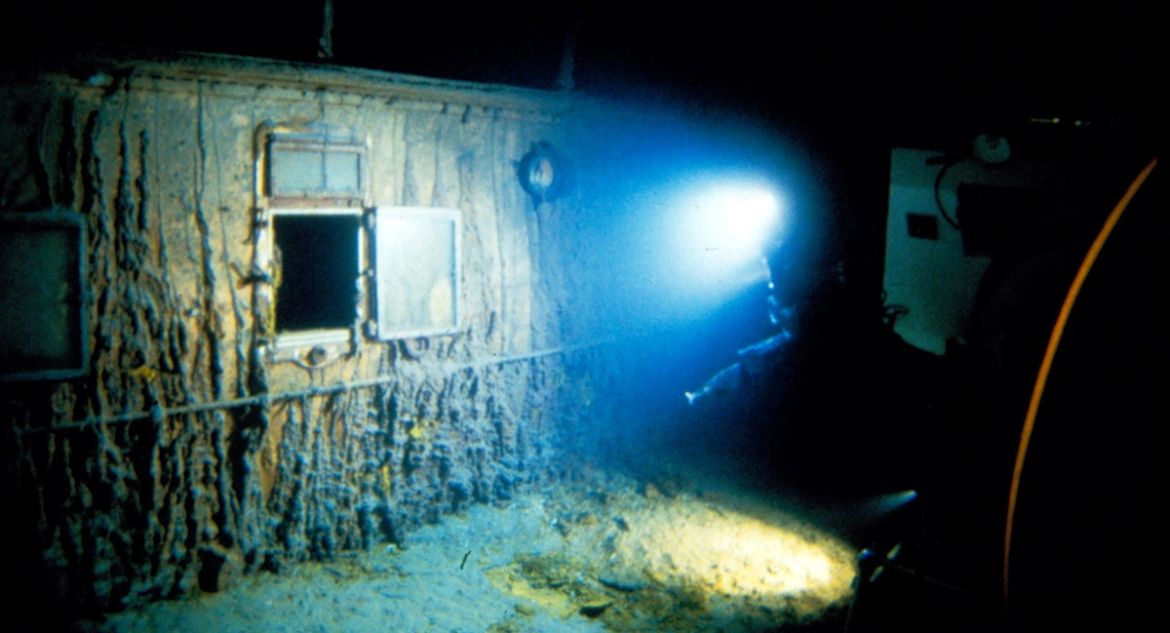
Titanic bow
As seen in this July 1986 footage, the bow of the Titanic was remarkably well preserved in the ship's final resting site on the ocean floor. The back of the ship, meanwhile, appeared destroyed. [Woods Hole Oceanographic Institution/Handout via Reuters]
Advertisement
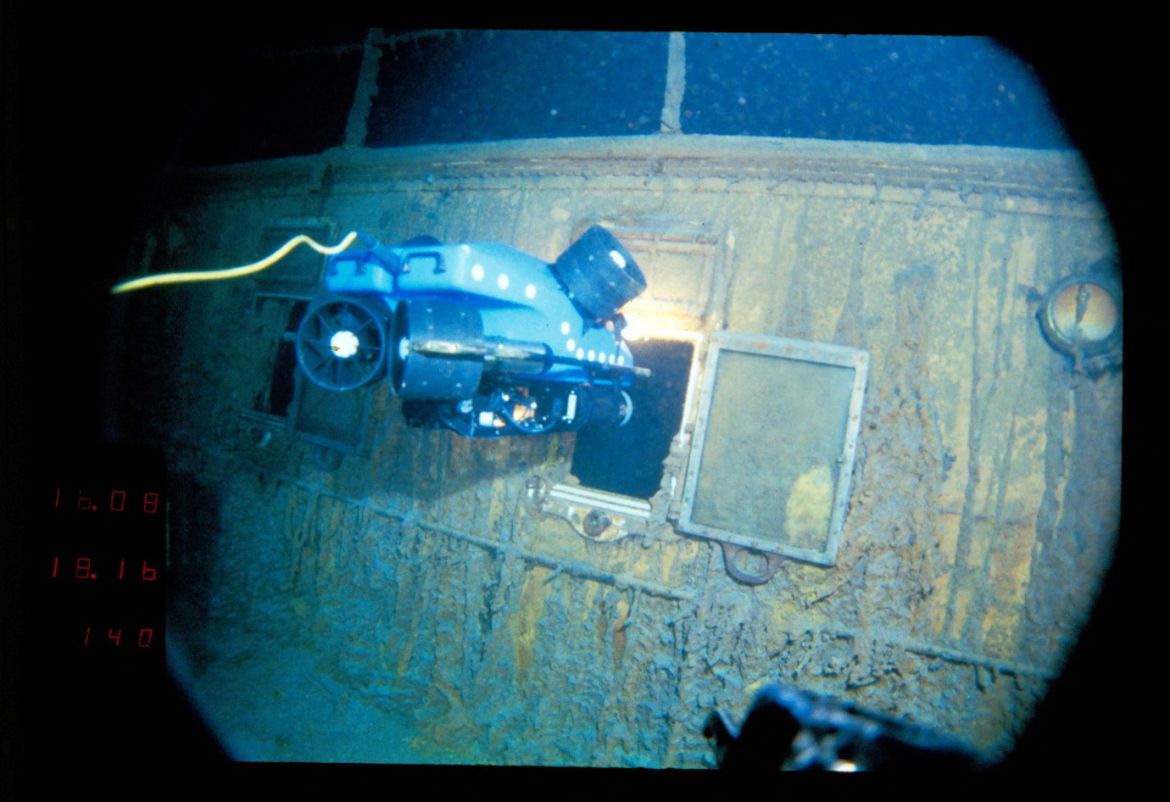
Titanic deck bulkhead
The submersibles that initially visited the Titanic site had to withstand intense water pressure as well as other harsh conditions in the icy north Atlantic Ocean. [WHOI//Handout via Reuters]
Robert Ballard looking through a device at the wreckage
Robert Ballard, a former US Navy intelligence officer, was a leader on the joint team that discovered the Titanic wreck. He is seen here filming the site in July 1986. [WHOI/Handout via Reuters]
A small, remotely-operated submersible named Jason Jr was used to collect photography in tight spaces around the ship — areas where the larger, human-operated vessel could not go. [WHOI/Handout via Reuters]
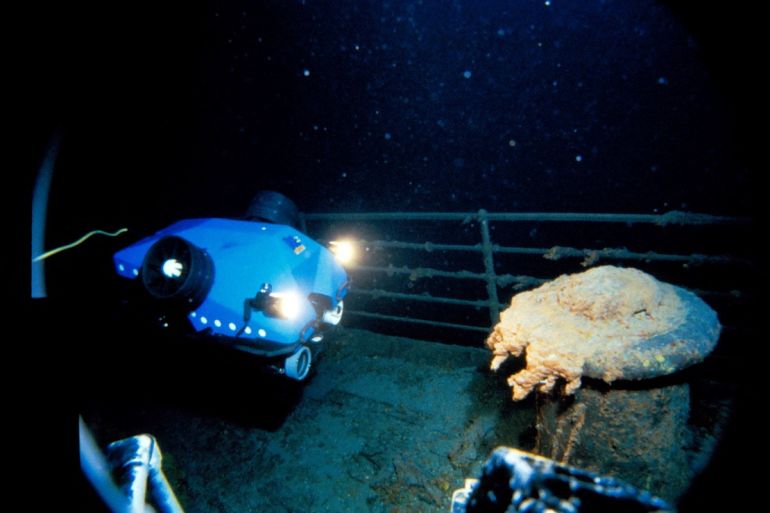
A submersible travels along the sunken Titanic's deck
Jason Jr is seen here travelling along the deck of the Titanic, collecting video and photography. [WHOI/Handout via Reuters]
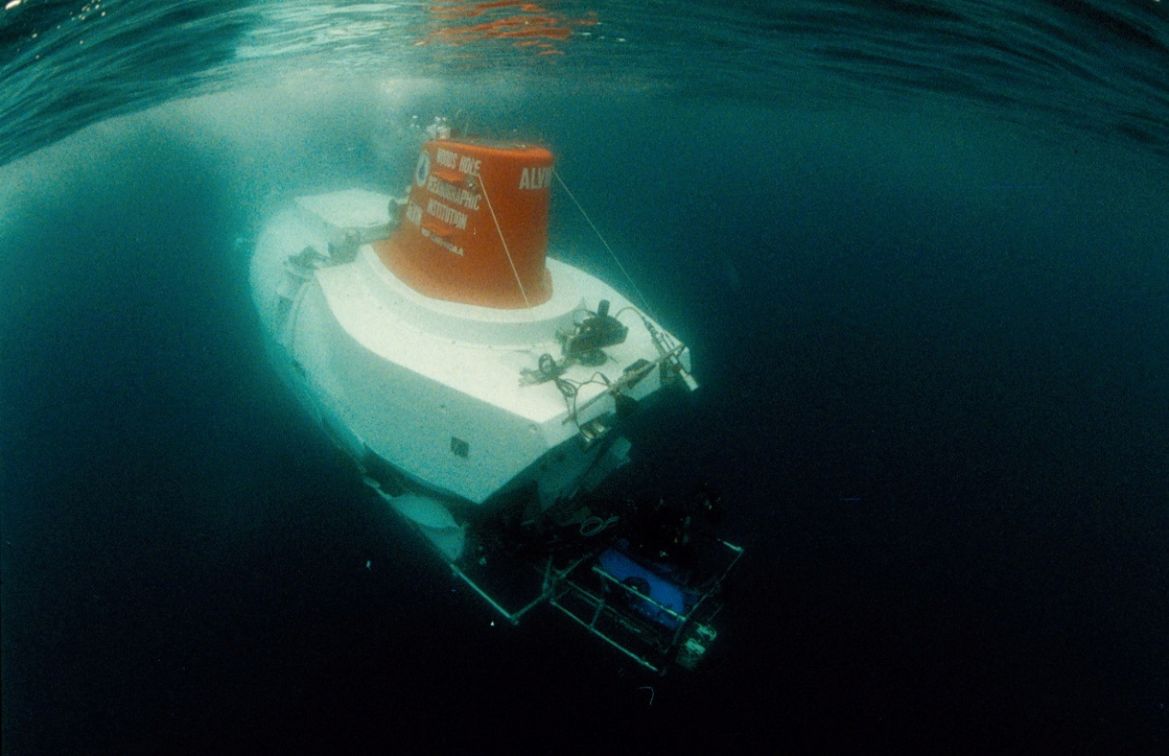
A human occupied submersible surfaces from the water
A human-operated vehicle named Alvin carried crews of three to the depths needed to see the Titanic in July 1986. [WHOI/Handout via Reuters]
Advertisement

Related

  • Antarctica Doomsday Glacier: ‘We should all be very concerned’

    Melting of the Florida-sized glacier is of grave concern, with the potential for significant global sea level rise.

    Published On 15 Feb 202315 Feb 2023
    An Icefin robot is seen in the water as scientists work in the field at the Thwaites Glacier in Antarctica [Becka Bower/Cornell University via Reuters]
  • New Pacific island rises after underwater volcanic blast

    The tiny island came into existence 11 hours after a volcanic eruption and grew to 24,000 square metres in size.

    Published On 26 Sep 202226 Sep 2022
    Gaseous clouds rising from the Hunga Ha'apai eruption seen from the Patangata coastline near Tongan capital Nuku'alofa.
  • NASA to run first global water survey from space

    Mission will conduct a comprehensive survey that aims to shed new light on mechanics and consequences of climate change.

    Published On 14 Dec 202214 Dec 2022
    The advanced radar SWOT satellite, short for Surface Water and Ocean Topography and designed and built at NASA's Jet Propulsion Laboratory (JPL) near Los Angeles, is seen in an artist's rendition created in February 2015. NASA/Handout via REUTERS THIS IMAGE HAS BEEN SUPPLIED BY A THIRD PARTY.
  • NASA to test nuclear fission-powered spacecraft engine by 2027

    The technological advancement has long been seen as critical to long-haul missions, including a manned trip to Mars.

    Published On 24 Jan 202324 Jan 2023
    Artist concept of Demonstration for Rocket to Agile Cislunar Operations (DRACO) spacecraft

More from Gallery

  • Trump holds prayer rally to ‘rededicate’ US as ‘one nation under God’

    Kathy Fain, from Longview, Texas, holds an American flag while singing the National Anthem during Rededicate 250, a mostly conservative Christian prayer gathering in honor of the United States' 250th anniversary, on the National Mall, Sunday, May 17, 2026, in Washington. (AP Photo/Julia Demaree Nikhinson)
    This gallery article has 10 imagescamera10
  • Photos: Millions of Palestinians mark 78 years since the Nakba

    Millions of Palestinians mark 78 years since the Nakba
    This gallery article has 9 imagescamera9
  • Israeli ultranationalists chant racist slogans during Jerusalem Day march

    Israeli ultranationalists chant racist slogans during Jerusalem Day march
    This gallery article has 9 imagescamera9
  • Photos: Trump in China for talks with Xi Jinping

    US President Donald Trump (R) shakes hands with China's President Xi Jinping at the Great Hall of the People in Beijing on May 14, 2026. (Photo by Kenny HOLSTON / POOL / AFP)
    This gallery article has 17 imagescamera17

Most popular

  • Iran says talks ongoing through Pakistan; Lebanon death toll tops 3,000

    Smoke rises following an Israeli strike in Zebdin, Lebanon May 17, 2026.
  • ‘Hindu order runs India’: Court declares another medieval mosque a temple

    bhojshala
  • Iran sends response to US proposal to end war via mediator Pakistan

    Iran's Foreign Ministry spokesman Esmaeil Baghaei
  • Russian drone hits Chinese ship off Ukraine before Putin meets Xi Jinping

    This handout photograph posted on the official Telegram channel of Moscow Region Governor Andrey Vorobyov on May 17, 2026 shows a burning building following an air attack at an undisclosed location in the Moscow region, amid the ongoing Russian-Ukrainian conflict. A huge wave of more than 500 Ukrainian drones attacked Russia overnight, killing three people in the Moscow region, authorities said on May, 17, 2026. Air defences shot down 556 drones in more than a dozen regions, including Moscow, Russia's defence ministry said, in one of the largest Ukrainian barrages of the ongoing conflict so far. [Handout/TELEGRAM/@vorobiev_live/AFP]

  • About

    • About Us
    • Code of Ethics
    • Terms and Conditions
    • EU/EEA Regulatory Notice
    • Privacy Policy
    • Cookie Policy
    • Cookie Preferences
    • Accessibility Statement
    • Sitemap
    • Work for us
  • Connect

    • Contact Us
    • User Accounts Help
    • Advertise with us
    • Stay Connected
    • Newsletters
    • Channel Finder
    • TV Schedule
    • Podcasts
    • Submit a Tip
    • Paid Partner Content
  • Our Channels

    • Al Jazeera Arabic
    • Al Jazeera English
    • Al Jazeera Investigative Unit
    • Al Jazeera Mubasher
    • Al Jazeera Documentary
    • Al Jazeera Balkans
    • AJ+
  • Our Network

    • Al Jazeera Centre for Studies
    • Al Jazeera Media Institute
    • Learn Arabic
    • Al Jazeera Centre for Public Liberties & Human Rights
    • Al Jazeera Forum
    • Al Jazeera Hotel Partners

Follow Al Jazeera English:

  • facebook
  • twitter
  • youtube
  • instagram-colored-outline
  • rss
Al Jazeera Media Network logo
© 2026 Al Jazeera Media Network