Skip linksSkip to Content
play
Live
Navigation menu
  • News
    • Africa
    • Asia
    • US & Canada
    • Latin America
    • Europe
    • Asia Pacific
  • Middle East
  • Explained
  • Opinion
  • Sport
  • Video
    • Features
    • Economy
    • Human Rights
    • Climate Crisis
    • Investigations
    • Interactives
    • In Pictures
    • Science & Technology
    • Podcasts
    • Travel
play
Live

In Pictures

Gallery|US Election 2024

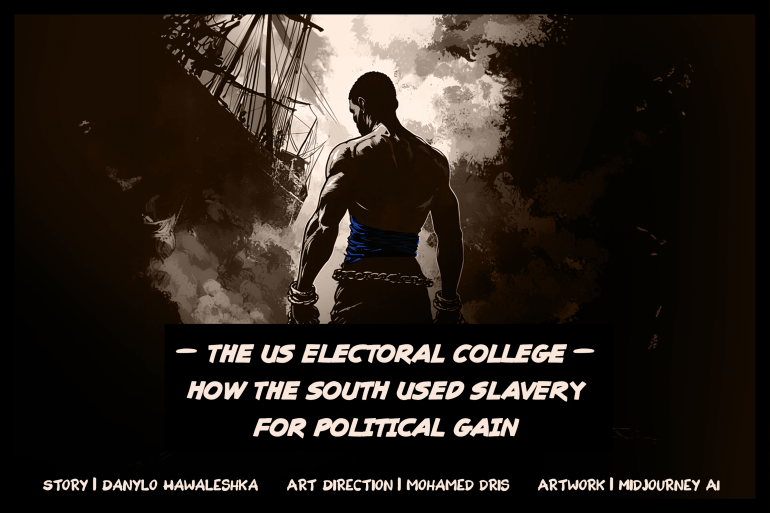
The US Electoral College – How the South used slavery for political gain

System to pick the US president was created in 1787, when the South found a way to inflate its numbers – and its political influence.
Save

Share

facebookxwhatsapp-strokecopylink
History Illustrated - The US Electoral College - How the South used slavery for political gain
By Danylo Hawaleshka
Published On 29 Oct 202429 Oct 2024

History Illustrated is a series of perspectives that puts news events and current affairs into historical context using graphics generated with artificial intelligence.
History Illustrated - The US Electoral College - How the South used slavery for political gain
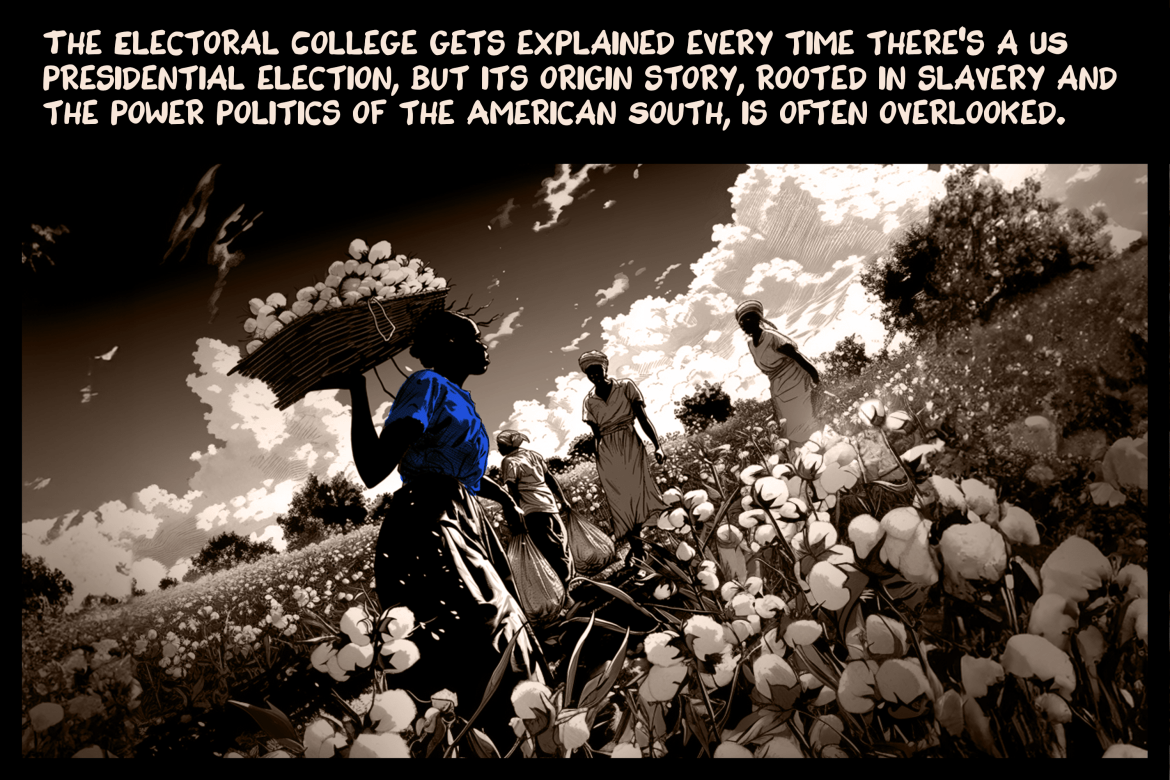
The Electoral College gets explained every time there’s a US presidential election, but its origin story, rooted in slavery and the power politics of the South, is often overlooked.
Advertisement
History Illustrated - The US Electoral College - How the South used slavery for political gain
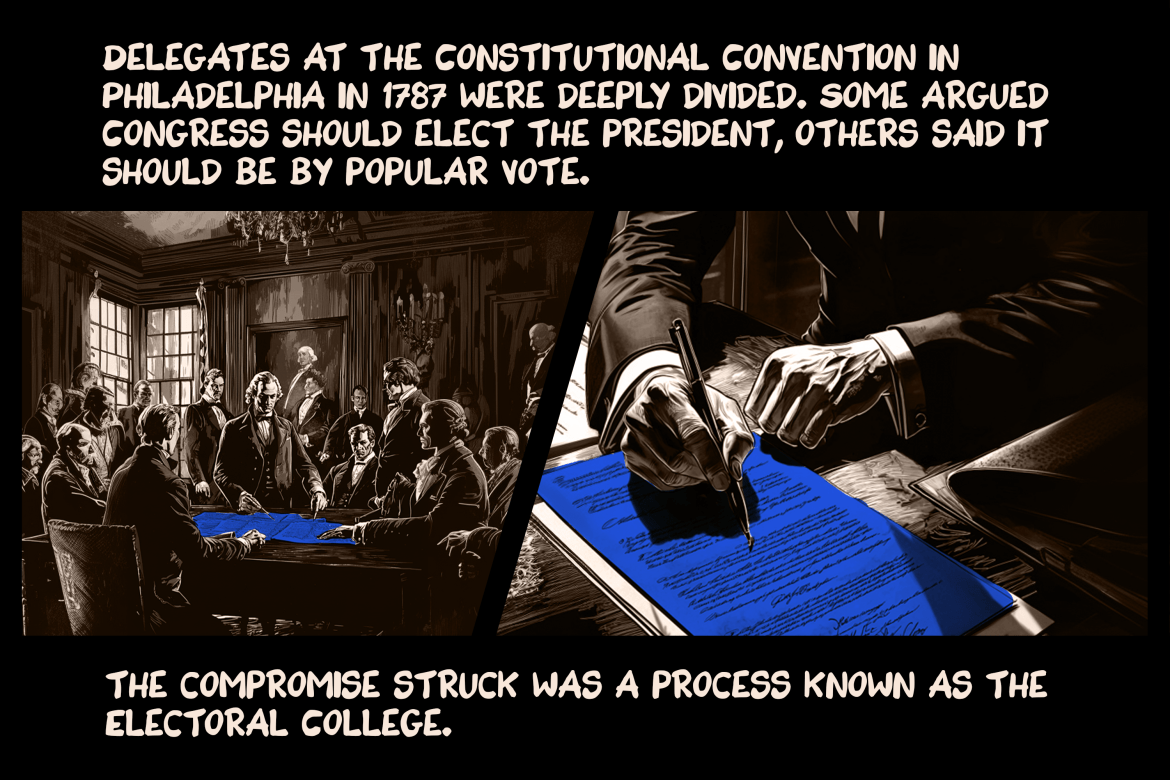
Delegates at the Constitutional Convention in Philadelphia in 1787 were deeply divided. Some argued Congress should elect the president, others said it should be by popular vote. The compromise struck was a process known as the Electoral College.
History Illustrated - The US Electoral College - How the South used slavery for political gain
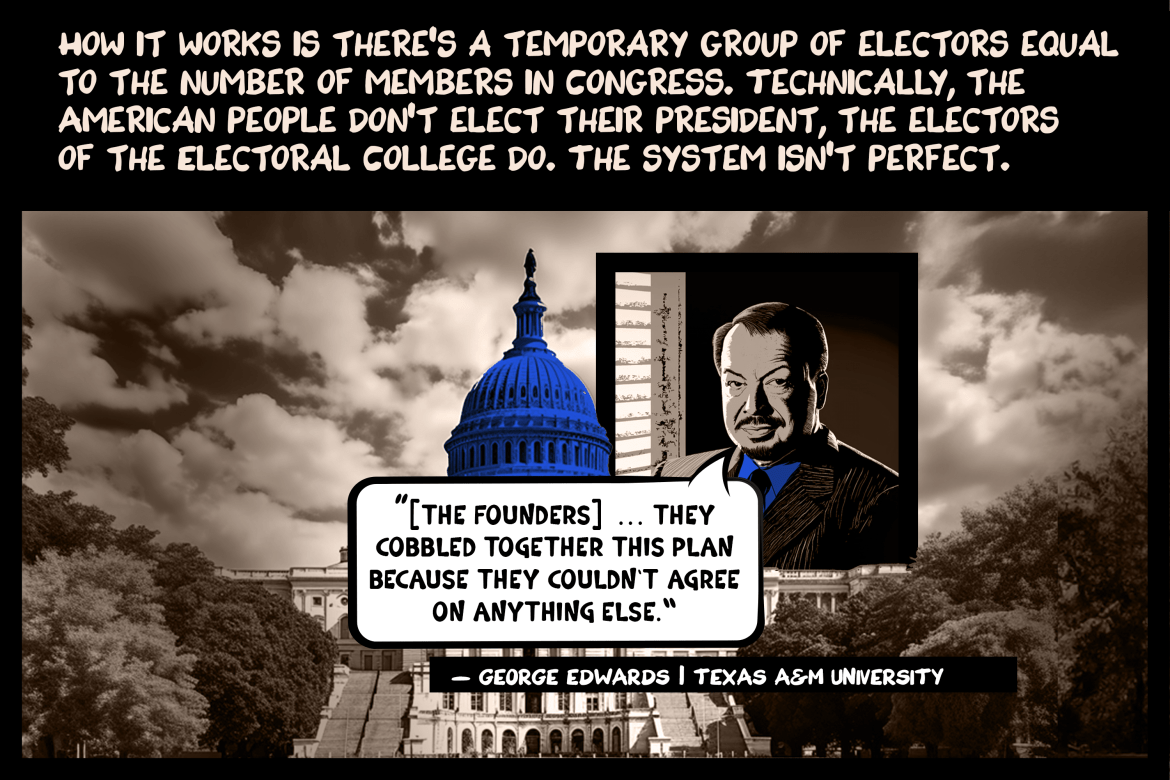
How it works is there’s a temporary group of electors equal to the number of members in Congress. Technically, the American people don’t elect their president, the electors of the Electoral College do. The system isn’t perfect.
History Illustrated - The US Electoral College - How the South used slavery for political gain
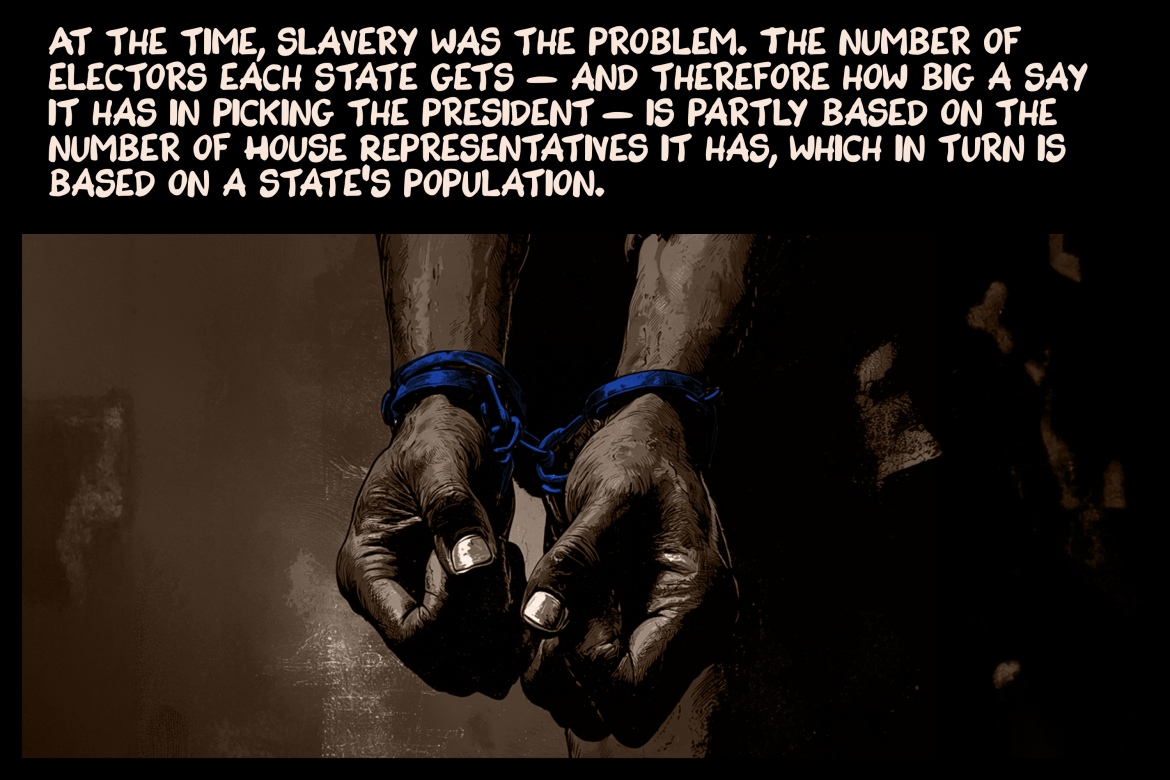
At the time, slavery was the problem. The number of electors each state gets - and therefore how big a say it has in picking the president — is partly based on the number of House Representatives it has, which in turn is based on a state's population.
History Illustrated - The US Electoral College - How the South used slavery for political gain
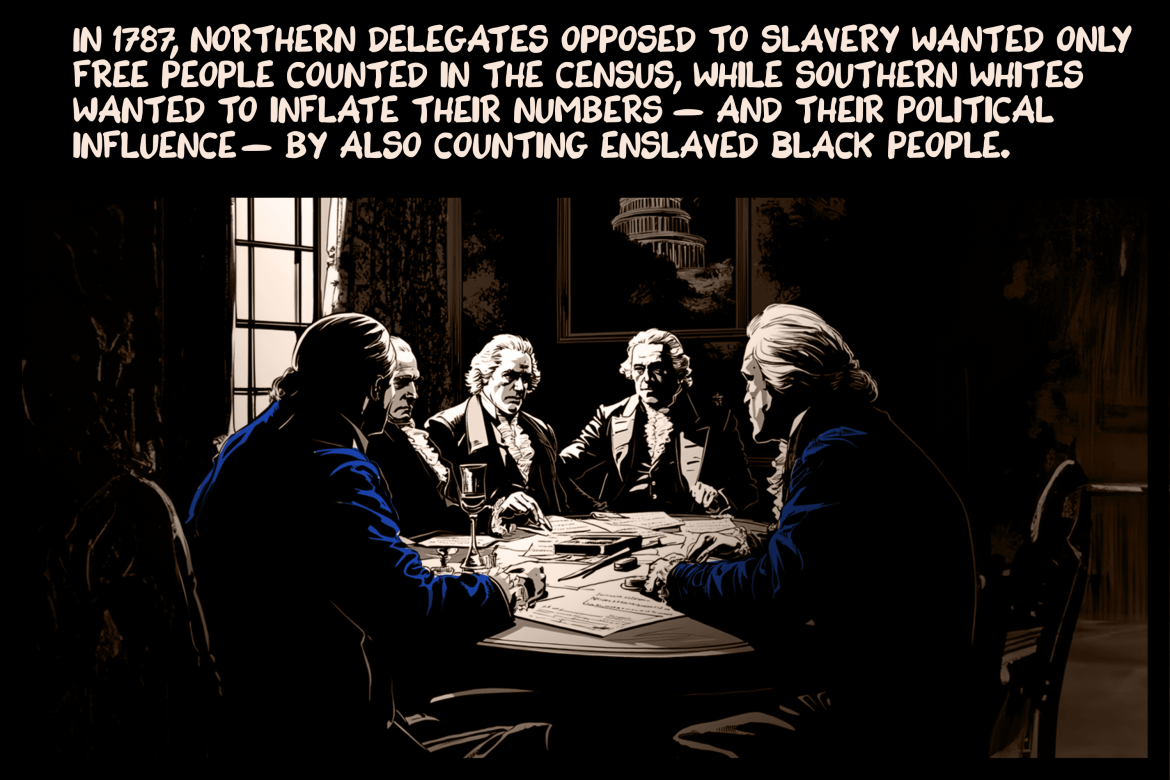
In 1787, northern delegates opposed to slavery wanted only free people counted in the census, while southern whites wanted to inflate their numbers- and their political influence - by also counting enslaved Black people.
History Illustrated - The US Electoral College - How the South used slavery for political gain
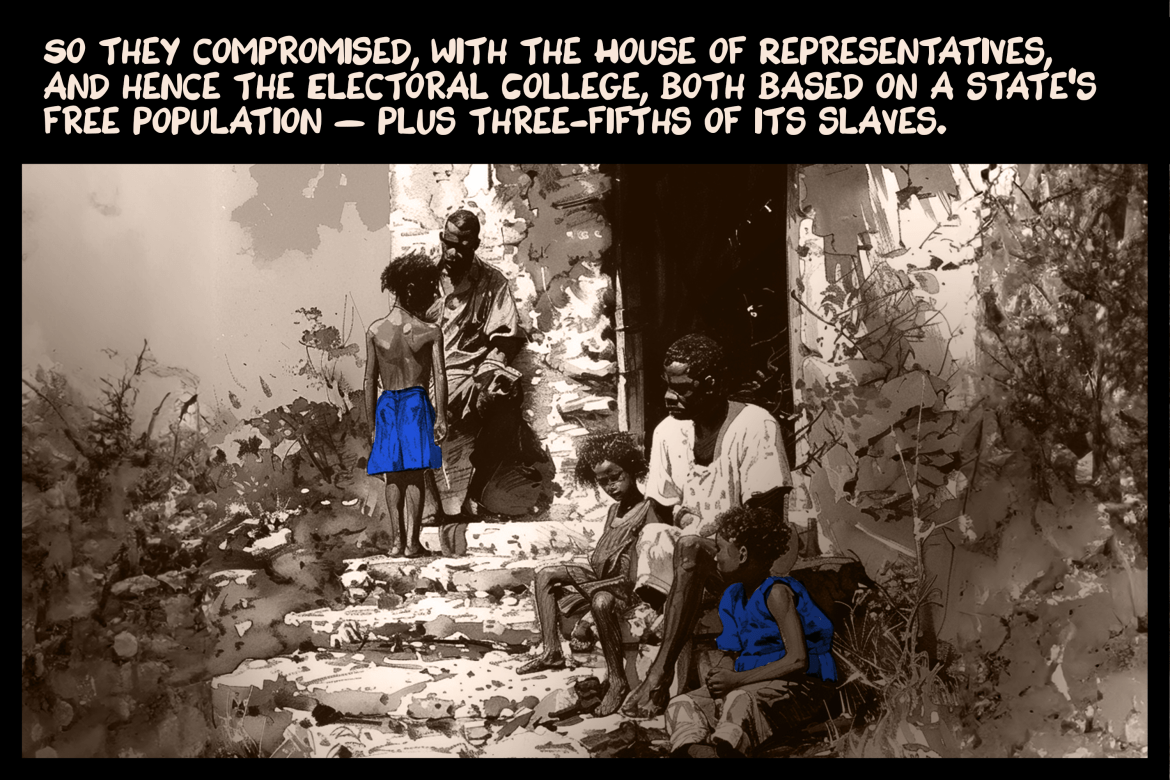
So they compromised, with the House of Representatives, and hence the Electoral College, both based on a state’s free population - plus three-fifths of its slaves.
Advertisement
History Illustrated - The US Electoral College - How the South used slavery for political gain
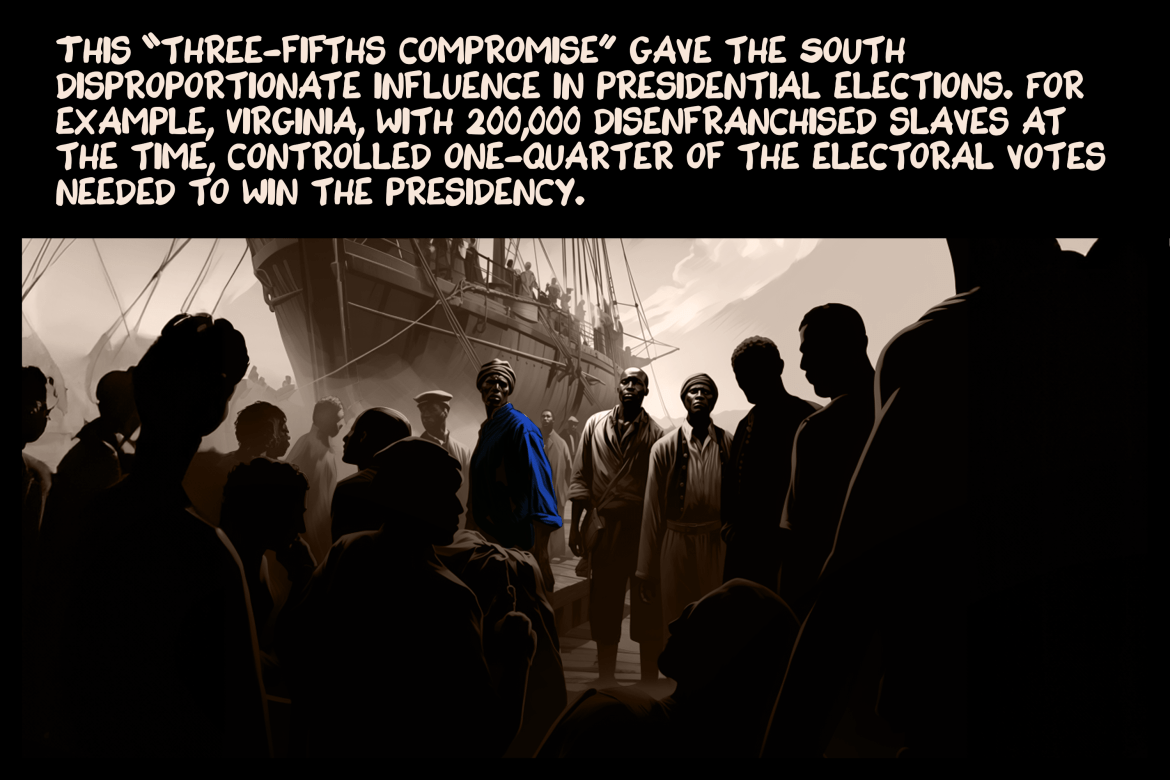
This “three-fifths compromise” gave the South disproportionate influence in presidential elections. For example, Virginia, with 200,000 disenfranchised slaves at the time, controlled one-quarter of the electoral votes needed to win the presidency.
History Illustrated - The US Electoral College - How the South used slavery for political gain
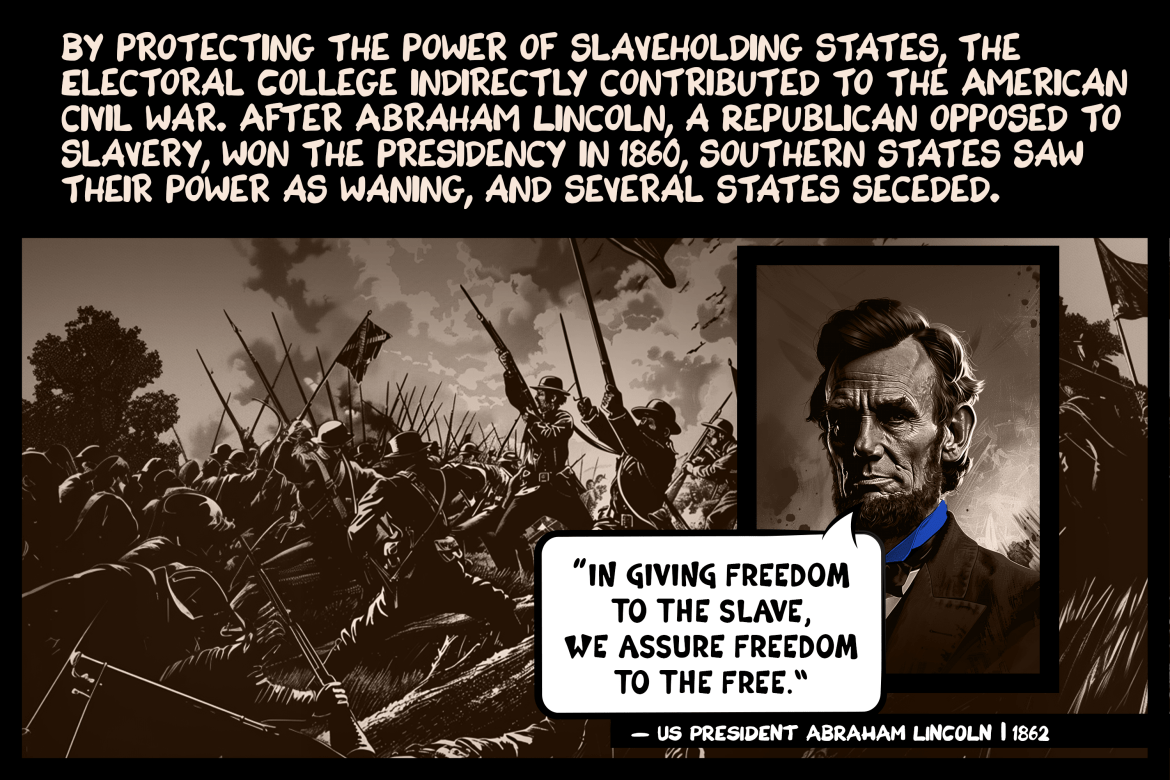
By protecting the power of slaveholding states, the Electoral College indirectly contributed to the American Civil War. After Abraham Lincoln, a Republican opposed to slavery, won the presidency in 1860, southern states saw their power as waning, and several states seceded.
History Illustrated - The US Electoral College - How the South used slavery for political gain
The US almost replaced the Electoral College with a national vote in 1969, when the House passed a constitutional amendment, only to have it blocked by southerners in the Senate. Today, with the presidential election around the corner, US voters will once again place their faith in a voting system that is anything but black and white.

Related

  • US election 2024: Everything you need to know in maps and charts

    Understanding the Electoral College, battleground states and key races in the US for the November 5 vote.

    Published On 29 Oct 202429 Oct 2024
    Interactive_USelections_2024_outsideimage
  • Hundreds of US ballots destroyed after drop boxes targeted by fire

    Police believe incidents in which ballots were destroyed by fire in US states of Oregon and Washington are linked.

    Published On 29 Oct 202429 Oct 2024
    This image released by the Portland Police Bureau shows a ballot box after an incendiary device was discovered inside, in Portland, Ore., Monday, Oct. 28, 2024
  • Harris makes appeal to younger voters with vow to ‘turn the page’

    Democratic candidate appears with running mate Tim Walz, singer Maggie Rogers at rally in key swing state of Michigan.

    Published On 29 Oct 202429 Oct 2024
    Kamala Harris and Tim Walz on stage together in Michigan
  • Bezos defends Washington Post’s decision to end presidential endorsements

    Jeff Bezos claims giving such support can ‘create a perception of bias’.

    Published On 29 Oct 202429 Oct 2024
    Close up phot of Jeff Bezos the owner of Amazon and the Washington Post

More from Gallery

  • Photos: Mughal-era pigeon training survives in heart of India’s capital

    Mughal-era pigeon training survives in heart of India's capital
    This gallery article has 11 imagescamera11
  • Photos: Displaced Lebanese families return home despite Israeli attacks

    Tens of thousands return to southern Lebanon despite warnings and risks
    This gallery article has 13 imagescamera13
  • Photos: Afghan villagers turn to gold-panning to sustain livelihoods

    Afghan villagers turn to gold panning to sustain livelihoods
    This gallery article has 9 imagescamera9
  • Photos: Families across Sudan endure years of displacement, hunger, loss

    Crowd of children sits under a tree and listens to a teacher.
    This gallery article has 17 imagescamera17

Most popular

  • Iran says no talks ‘under shadow of threats’; Trump says blockade to remain

    Relatives pray by the graves of Hussein Dbouk, 80, and his Son Rabih Dbouk, 32, victims retrieved from the rubble of a building hit by an Israeli strike just before the ceasefire, following a funeral ceremony, amid a 10-day ceasefire between Lebanon and Israel, in Tyre, southern Lebanon, April 20, 2026.
  • US, Iran exchange threats as fragile ceasefire set to expire

    A woman walks past an anti-US and anti-Israel mural in Tehran
  • Technofacism? Why Palantir’s pro-West ‘manifesto’ has critics alarmed

    Protesters hold up signs to "defund Palantir" and "free DC"
  • Spain, Slovenia, Ireland push EU to debate Israel pact suspension

    Spain's Foreign Minister Jose Manuel Albares

  • About

    • About Us
    • Code of Ethics
    • Terms and Conditions
    • EU/EEA Regulatory Notice
    • Privacy Policy
    • Cookie Policy
    • Cookie Preferences
    • Accessibility Statement
    • Sitemap
    • Work for us
  • Connect

    • Contact Us
    • User Accounts Help
    • Advertise with us
    • Stay Connected
    • Newsletters
    • Channel Finder
    • TV Schedule
    • Podcasts
    • Submit a Tip
    • Paid Partner Content
  • Our Channels

    • Al Jazeera Arabic
    • Al Jazeera English
    • Al Jazeera Investigative Unit
    • Al Jazeera Mubasher
    • Al Jazeera Documentary
    • Al Jazeera Balkans
    • AJ+
  • Our Network

    • Al Jazeera Centre for Studies
    • Al Jazeera Media Institute
    • Learn Arabic
    • Al Jazeera Centre for Public Liberties & Human Rights
    • Al Jazeera Forum
    • Al Jazeera Hotel Partners

Follow Al Jazeera English:

  • facebook
  • twitter
  • youtube
  • instagram-colored-outline
  • rss
Al Jazeera Media Network logo
© 2026 Al Jazeera Media Network