Skip linksSkip to Content
play
Live
Navigation menu
  • News
    • Africa
    • Asia
    • US & Canada
    • Latin America
    • Europe
    • Asia Pacific
  • Middle East
  • Explained
  • Opinion
  • Sport
  • Video
    • Features
    • Economy
    • Human Rights
    • Climate Crisis
    • Investigations
    • Interactives
    • In Pictures
    • Science & Technology
    • Podcasts
    • Travel
play
Live

In Pictures

Gallery|Climate Crisis

Climate crisis threatens Pakistan’s bees and honey trade

Pakistan’s bees once produced 22 varieties of honey but that has plummeted to 11 as flowering seasons shorten.

Save

Share

facebookxwhatsapp-strokecopylink
Pakistan beekeepers widen pursuit of flowers
Bees collecting nectar from mustard flowers near a honeybee farm at Lak Mor village in Sargodha district, Punjab province [Aamir Qureshi/AFP]
By AFP
Published On 4 Mar 20254 Mar 2025

Under a dry, smoggy sky, a beekeeper in Pakistan’s Punjab province carefully loads boxes filled with tens of thousands of bees onto the back of a truck.

Together, they will travel 500km (about 300 miles) in an increasingly desperate chase to find flowering plants, clean air, and moderate temperatures for honey production as climate change and pollution threaten the industry.

Pakistan’s beekeepers typically move seasonally to avoid stifling heat or freezing cold. Summers are spent in northwestern Khyber Pakhtunkhwa province, and winters in central Punjab province.

But weather patterns made unpredictable by climate change, coupled with some of the worst pollution in the world, mean beekeepers must move more frequently and travel further.

This winter was marked by soaring, hazardous smog levels that the government declared a national disaster. Research has found air pollution can make it harder for bees to locate flowers.

Diminished rainfall, meanwhile, failed to clear the choking air and triggered drought warnings for farmers.

The bees of Pakistan’s 27,000 beekeepers once had diverse foliage fed by reliable rainfall, offering a rich source of nectar. Their honey is used in local flu remedies, drizzled over sweets, and given as gifts.

Since 2022, however, Pakistan’s honey production has dropped 15 percent, according to the government’s Honey Bee Research Institute in capital Islamabad.

Bees are threatened globally by changing weather patterns, intensive farming practices, land-use change, and pesticides.

Advertisement

Their loss threatens not just the honey trade but food security in general, with a third of the world’s food production dependent on bee pollination, according to the Food and Agriculture Organization.

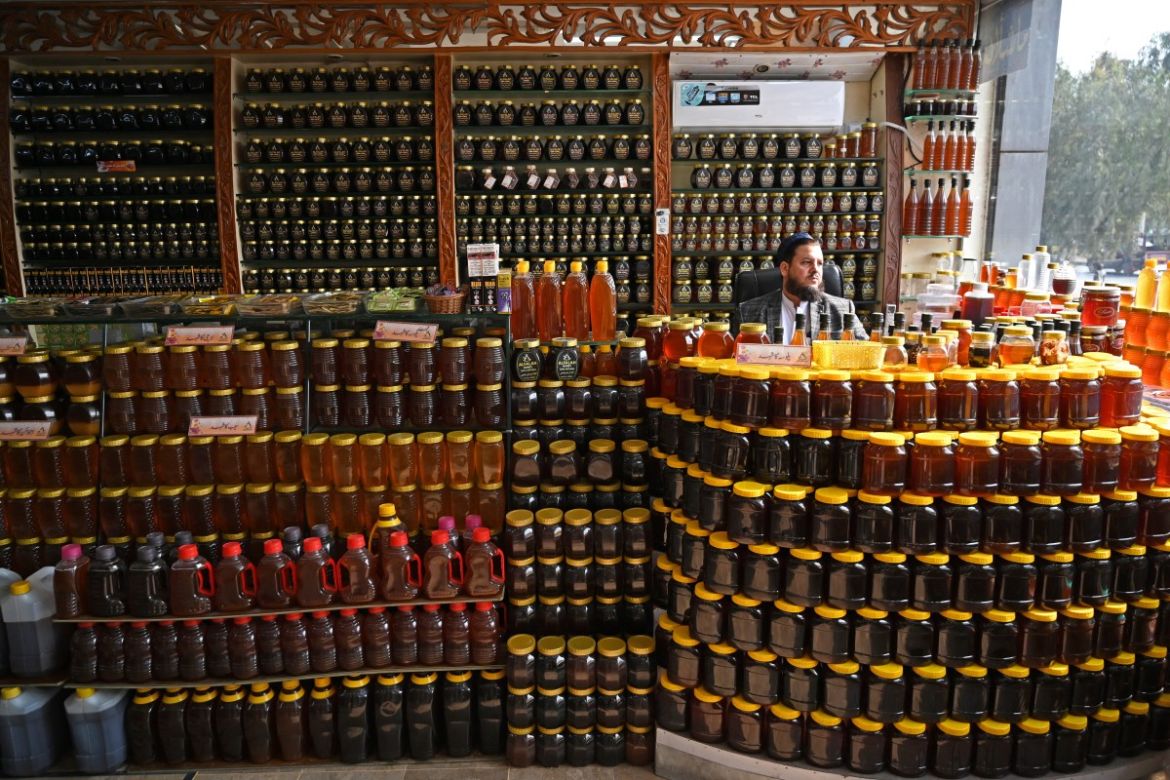
Pakistan’s bees once produced 22 varieties of honey, but that has plummeted to 11 as flowering seasons shorten. Three of the country’s four honeybee species are endangered.

Also, moving so often is expensive for beekeepers in a country where fuel prices have risen dramatically in recent years. And beekeepers seeking better weather can face harassment if they set up in areas without permission from landlords.

Some hope is offered by new technology intended to keep bees cool, addressing the problem of how extreme temperatures affect the insects, if not their food source.

Abdullah Chaudry, a former beekeeper, developed new hives with improved ventilation based on inspiration from other honey-producing nations dealing with rising temperatures, including Turkiye and Australia.

Early signs suggest the boxes improve production by about 10 percent, but they are just part of the adaptation puzzle.
Pakistan beekeepers widen pursuit of flowers
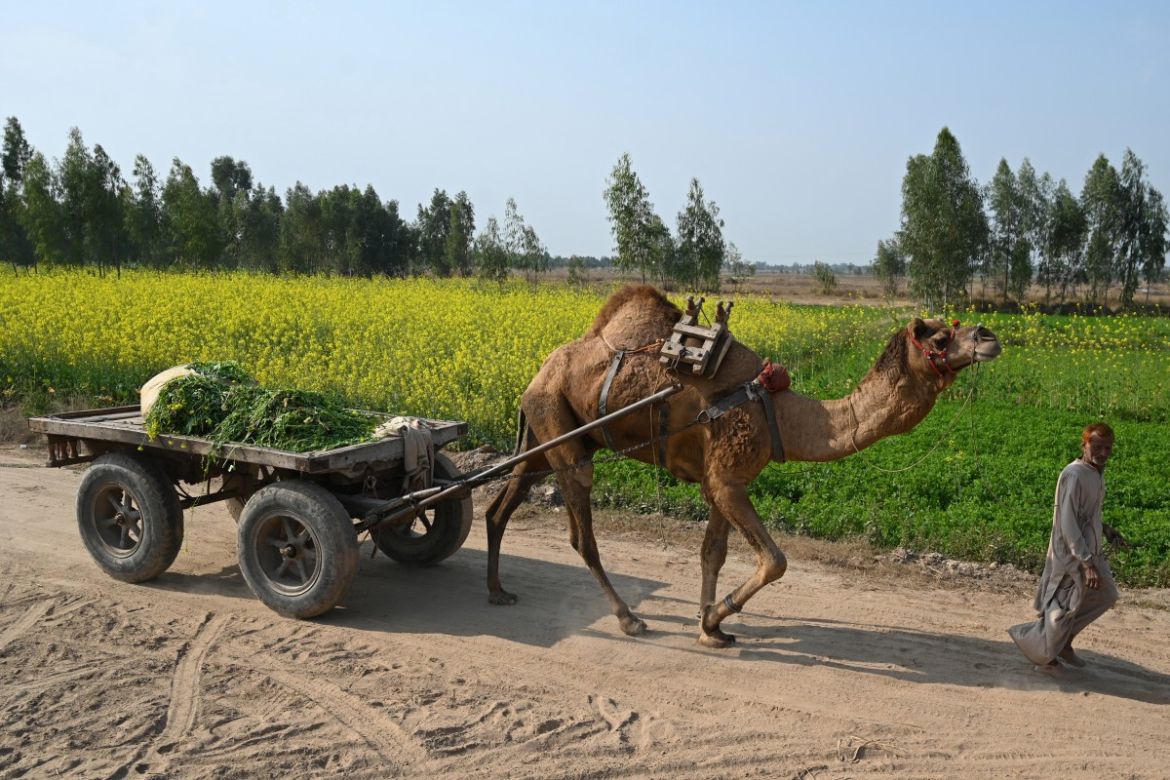
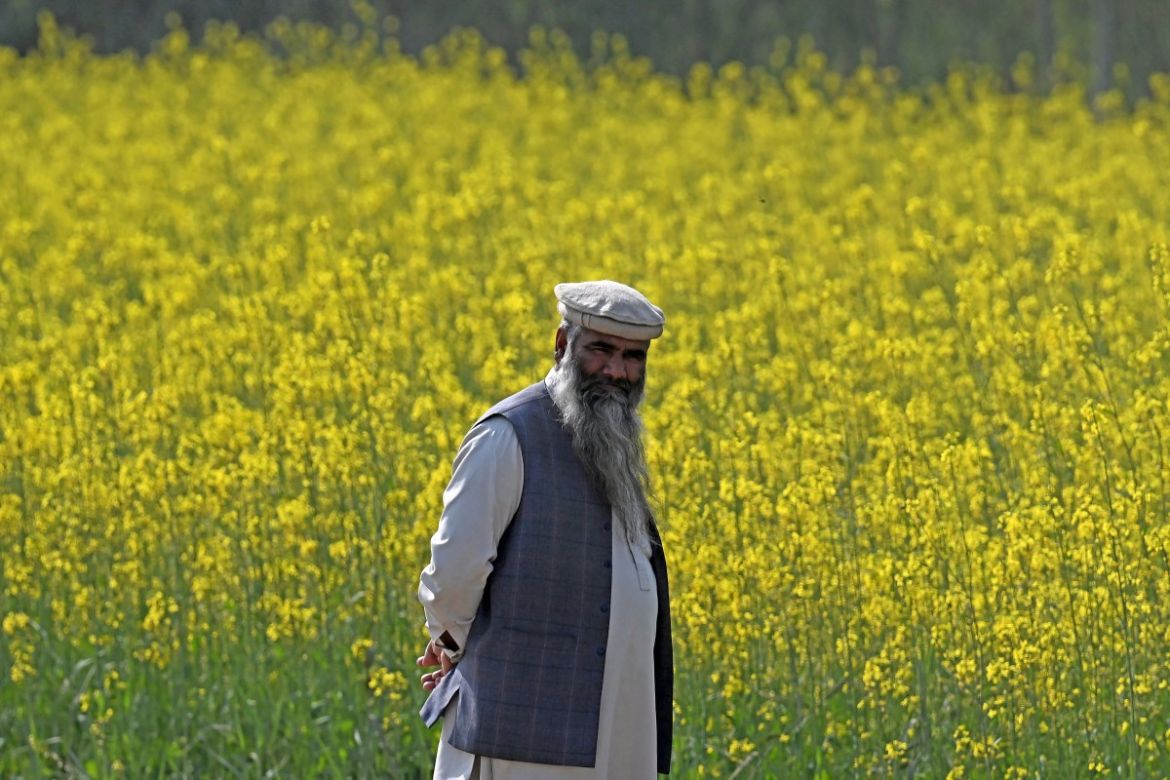
Malik Hussain Khan walks in a mustard field near his honeybee farm at Lak Mor village. [Aamir Qureshi/AFP]
Advertisement
Pakistan beekeepers widen pursuit of flowers
"We move the boxes according to where the weather is good and the flowers bloom," said Malik Hussain Khan. [Aamir Qureshi/AFP]
Pakistan beekeepers widen pursuit of flowers
"Almost half of my bees died when the smog and fog hit this winter because they could not fly. There was hardly any rain," said Malik Hussain Khan, who moved his bees as frequently as every few weeks in January and February. [Aamir Qureshi/AFP]
Pakistan beekeepers widen pursuit of flowers
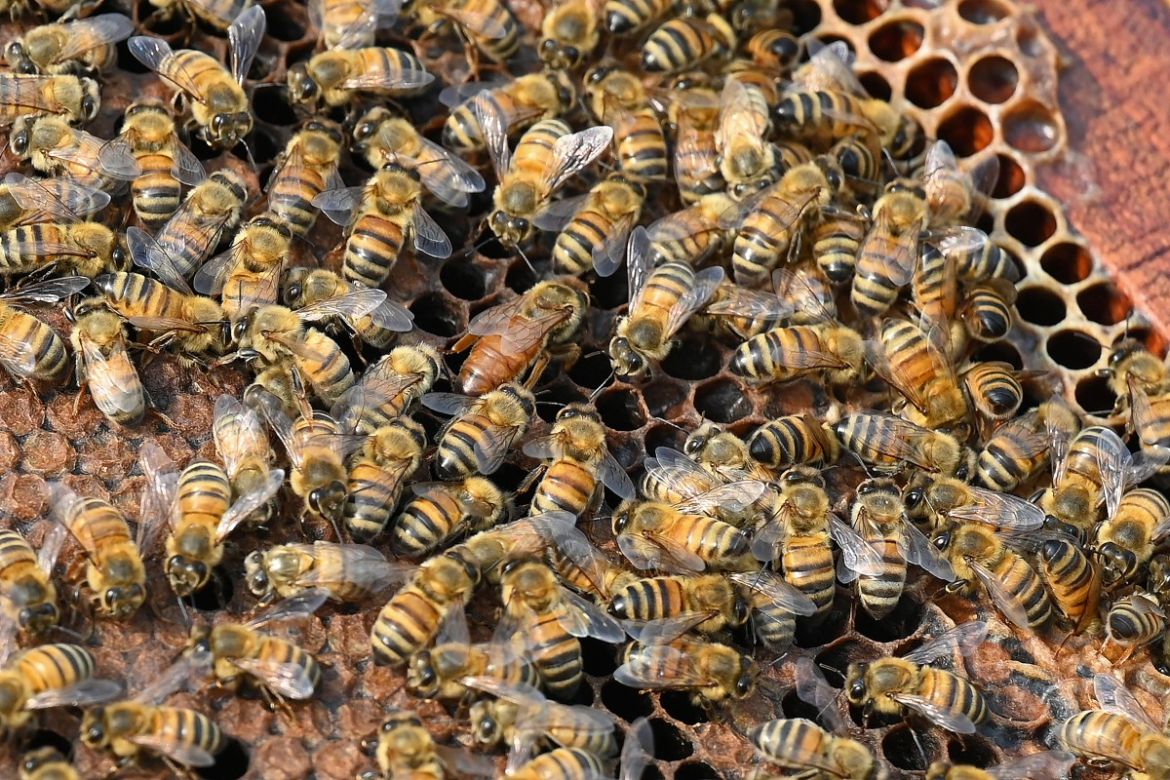
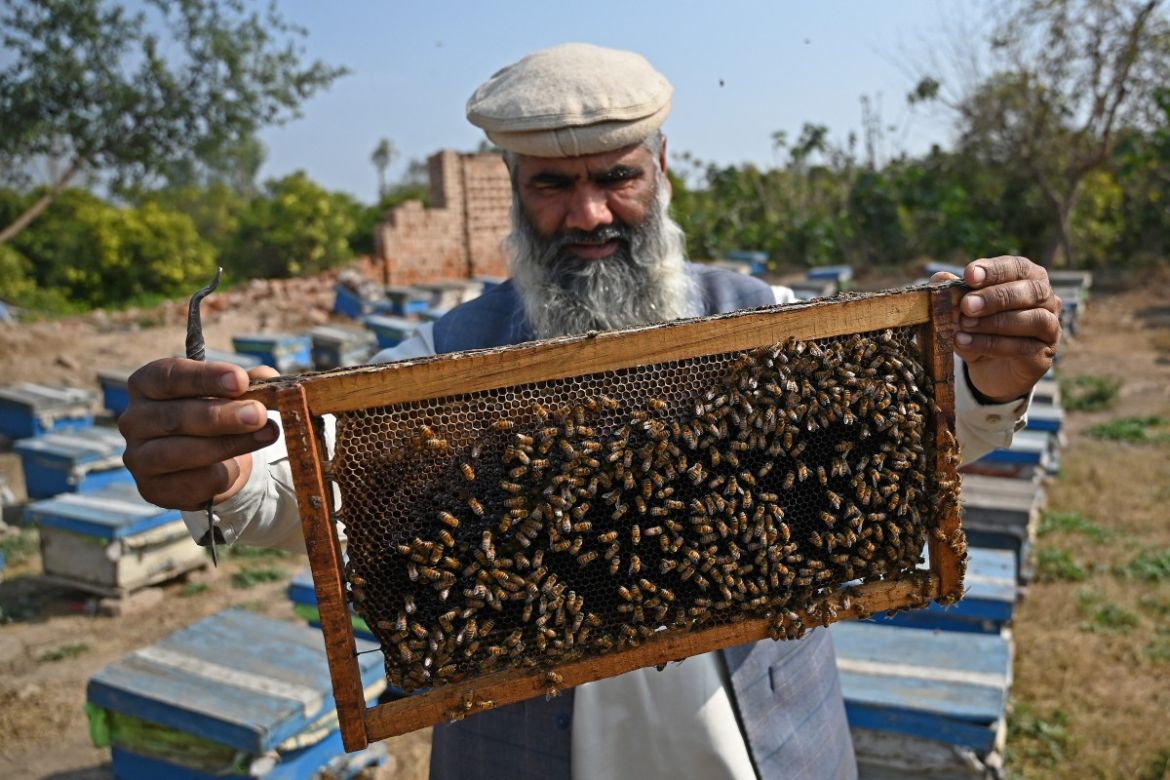
Three of Pakistan's four honeybee species are now endangered. [Aamir Qureshi/AFP]
Pakistan beekeepers widen pursuit of flowers
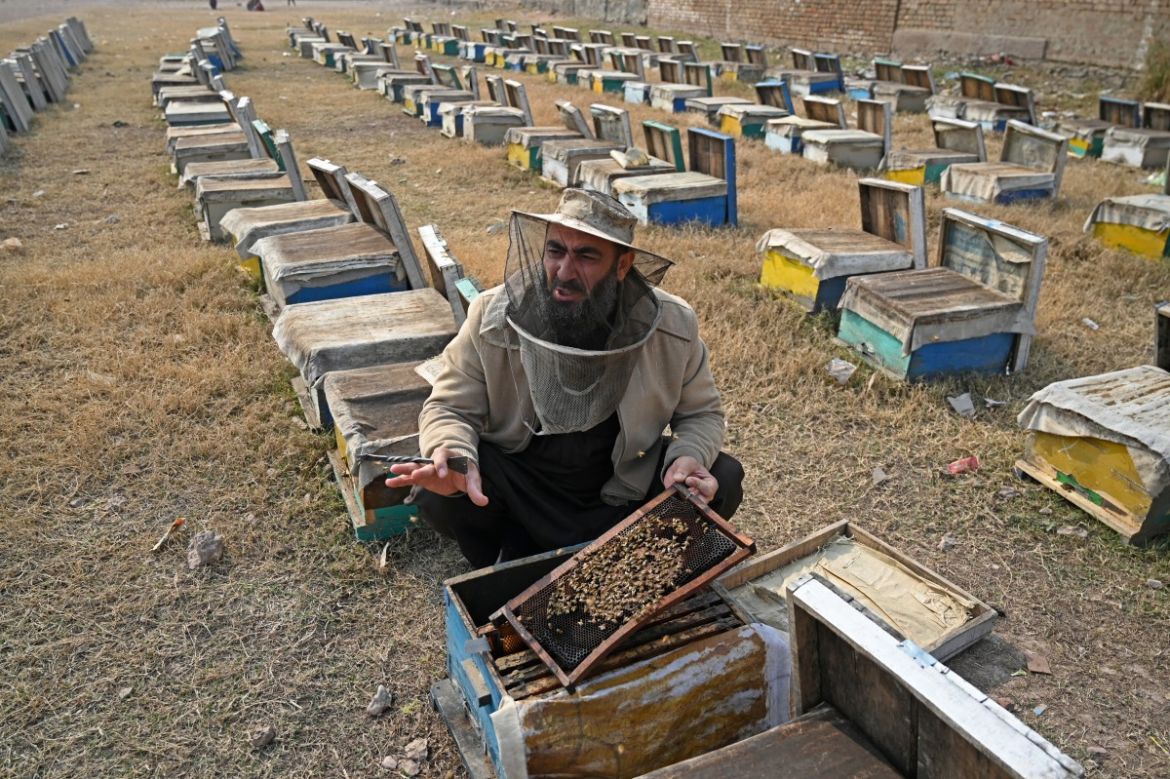
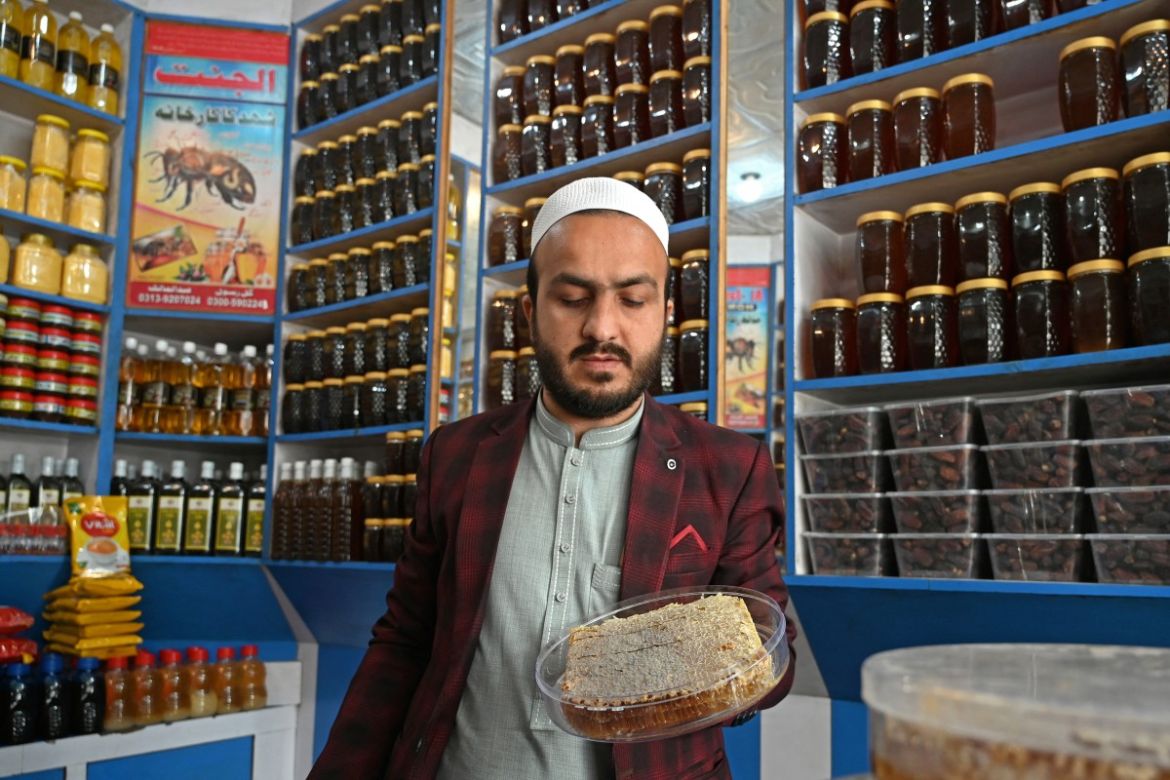
Beekeeper Gul Badshah inspects a honeycomb at a farm in Chamkani, on the outskirts of Peshawar. [Aamir Qureshi/AFP]
Pakistan beekeepers widen pursuit of flowers
Bees are threatened globally by changing weather patterns, intensive farming practices, land-use change, and pesticides. [Aamir Qureshi/AFP]
Advertisement
Pakistan beekeepers widen pursuit of flowers
Since 2022, Pakistan's honey production has dropped 15 percent, according to the government's Honey Bee Research Institute (HBRI) in the capital Islamabad. [Aamir Qureshi/AFP]
Pakistan beekeepers widen pursuit of flowers
The loss of bees threatens not just the honey trade but food security in general, with a third of the world's food production dependent on bee pollination, according to the Food and Agriculture Organization. [Aamir Qureshi/AFP]
Pakistan beekeepers widen pursuit of flowers
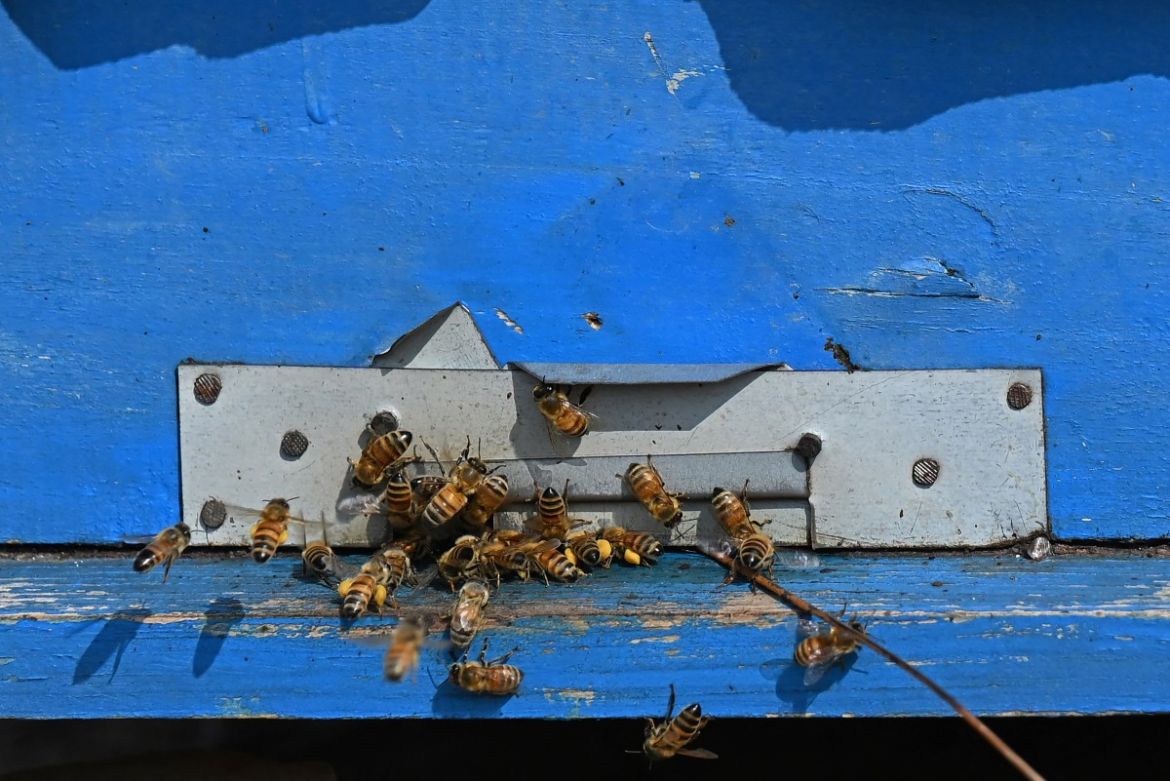
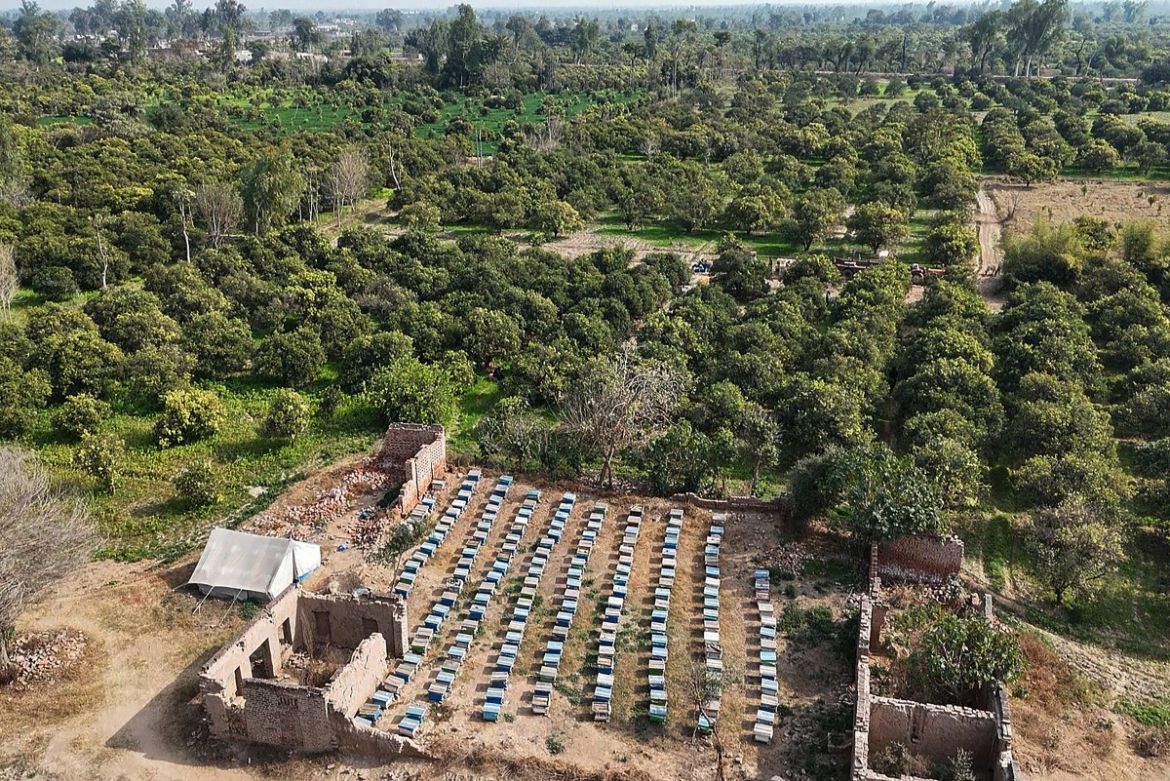
A honeybee farm at Lak Mor village in Sargodha district, Punjab province. [Aamir Qureshi/AFP]

Related

  • Pakistani and Afghan forces clash at vital border crossing

    Afghanistan says one member of its security forces is killed and two injured in overnight clashes at Torkham crossing.

    Published On 3 Mar 20253 Mar 2025
    Pakistan side of Torkham border crossing
  • Most adults, a third of children will be overweight or obese by 2050: Study

    Lancet study uses data from 204 countries to paint a grim picture of what it called an ‘unprecedented global epidemic’.

    Published On 4 Mar 20254 Mar 2025
    A tape measure is held by a tailor at Maurice Sedwell tailors on Saville Row,
  • Can Pakistan’s new anti-extremism policy defeat rising armed attacks?

    Amid a surge in armed attacks, Pakistan has unveiled a new strategy to tackle ‘extremism’. But experts are sceptical.

    Published On 25 Feb 202525 Feb 2025
    Pakistani soldier
  • A simple illustrated guide to Ramadan, answers to 10 common questions

    The ninth month of the Islamic calendar is special to Muslims around the world for its many unique blessings.

    Published On 4 Mar 20254 Mar 2025
    Interactive_Ramadan_2025_Guide-05-1740728343

More from Gallery

  • Photos: Somalia hunger crisis worsens as drought displaces more than 500,000

    Hawa Moalim, 33, fled Wajid in the Bakool region after the drought destroyed her livelihood. She began the journey to Baidoa with her six children and the few goats that had survived, determined to give her family a chance. One by one, the animals died on the road. By the time the family arrived at Wayamo displacement camp two weeks ago, they had nothing left. "We arrived here hoping for help," she says. "But since we came, we have received nothing. There is no food, no water, and no proper shelter." Wayamo displacement camp, Baidoa, Southwest State, Somalia. [Abdulkadir Mohamed/NRC]
    This gallery article has 14 imagescamera14
  • Photos: North Korea opens museum for troops killed fighting for Russia

    North Korea opens museum for troops killed fighting for Russia
    This gallery article has 9 imagescamera9
  • Photos: Bomb attack on Colombia highway kills 19 ahead of election

    Bomb attack on Colombia highway kills 19 ahead of election
    This gallery article has 9 imagescamera9
  • Photos: Chornobyl’s ‘liquidators’ return 40 years after nuclear disaster

    Survivors return to Chernobyl, 40 years after devastating explosion
    This gallery article has 15 imagescamera15

Most popular

  • Trump says Iran requesting end to US blockade; Israel kills three medics

    People inside a destroyed building, amid a temporary ceasefire between Lebanon and Israel, in Tyre, southern Lebanon, April 28, 2026.
  • UAE leaves OPEC in blow to oil cartel during war on Iran

    Window of OPEC building with the blue logo.
  • Trump scolds Germany’s Merz for criticism of Iran war

    Trump
  • What are OPEC and OPEC +, and why has the UAE quit?

    FILE - A photographer takes pictures of the Khurais oil field during a tour for journalists, 150 km east-northeast of Riyadh, Saudi Arabia, June 28, 2021. A cut in oil production is on the table when OPEC oil-producing countries meet Wednesday. The OPEC+ alliance that includes Saudi Arabia and Russia is weighing a cut of a million barrels per day or more. The idea is to boost oil prices that have fallen from summer highs of over $100 to around $80 for U.S. crude. (AP Photo/Amr Nabil, File)

  • About

    • About Us
    • Code of Ethics
    • Terms and Conditions
    • EU/EEA Regulatory Notice
    • Privacy Policy
    • Cookie Policy
    • Cookie Preferences
    • Accessibility Statement
    • Sitemap
    • Work for us
  • Connect

    • Contact Us
    • User Accounts Help
    • Advertise with us
    • Stay Connected
    • Newsletters
    • Channel Finder
    • TV Schedule
    • Podcasts
    • Submit a Tip
    • Paid Partner Content
  • Our Channels

    • Al Jazeera Arabic
    • Al Jazeera English
    • Al Jazeera Investigative Unit
    • Al Jazeera Mubasher
    • Al Jazeera Documentary
    • Al Jazeera Balkans
    • AJ+
  • Our Network

    • Al Jazeera Centre for Studies
    • Al Jazeera Media Institute
    • Learn Arabic
    • Al Jazeera Centre for Public Liberties & Human Rights
    • Al Jazeera Forum
    • Al Jazeera Hotel Partners

Follow Al Jazeera English:

  • facebook
  • twitter
  • youtube
  • instagram-colored-outline
  • rss
Al Jazeera Media Network logo
© 2026 Al Jazeera Media Network