Iran war day 70: US, Iran trade fire in Hormuz amid ceasefire tensions
Iran accuses US of breaching ceasefire near Hormuz as CENTCOM says forces responded to Iranian attacks.
Videos show interceptions over the skies of Tehran

Iran has accused the United States of violating their ceasefire by targeting two ships near the Strait of Hormuz and attacking civilian areas along the country’s southern coast, as tensions continue to escalate around the strategic waterway.
US Central Command (CENTCOM) said its forces intercepted “unprovoked Iranian attacks” and responded with “self-defence strikes”, while Iranian state media reported explosions on Qeshm Island and said air defence systems had intercepted several drones over the area.
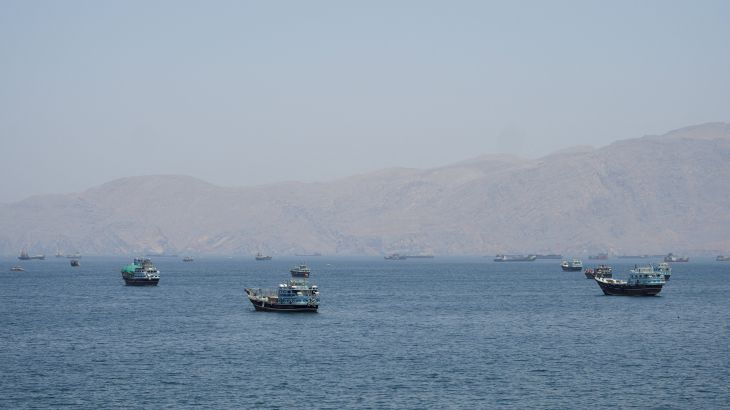
Qeshm is strategically located at the entrance to the Strait of Hormuz and is seen as the primary platform for Iran’s “asymmetric” naval power, analysts say.
The latest exchange came just a day after US President Donald Trump said a deal with Tehran could be within reach, following what he described as “very good talks”, while also warning that the US could resume bombing if Iran refused to agree to a deal.
Here is what we know about what’s been happening the past 24 hours:
In Iran
- Pezeshkian reveals rare meeting with Khamenei: Iranian President Masoud Pezeshkian said he recently met Supreme Leader Mojtaba Khamenei, and described the encounter as candid and conducted in an atmosphere of mutual trust, in one of the first publicly acknowledged interactions involving Iran’s recently appointed top leader since the war with the US and Israel began.
- Tehran rejects vessel attack claims: Iran denied that it was behind an explosion that damaged a South Korean ship in the Strait of Hormuz this week. Tehran’s embassy in Seoul said on Thursday that it “firmly rejects and categorically denies any allegations regarding the involvement of the armed forces of the Islamic Republic of Iran in the incident involving damage to a Korean vessel in the Strait of Hormuz”.
- Iran accuses US of ceasefire breaches: Iran accused the US of violating the ceasefire by attacking two vessels near the Strait of Hormuz and carrying out strikes on civilian areas along Iran’s southern coast. Iranian state media said Tehran’s forces retaliated by attacking US military vessels near the strait and warned of a “crushing response” to any further aggression.
- Iran may soften nuclear stance after war: Analyst Negar Mortazavi said Tehran could show greater flexibility on its nuclear programme once the conflict ends, though she added that Iran is unlikely to hand over its enriched uranium directly to the US. Mortazavi told Al Jazeera that Iran believes negotiations with the Trump administration require “time and patience”, noting Tehran had previously entered talks with Washington only to later come under attack.
War diplomacy
- Rubio meets pope amid war tensions: US Secretary of State Marco Rubio discussed the war with the pope as they met on Thursday against the backdrop of tensions between the White House and the Vatican, notably over the Iran war.
- France condemns attacks near Hormuz: French President Emmanuel Macron told his Iranian counterpart Masoud Pezeshkian that strikes on Emirati civilian infrastructure and ships near the Strait of Hormuz were “unjustified”.
- Lebanon, Israel set for Washington peace talks: Lebanon and Israel are expected to hold a new round of negotiations in Washington on May 14-15 aimed at reaching a peace agreement, a US official said, despite new Israeli strikes.
In the Gulf
- UAE urges residents to shelter amid aerial threat: The UAE’s National Emergency Crisis and Disasters Management Authority said air defence systems were responding to a missile and drone threat, and urged residents to remain in safe locations and follow official updates.
In the US
- Trump says Iranian boats destroyed in Hormuz clash: The US president said three US Navy destroyers transited the Strait of Hormuz “under fire” without sustaining damage, while claiming Iranian attackers and several small boats had been “completely destroyed” during the confrontation.
- Tit-for-tat exchanges continue amid diplomacy push: Al Jazeera’s Kimberly Halkett, reporting from Washington, DC, said the US and Iran are blaming each other for the latest escalation, describing the situation as a “tit-for-tat” exchange unfolding even as diplomatic efforts continue.
- Trump insists ceasefire remains in place: Trump said the ceasefire with Iran was still holding, despite clashes in the Strait of Hormuz. The US president also warned Tehran of a harsher response if a deal is not reached “fast”.
In Lebanon
- Netanyahu pledges continued strikes on Hezbollah: Israeli Prime Minister Benjamin Netanyahu claimed responsibility for the killing of a senior Hezbollah commander in Beirut the previous day, saying “no terrorist is immune” from Israeli attacks.
- Israeli attacks kill 11 in southern Lebanon: Lebanon’s National News Agency reported that Israeli air attacks on the towns of Doueir, Harouf and Habboush in the Nabatieh district killed 11 people, including two children, and wounded 36.
Global economy
- UN warns of mounting disruption in Strait of Hormuz: The head of the UN’s International Maritime Organization said about 1,500 ships and their crews remain stranded in the Gulf because of Iran’s closure of the Strait of Hormuz, a key global shipping route disrupted by the regional war.
- Oil prices jump after Hormuz clashes: Oil prices surged after the US and Iran exchanged fire in the Strait of Hormuz, raising fears over the fragile ceasefire and the security of global energy supplies. Brent crude rose as much as 7.5 percent during Thursday’s trading, before easing to about $101 per barrel early Friday.