Skip linksSkip to Content
play
Live
Navigation menu
  • News
    • Africa
    • Asia
    • US & Canada
    • Latin America
    • Europe
    • Asia Pacific
  • Middle East
  • Explained
  • Opinion
  • World Cup
  • Video
    • Features
    • Economy
    • Sport
    • Human Rights
    • Climate Crisis
    • Investigations
    • Interactives
    • In Pictures
    • Science & Technology
    • Podcasts
    • Travel
play
Live
Navigation menu
  • Donald Trump
  • How Iran war fallout may shape US elections
  • A visual guide to redistricting
  • Who is Thomas Massie?
  • Takeaways from primary elections

In Pictures

Gallery|Business and Economy

Trump’s tariffs threaten Kashmir’s carpet-weaving legacy amid price hikes

The steep 28-percent tariff imposed by the US means the imported carpets will become significantly more expensive for American consumers and retailers.
Save

Share

facebookxwhatsapp-strokecopylink
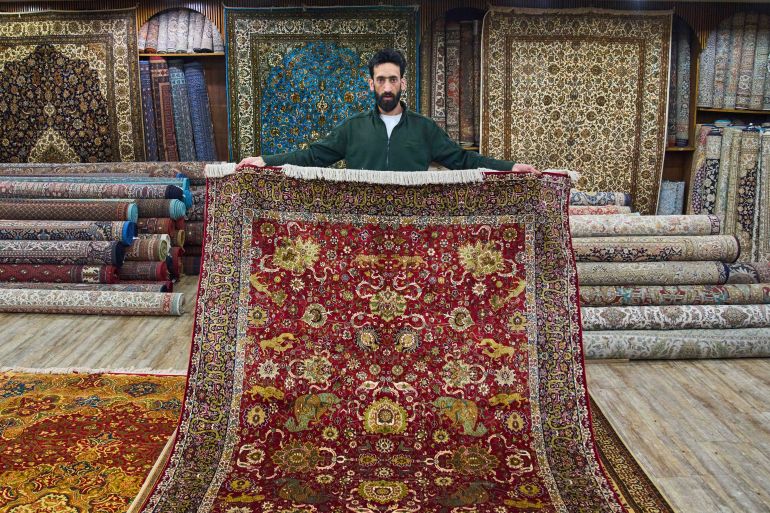
Mohammad Iqbal Bakshi displays a Kashmiri hand-knotted silk carpet.
Mohammad Iqbal Bakshi displays a Kashmiri hand-knotted silk carpet at a showroom in Srinagar [Dar Yasin/AP Photo]
By AP
Published On 17 Apr 202517 Apr 2025

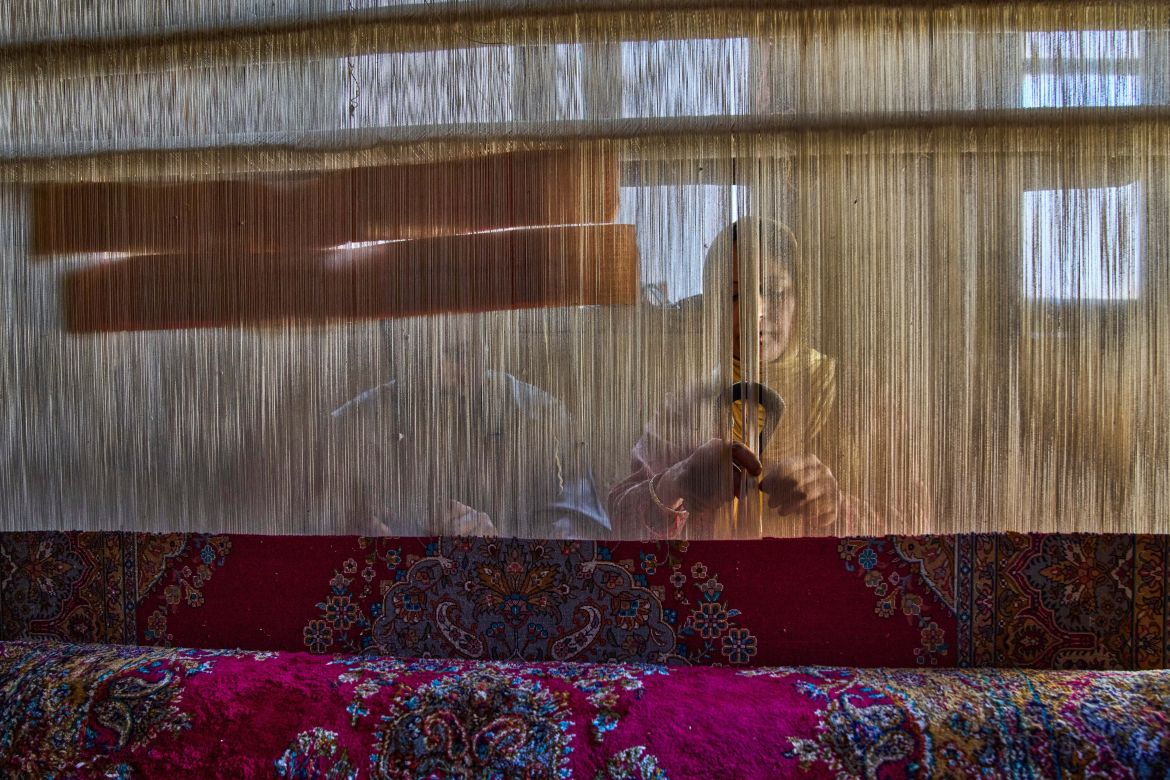
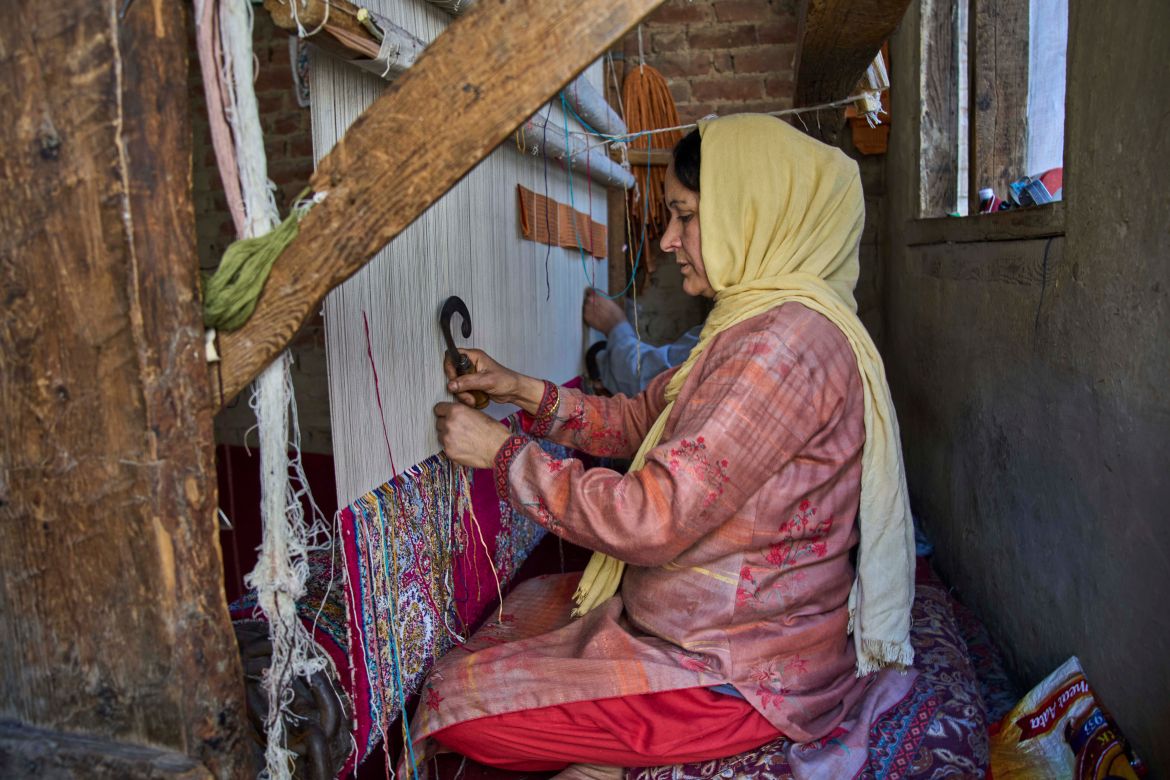
Mohammad Yousuf Dar and his wife, Shameema, sit cross-legged in front of their loom, deftly tying consecutive knots to create the floral patterns of the famed Kashmiri carpets that are now threatened by the Trump administration’s sweeping global tariffs.

Genuine hand-knotted Kashmiri carpets are typically made from pure silk, and sometimes pure wool. Generations of artisans have for centuries handed down the craft to ensure its survival, and while the carpets are expensive, most craftspeople can barely make ends meet.

“I just help my husband so that we have a modicum of decent income to run our household,” Shameema, 43, said as she and Mohammad rhythmically plucked at the colourful silk threads in their dimly lit workshop in Indian-administered Kashmir‘s main city, Srinagar.

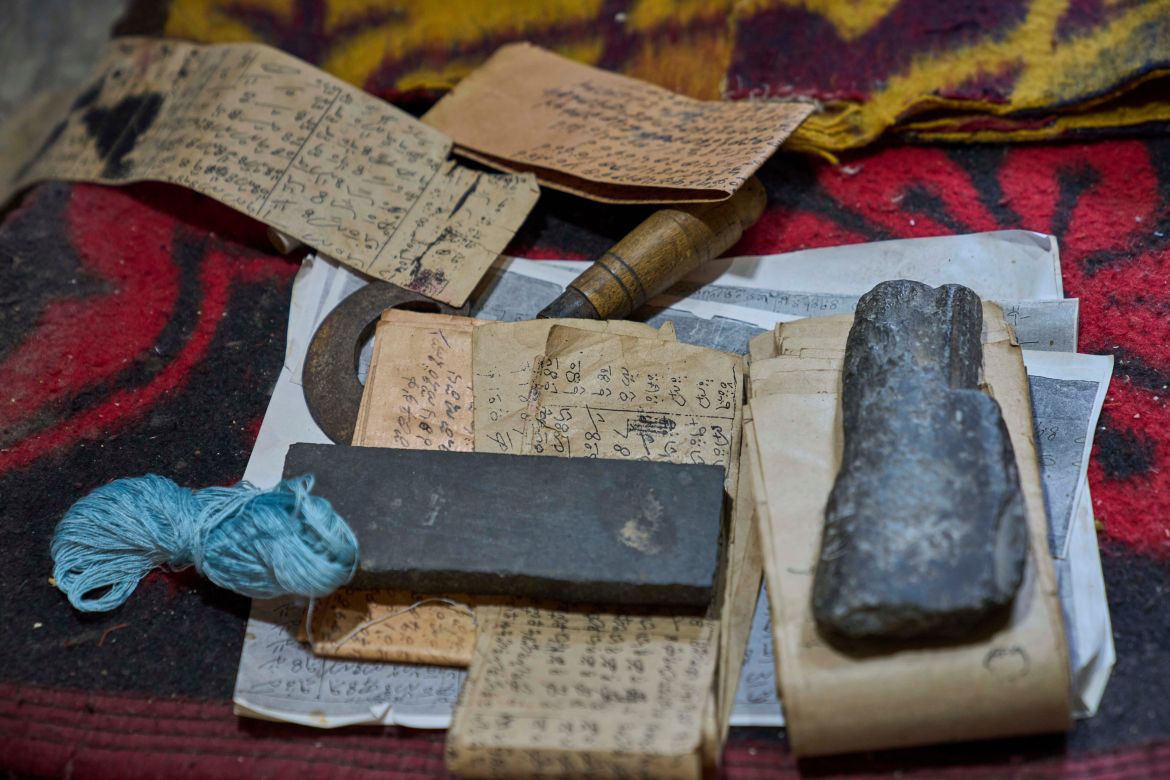
They periodically glance at a yellowed scrap of paper, known as Taleem, or instructions, showcasing the pattern they are working on in an ancient shorthand of symbols and numbers and a cryptic colour map.

Mohammad and Shameema learned the craft at the ages of nine and 10, respectively.

The industry has survived decades of conflict over the disputed region between India and Pakistan and withstood the fickleness of fashion to stay in demand, adorning mansions and museums alike.

However, Kashmiri traders say that US President Donald Trump’s tariffs on imports can deal a hard blow to an already threatened business that is vying to survive amid mass-produced carpets, which are less costly, and artisans abandoning the industry.

Advertisement

Although the tariffs were primarily aimed at chief exporters like China, they have inadvertently ensnared traditional handicraft industries from regions like Kashmir, which depend on US and European markets for survival.

Carpet exports from India to the US alone are valued at approximately $1bn, out of a total global export value of $2bn, according to official data.

Mohammad, 50, said he is the only weaver left out of more than 100 who shifted to other jobs about 20 years ago in his neighbourhood in Srinagar city’s old centre.

“I spend months knotting a single rug, but if there is no demand, our skills feel worthless,” he said.

Still, thousands of families in Kashmir rely on this craft for their livelihood, and the steep 28-percent tariff imposed by the US means the imported carpets will become significantly more expensive for American consumers and retailers.

“If these carpets are going to be more expensive in America, does that mean our wages will rise too?” Mohammad asked.

Not likely.

The increased cost to consumers in the US does not translate into higher wages for weavers, experts say, but rather often leads to reduced orders, lower incomes, and growing uncertainty for the artisans.

This price hike could also push buyers towards cheaper, machine-made alternatives, leaving Kashmiri artisans in the lurch.

Insiders say that unless international trade policies shift to protect traditional industries, Kashmir’s hand-knotted legacy may continue to fray until it disappears.

Wilayat Ali, a Kashmiri carpet supplier, said his trading partner, who exports the carpets to the US, Germany and France, has already cancelled at least a dozen orders in the making.

“The exporter also returned some dozen carpets,” he said. “It boils down to the hard arithmetic of profit and loss,” Ali explained. “They do not see thousands of knots in a carpet that takes months to make.”
Decades-old Kashmiri weaving legacy threatened by global trade policies
Shameema and her husband Mohammad Yousaf Dar weave a Kashmiri hand-knotted carpet at their home in Srinagar. [Dar Yasin/AP Photo]
Advertisement
Decades-old Kashmiri weaving legacy threatened by global trade policies
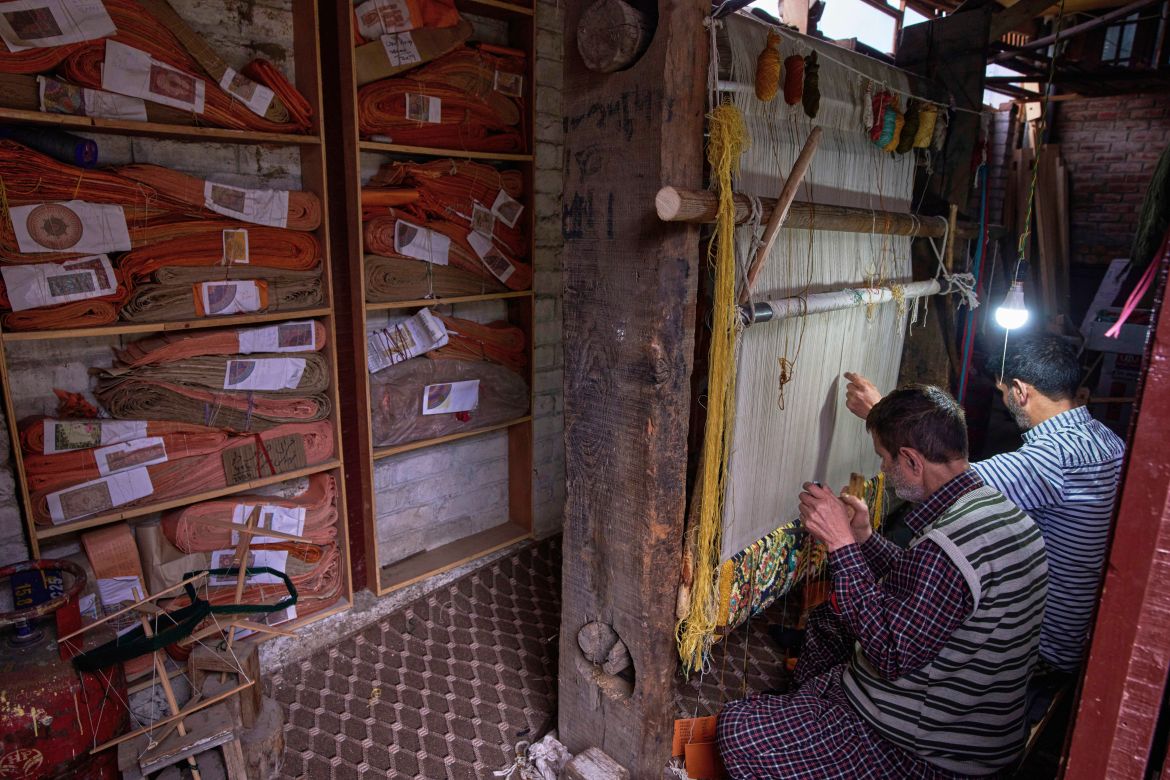
Kashmiri artisans weave hand-knotted carpets at a factory in Kashmir. [Dar Yasin/AP Photo]
Decades-old Kashmiri weaving legacy threatened by global trade policies
Ahsan Sofi carries a Kashmiri hand-knotted carpet out of a carpet factory in Srinagar. [Dar Yasin/AP Photo]
Decades-old Kashmiri weaving legacy threatened by global trade policies
Knife-sharpening stones are used as paperweights for strips of paper with carpet-weaving instructions at a factory in Srinagar. [Dar Yasin/AP Photo]
Decades-old Kashmiri weaving legacy threatened by global trade policies
Farooq Ahmed, left, and Mushtaq Ahmed weave a Kashmiri hand-knotted carpet. [Dar Yasin/AP Photo]
Decades-old Kashmiri weaving legacy threatened by global trade policies
Colorful silk weaving threads are hung from above a loom at a carpet factory in Srinagar. [Dar Yasin/AP Photo]
Advertisement
Decades-old Kashmiri weaving legacy threatened by global trade policies
Shameema and her husband Mohammad Yousaf Dar weave a Kashmiri hand-knotted carpet at their home in Srinagar. [Dar Yasin/AP Photo]
Decades-old Kashmiri weaving legacy threatened by global trade policies
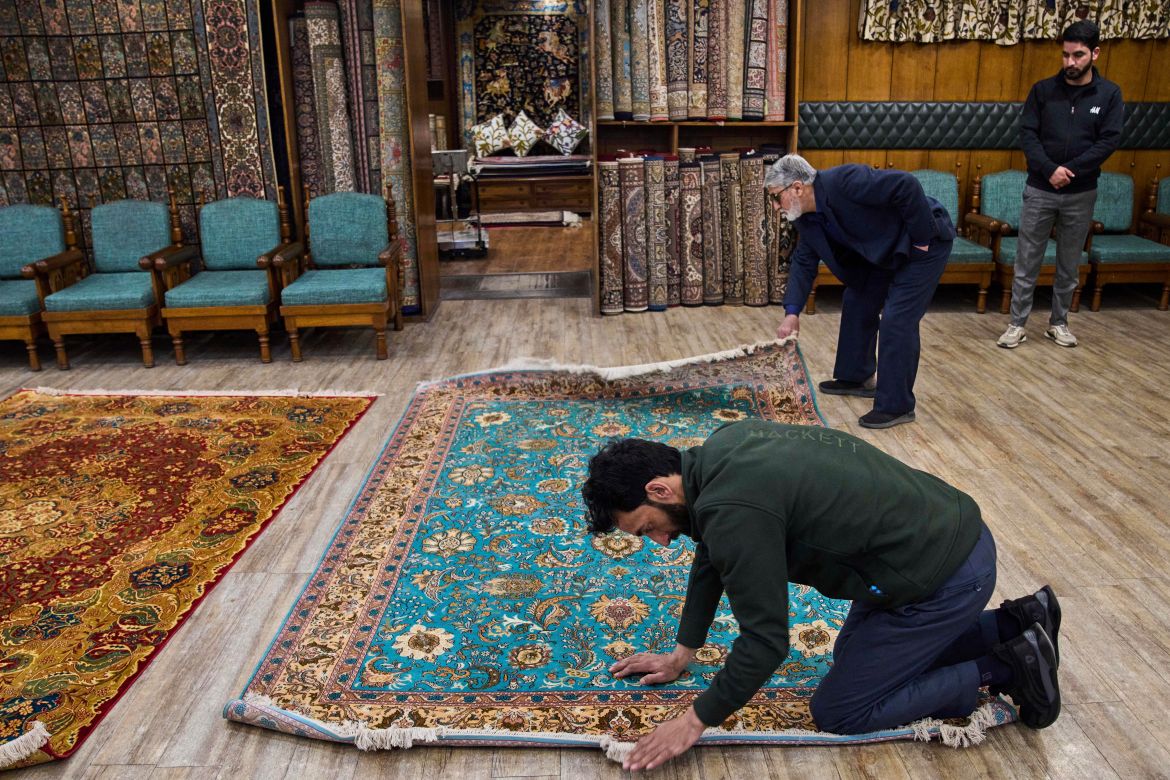
Mohammad Iqbal Bakshi, left, and Mohammad Rafiq Shah inspect a Kashmiri hand-knotted silk carpet inside a showroom in Srinagar. [Dar Yasin/AP Photo]
Decades-old Kashmiri weaving legacy threatened by global trade policies
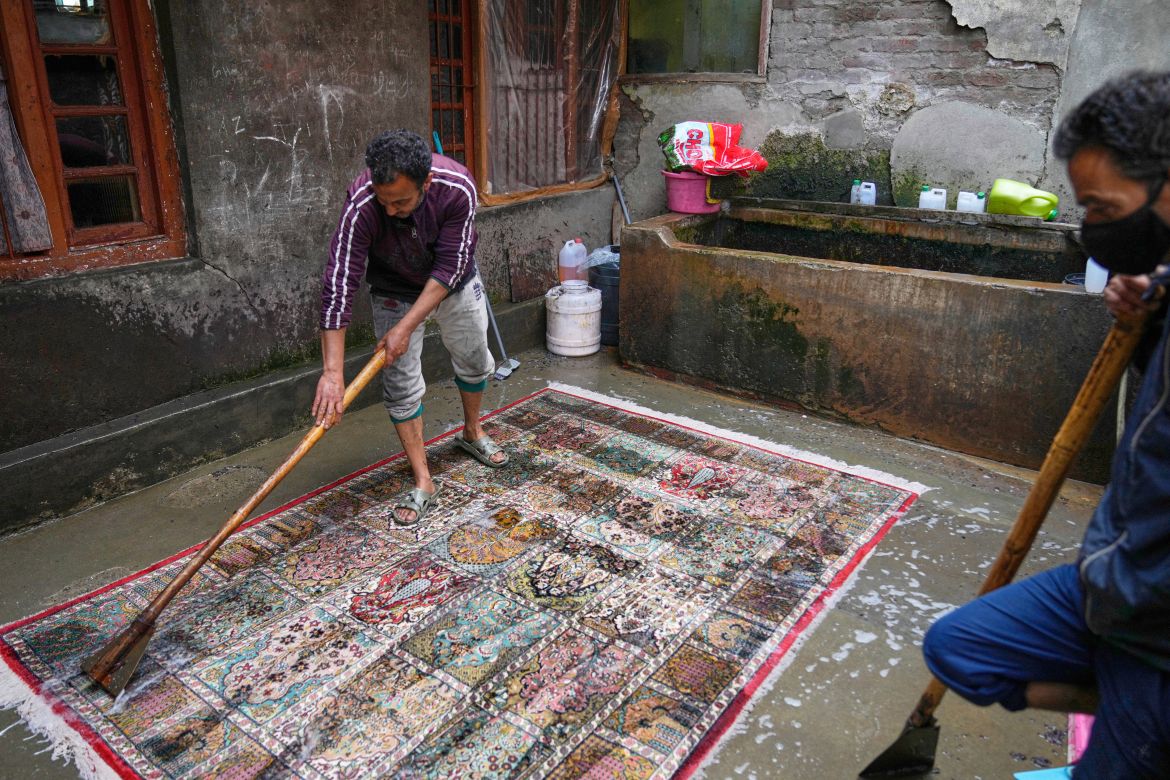
Professional carpet cleaners Waseem Ahmed Mir, left, and Abid Ahmed wash Kashmiri hand-knotted carpets at a workshop. [Dar Yasin/AP Photo]
Decades-old Kashmiri weaving legacy threatened by global trade policies
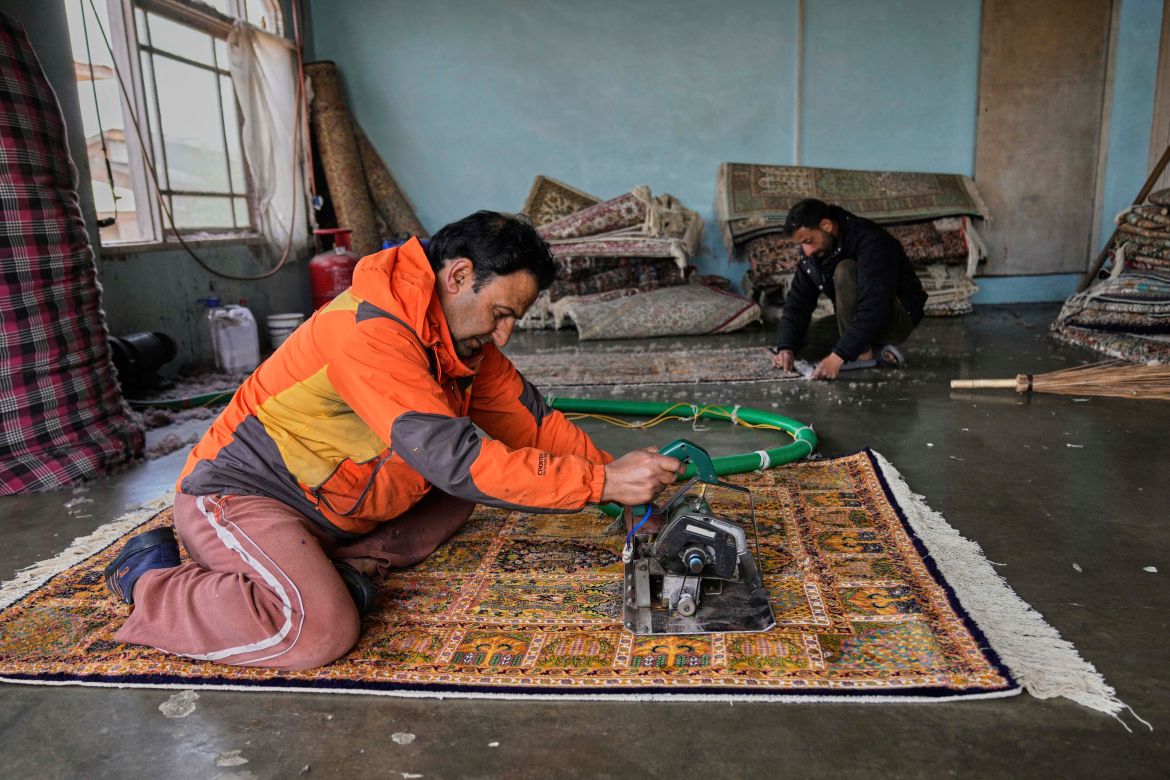
Ishfaq Ahmad Mir, left, and Altaf Ahmed shear Kashmiri hand-knotted carpets to remove protruding fibres. [Dar Yasin/AP Photo]
Decades-old Kashmiri weaving legacy threatened by global trade policies
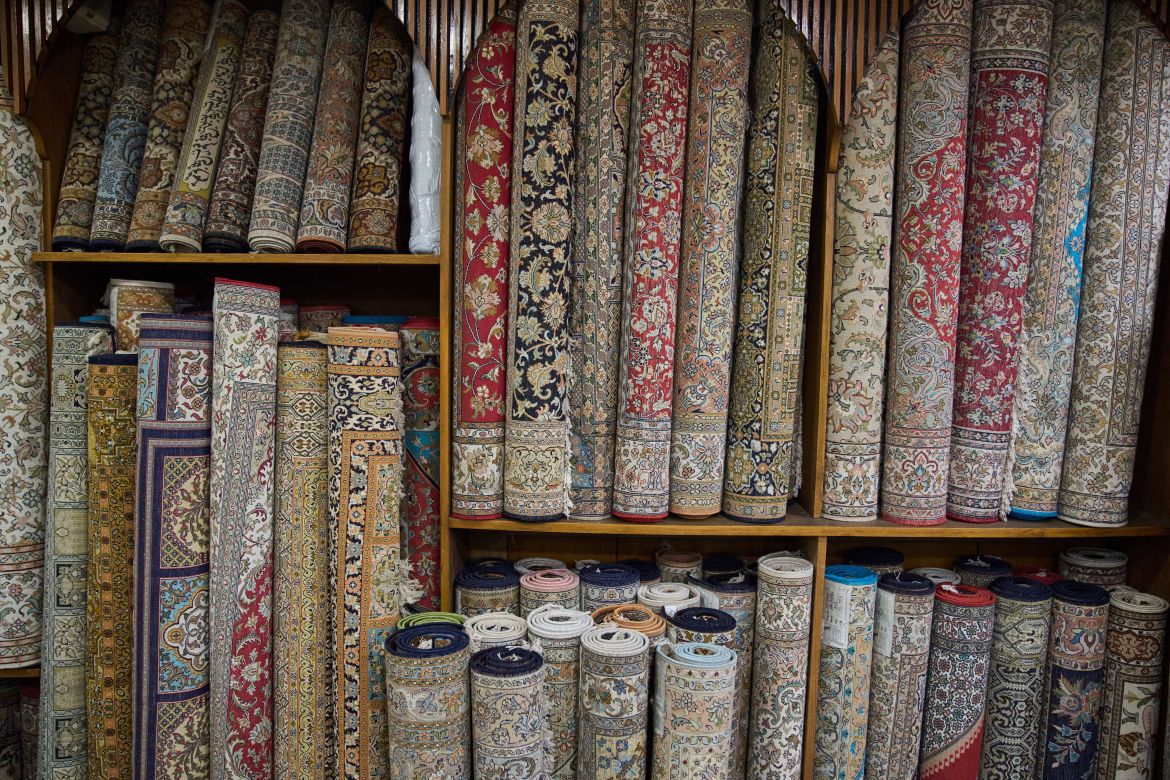
Kashmiri hand-knotted carpets are displayed at a showroom in Srinagar. [Dar Yasin/AP Photo]

Related

  • Kashmir’s famed saffron faces devastating new terror: Porcupines

    Kashmir’s saffron farmers are losing 30 percent of their crop to the rodents as deforestation pushes them into farms.

    Published On 16 Apr 202516 Apr 2025
    Kashmiri farmer and saffron producer Ghulam Mohammad Mir and his family pick saffron stigmas from the flowers at his residence in Kashmir's Pampore October 31, 2024. REUTERS/Sharafat Ali
  • Wave of Kashmir disappearances, mystery deaths spook tribal community

    Young men disappear, their dead bodies found weeks later in canals. Kashmir’s Gujjars refuse to believe they drowned.

    Published On 8 Apr 20258 Apr 2025
    A group of Gujjar men gather for a discussion in Chandian Paha village of Kulgam, Kashmir. Photo Sajad Hameed
  • ‘Stuck in a nightmare’: A Kashmiri woman’s battle with heroin addiction

    Afiya* is among thousands of young people in the region, where an epidemic of drug abuse is consuming lives.

    Published On 10 Mar 202510 Mar 2025
    Kashmir drugs

More from Gallery

  • Photos: Southern Philippines hit by 7.8-magnitude earthquake

    Earthquake Philippines
    This gallery article has 7 imagescamera7
  • Photos: Crowds flood Madrid streets to see Pope Leo’s procession

    Spain Pope
    This gallery article has 8 imagescamera8
  • Photos: 100 days of the US-Israel war on Iran

    Rescue workers search for survivors in the rubble after a strike in southern Tehran
    This gallery article has 34 imagescamera34
  • Photos: Cockroach Janta Party rallies in New Delhi for youth protests

    Cockroach Janta Party (CJP) founder Abhijeet Dipke (C) shouts slogans during a protest
    This gallery article has 9 imagescamera9

Most popular

  • Iran’s top negotiator says US seeking no ceasefire or dialogue

    Daily life in Tehran continues as usual despite tensions with Israel, US
  • US confirms it denied entry to Somali referee set to take part in World Cup

    Omar Artan
  • ‘Strategic doctrine’: Iran hails military shift after Beirut raid response

    Demonstrators wave Iranian flags in a pro-government gathering in Tehran, Ira
  • France and Germany scrap fighter jet in hit to European defence cooperation

    Under the plan, the French Rafale jets and the Eurofighter used by Germany and Spain would both be replaced by 2040

  • About

    • About Us
    • Code of Ethics
    • Terms and Conditions
    • EU/EEA Regulatory Notice
    • Privacy Policy
    • Cookie Policy
    • Cookie Preferences
    • Accessibility Statement
    • Sitemap
    • Work for us
  • Connect

    • Contact Us
    • User Accounts Help
    • Advertise with us
    • Stay Connected
    • Newsletters
    • Channel Finder
    • TV Schedule
    • Podcasts
    • Submit a Tip
    • Paid Partner Content
  • Our Channels

    • Al Jazeera Arabic
    • Al Jazeera English
    • Al Jazeera Investigative Unit
    • Al Jazeera Mubasher
    • Al Jazeera Documentary
    • Al Jazeera Balkans
    • AJ+
  • Our Network

    • Al Jazeera Centre for Studies
    • Al Jazeera Media Institute
    • Learn Arabic
    • Al Jazeera Centre for Public Liberties & Human Rights
    • Al Jazeera Forum
    • Al Jazeera Hotel Partners

Follow Al Jazeera English:

  • facebook
  • twitter
  • youtube
  • instagram-colored-outline
  • rss
Al Jazeera Media Network logo
© 2026 Al Jazeera Media Network